Joseph Levinson, 98,
Dies in Vilnius
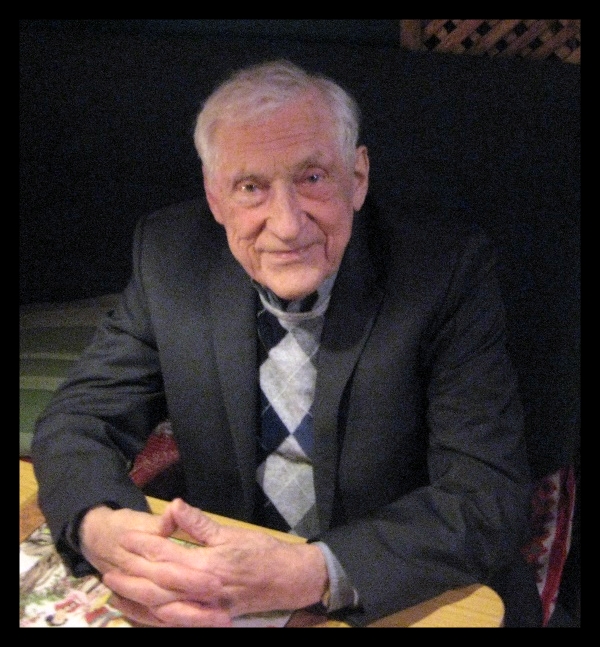
JOSEPH LEVINSON (1917-2015)


Below, (1) the text of DH’s letter to the mayor of Kaunas on 3 February, (2) the response received from his office on 11 February, (3) our response of the same date, and (4) the response from the mayor’s office received on 13 February and (5) our response of the same date. The correspondence relates to the annual neo-Nazi march planned for 16 February 2015 in central Kaunas. See also section on previous marches, and our 3 February 2015 correspondence with the Kaunas police. Note that a banner featuring a major Kaunas Holocaust collaborator, the Nazi puppet prime minister Juozas Ambrazevicius Brazaitis (reburied with full honors as a hero in Kaunas, in 2012), is depicted in a 2014 photograph used by the march’s organizers to advertise the 2015 event.
JERUSALEM—The Simon Wiesenthal Center’s Israel office here today released the text of a letter sent by director Dr. Efraim Zuroff to the mayor of Kaunas, Lithuania, Andrius Kupčinskas, concerning the neo-Nazi march scheduled for February 16th. See also Defending History’s correspondence with the mayor’s office and our background summary.
SEE EXTENDED COVERAGE ON PAGE 1
The text of the letter is as follows:
◊
February 12, 2015
Meras Andrius Kupčinskas
Laisves al. 96 201 kab.
Kaunas
LITHUANIA
◊
Dear Mayor Kupčinskas,
Below, (1) the text of DH’s letter to the mayor of Kaunas, (2) the response received today from his office, and (3) our further response, in connection with the annual neo-Nazi march planned for 16 February 2015 in central Kaunas. See also section on previous marches, and our 3 February 2014 correspondence with the Kaunas police. Note that a banner featuring a major Kaunas Holocaust collaborator, the Nazi puppet prime minister Juozas Ambrazevicius Brazaitis (reburied with full honors as a hero in Kaunas, in 2012), is depicted in a 2014 photograph used by the march’s organizers to advertise the 2015 event.
◊
Вянваре прошлого, 2014-го года из печати вышла новая книга стихов литовского поэта, публициста, члена Международной ассоциации «Литва без нацизма» Александраса Босаса под названием «IŠ TEN SUGRĮŽTANTIEMS. Apie ŠOA RIMTAI IR SU IRONIJA» («ТЕМ, КТО ВОЗВРАЩАЕТСЯ ОТТУДА. О ШОА СЕРЬЁЗНО И С ИРОНИЕЙ». 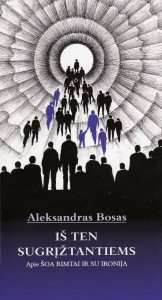 Далее «Тем, кто возвращается оттуда» – М.Х.). А.Босас стал первым в истории литовской литературы поэтом, который не только обратился к самой болезненной и негласно табуированной теме в истории Литвы – к теме Шоа, – но и посвятил ей не одно и не несколько стихотворений, а всю третью, к сожалению, последнюю книгу. В ней поэт не шопотом и не намёками, а «во весь голос» открыто и откровенно заявил о своём отношении к трагедии Шоа и так называемого «окончательного решения еврейского вопроса».
В годы нацистской оккупации германские нацисты при активной добровольной помощи весьма значительного количества организованных и вооружённых местных гражданских лиц, вступивших в военизированные подразделения полиции, уничтожили почти всю еврейскую общину, которая до Второй мировой войны была самой знаменитой и высокоразвитой общиной всемирной еврейской диаспоры в первой половине ХХ века. Евреи представляли в Литве самое многочисленное национальное меньшинство населения. Еврейская община жила в мире и согласии с местным литовским, польским, русским населением, с другими национальными группами.
◊
Iwill speak about painful things, and so I understand if some of you won’t want to listen and will step out.
It is most important that we empathize with the victims of the Holocaust, and yet we must also empathize with the perpetrators if we wish to understand what happened and who was responsible for what. Litvaks outside of Lithuania feel hurt that Lithuanians shirk responsibility for the Holocaust.
I won’t be indifferent. I am a deliberate Lithuanian. I was born in the diaspora. I chose to be Lithuanian. Is the Lithuanian worldview harmful? I must investigate.
The Simon Wiesenthal Center today issued a statement expressing dismay that Vilnius’s state-sponsored Genocide Center (full name: Genocide and Resistance Research Center of Lithuania) was included in the Lithuanian Jewish Community’s annual program marking Holocaust Remembrance Day. The third of three events was dedicated entirely to a book produced by the Center. The only announced speaker for the event, the book’s author, is known for rejecting known elements of the historic narrative of the annihilation of Lithuanian Jewry, for his support for monuments for pro-Hitler forces, and for participation in far-right pro-fascist journals.
The Stahlecker Reports offer a rare glimpse into the inner workings of what was the onset the Final Solution: the Baltic invasion within Operation Barbarossa. Naturally, Most wartime documents deal with the effect and aftermath of the war. In the sea of war documents, the Stahlecker Reports are pivotal, in that in that they shed some light on the backdrop and the motives behind the war’s operations.
Iwas proud to serve as Austria’s remembrance volunteer (Gedenkdiener) in 2013-2014. Based in Vilnius in the Green House, the country’s only serious Holocaust exhibit, I was able to travel extensively and meet Lithuanian citizens from a wide variety of backgrounds. Despite all the hype, the Jewish heritage is not really in the best of shape. There is a lot of ignorance combined with an ethnocentric nationalist worldview.
B O O K S
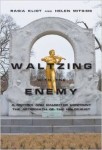 In Waltzing with the Enemy: A Mother and Daughter Confront the Aftermath of the Holocaust by Rasia Kliot and Helen Mitsios, the authors write a dual memoir of survival and healing. The mother, Rasia, was born into upper class comfort in Vilna (today Vilnius, Lithuania). Her daughter, Helen Mitsios, was born in Montreal, Canada. The dual structure – the first half is titled “Rasia’s Story” and the second half is labeled “Helen’s Story” – works very well.
LONDON—British author Peter Jukes, best known for his screenplays, literary criticism and political journalism, tweeted last week on the release in the United States of a new documentary film that heroizes certain postwar anti-Soviet “forest brothers” in Lithuania. The film, “The Invisible Front,” that premiered in Greenwich Village’s prestigious Cinema Village theater on 7 November, fails to even mention the view that various of the specific figures it glorifies for their post 1944 activities were in fact alleged recycled Nazi collaborators of 1941. That was the year when, in the days following the Nazi invasion launched on 22 June, the Lithuanian Activist Front (LAF) started butchering local civilian Jews, often elderly rabbis or young women, before the first German forces had arrived. Premeditation becomes evident from perusal of the LAF’s prewar leaflets.
Iam proud to be a Litvak, and I am proud to be a citizen of independent and democratic Lithuania. I very much enjoy walking in our city’s delightful Vingis Park, as well as downtown in the beautiful city center area.
However, I feel suddenly both sad and shocked, when I see neo-Nazi parades with swastikas and other fascist symbols along Gedimino Boulevard on our independence day repeating the yelled chants of “Lithuania for [ethnic] Lithuanians.”
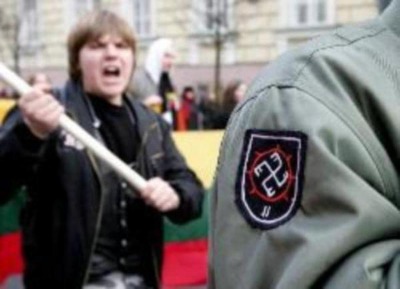
◊
Dear Dr. Rogatchi,
Warm congratulations on your excellent film, The Lessons of Survival. Conversations with Simon Wiesenthal. We encourage all our readers to see the film, and those who live in or near Vilnius to attend the screening this Tuesday 28 October 2014 at 5 PM at the Vilnius Jewish Public Library, followed by a distinguished panel discussion.
Svintsyán [Švenčionys] — Some fifty people gathered in the forest at midday today at the mass grave at Poligón, outside Švenčioneliai (Yiddish: Svintsyánke), in northeastern Lithuania, where around 8,000 Jews were murdered on 7 and 8 October 1941 after more than a week of barbaric incarceration and humiliation. The number includes nearly all the Jews of the county-seat town Švenčionys (Svintsyán) as well as the Jewish citizens of a number of towns and villages in the region, including (Yiddish names first in the following list, followed by current Lithuanian or Belarusian names): Dugelíshik (Naujasis Daugėliškis), Duksht (Dūkštas), Haydútsetshik (Adutiškis), Ignalíne (Ignalina), Koltnyán (Kaltanėnai), Kaméleshik (Kimelishki, Belarus), Labonár (Labanoras), Lingmyán (Linkmenys), Líntep (Lyntupy, Belarus), Maligán (Mielagėnai), Podbródzh (Pabradė), Saldúteshik (Saldutiškis), Salemánke (Salamianka), Stayátseshik (Stajotiškės), Svintsyánke (or Nay-Svintsyán — Švenčionėliai), and Tseykín (Ceikiniai).
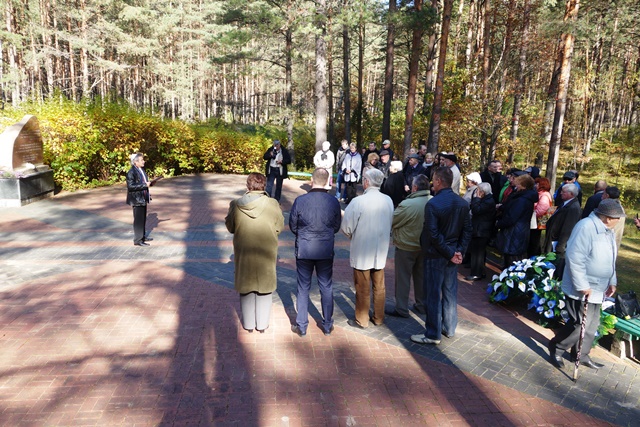
Misha (Meyshke) Shapiro (at left), head of a region’s tiny remnant Jewish community, chairs the annual commemoration in the forest at a mass grave where 8,000 Jews were killed in two days in October of 1941.
The following review of Laima Vince’s Journeys through the Backwaters of the Heart originally appeared in Aspen Review (Dec. 2013). The review is now republished here by permission of Peter Jukes, whose latest book is The Fall of the House of Murdoch.
Ms. Vince’s Journeys was also reviewed in Defending History by Geoff Vasil.
While filming a re-enactment of a battle between Lithuanian nationalists and their Soviet- backed NKVD persecutors, Jonas Kadzionis (a survivor of the “Forest Brothers” partisans) warned the author Laima Vince: “Don’t get lost in the forest, and don’t lose your conscience.”
Unfortunately, in her book Journeys through the Backwaters of the Heart Vince has managed to do both.
O P I N I O N
My 2012 documentary film Rewriting History tracked the emergence of “Double Genocide” and the rewriting of the history of the Holocaust in Lithuania.
The film warned that what was occurring in Lithuania was a harbinger of something that could become more widespread and ultimately mainstream in Europe, particularly in Eastern Europe. Unfortunately recent events in Hungary bear this out.
(Reposted from today’s Jerusalem Post)
Three events took place this weekend which reflect the ambiguities of contemporary Jewish life in the Baltics and particularly in Lithuania, the largest of the three new democracies. In reverse order, on Sunday, ultra-nationalist groups staged an Independence Day march, which included anti-Semitic themes, in Kaunas (Kovno), Lithuania’s interwar capital and the country’s second largest city.Continue reading
Dr. Efraim Zuroff, Holocaust historian, Nazi-hunter, and director of the Simon Wiesenthal Center’s Israel office, has posted the following comment on the website of Tablet magazine, as one of the comments to a new book review. The comment also appears separately on Facebook.
Jonas Öhman is a Swede who has been coming to Lithuania and living here on and off from almost the beginning of modern independence in the 1990-1991 period. During that time he has produced a number of films, only one of which appears to his credit on the internet film database imdb.com, but all of which deal more or less with a mythologized version of the history of Lithuanian anti-Soviet partisans.
Zabludoff’s Petition Nears the 3,000 Mark