[last update]
◊
see also: BOOKS SECTION
[last update]
see also: BOOKS SECTION
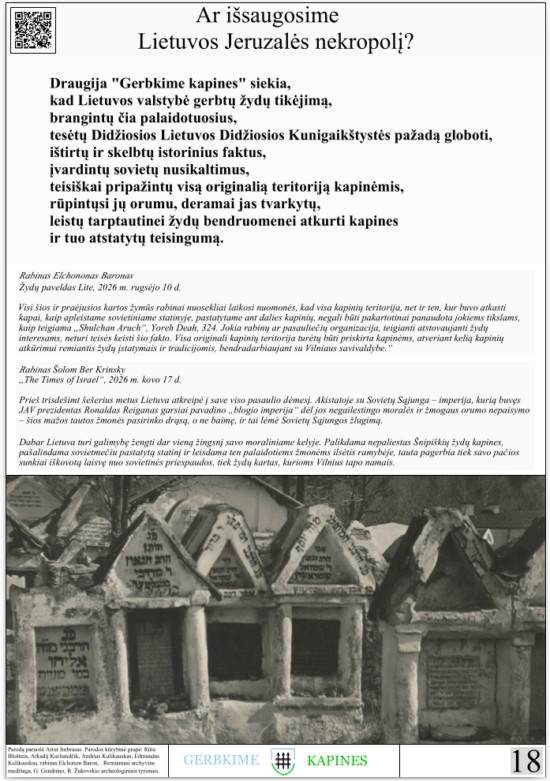
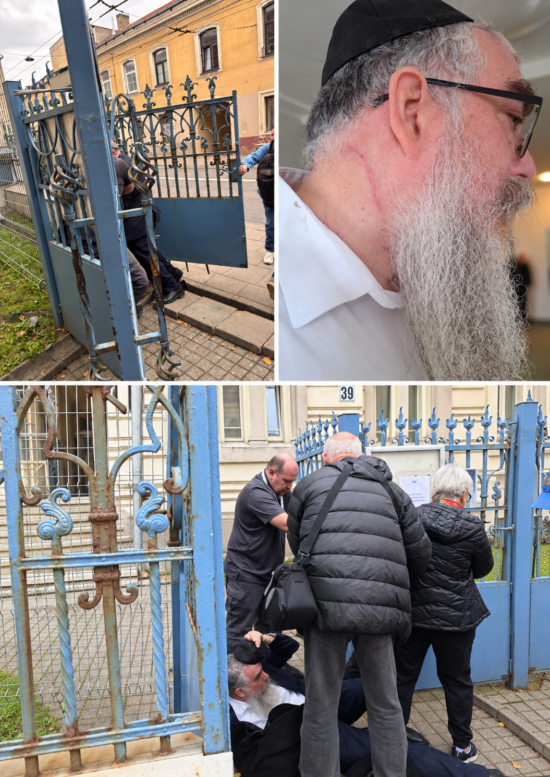
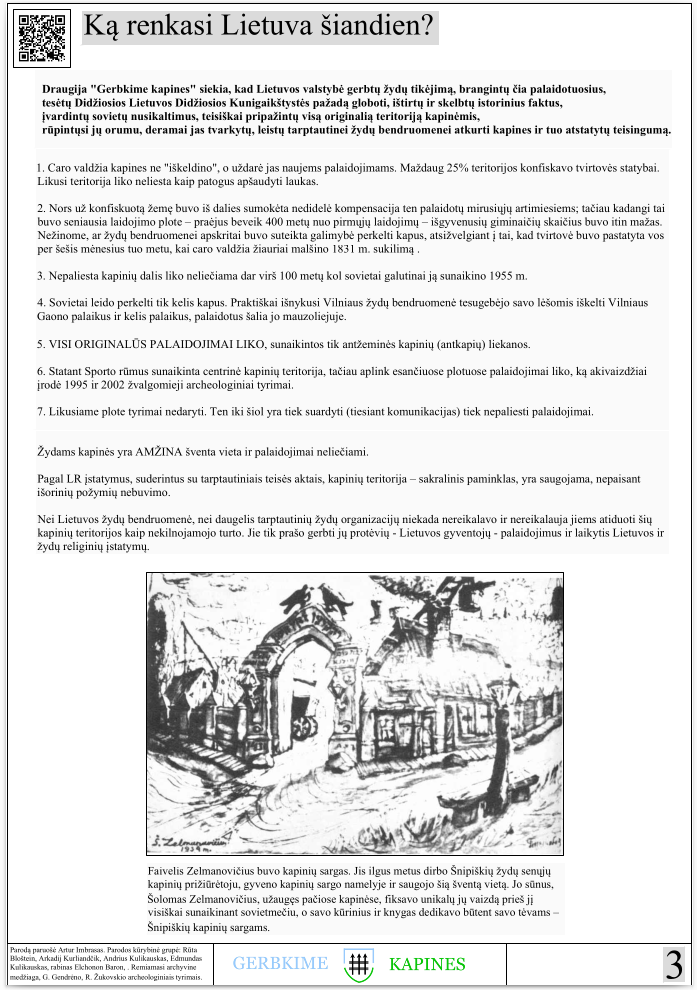
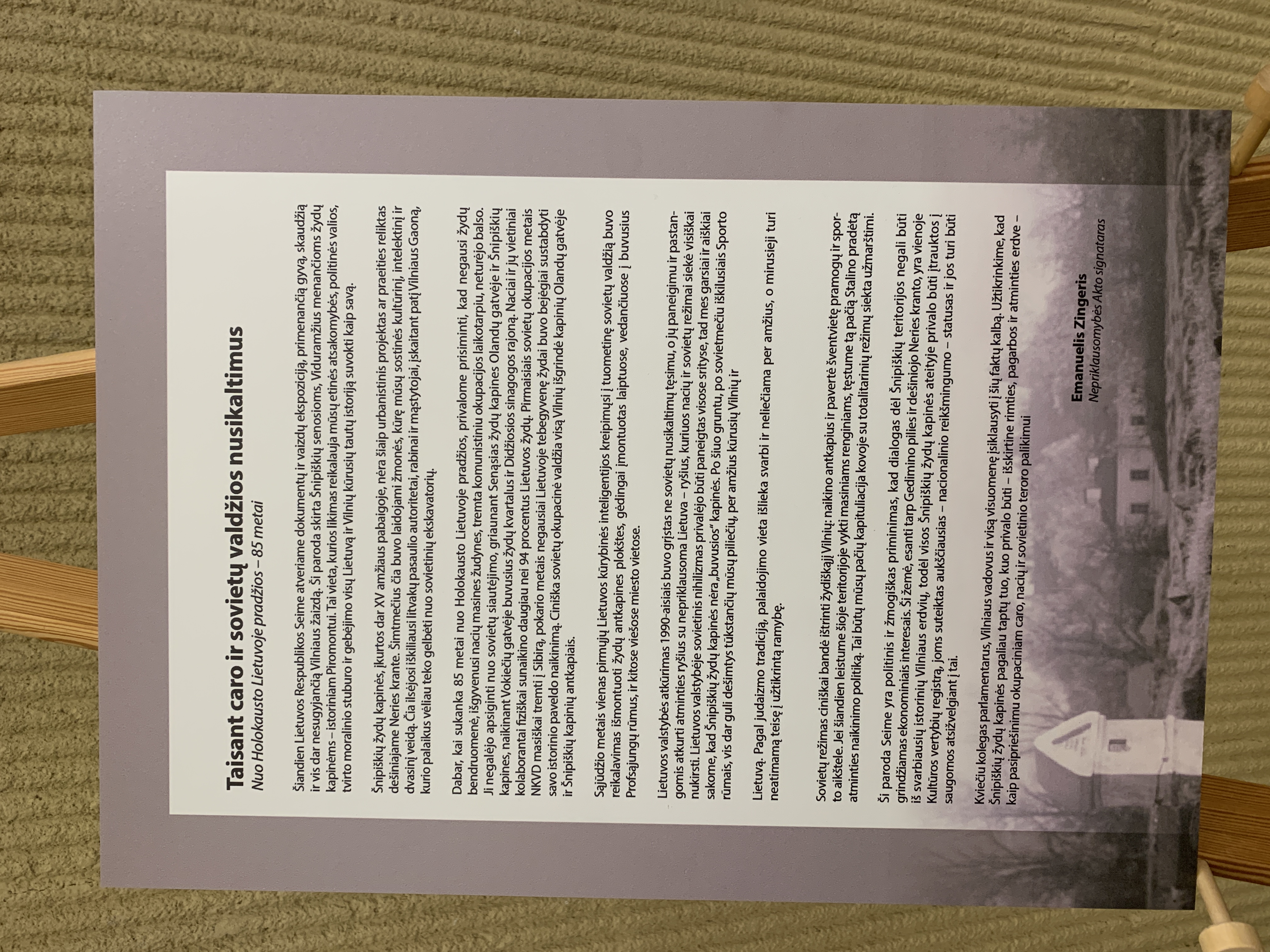
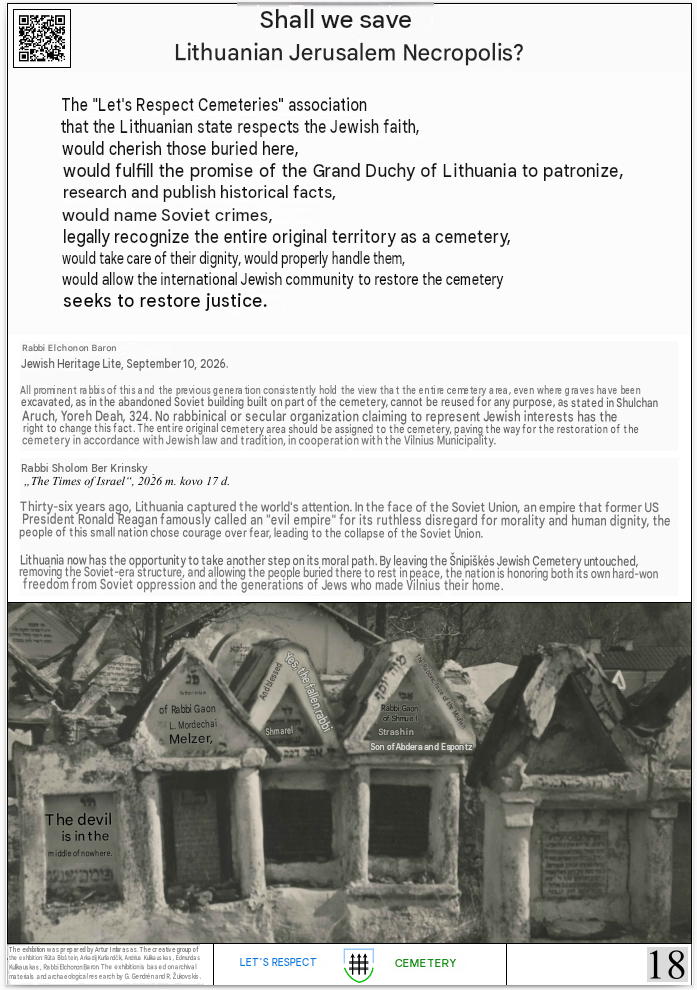
For many years, I have followed with deep concern the situation of the Old Vilna Jewish Cemetery at Piramont (Shnípishok, today’s Šnipiškės), located beneath all around the ruin of the Soviet-era Sports Palace. The site, historically known as the major Jewish cemetery in the lands of the Grad Duchy of Lithuania, remains a place of great religious and cultural significance for the Jewish people and for the history of Vilnius itself. Last summer’s announcement confirming intentions to turn it into a national conference center is alarming to good-willed Jews and non-Jews alike. The feelings were reinforced by last week’s event promoting the desecration, an event for some reason held at Lithuania’s National Academy of Sciences.
[last update]
UPDATES

Top: The “convention center in the Jewish cemetery” project slated for approval by the Lithuanian Academy of Sciences on Jan. 14th includes an annex (right of image) built right on top of Jewish graves going back half a millennium. Bottom: Alternative narrative of this choice of venue for a new national convention center.
◊

Introduction (in Yiddish, Lithuanian, and English) to the exhibit honoring Yivo’s centennial at Vilnius’s Jewish Cultural and Information Center in the heart of the city’s Old Town
It is heartwarming to see the widespread celebration of Yivo’s centenary this year, which is ipso facto a celebration of sophisticated Yiddish language culture in all its many branches. May the year’s events lead to ever more inspiring projects, particularly those that in the spirit of the Vilna Yivo will be carried out in Yiddish, strengthening living Yiddish as a vibrant means of communication, including the higher registers of scholarship and literature, for the generations to come, in accordance with Yivo’s raison d’etre. Although a researcher and teacher with a lifelong affiliation with Yivo and all that it means, I fully, to be honest, expected — as a critic of the present Yivo leadership’s participation in Holocaust obfuscation projects by a certain powerful establishment in Lithuania — to be excluded (not informed, not invited to submit a paper topic) by the recent Yivo conference in Vilnius and its eminent local partners.
◊
◊
◊
On July 1944, Convoy 77 left the internment camp of Drancy in France, three weeks before the liberation of Paris. The destination was Auschwitz-Birkenau. Eight Litvaks living in France were deported, of whom only one survived the war. The association of the deportees of Convoy 77 would receive the sponsorship of the French Presidency which commissioned schools in France and abroad to research and reconstruct their lives in France and their last days. The project was to “put adolescents in charge not of a sepulchral memory but of the reconstitution of life paths more than death paths.”
The project was initiated by a class at the French Lyceum in Vilnius before the Covid-19 epidemic, under the direction of Professor Yvan Leclère, author of a book, Soviet Hegemony. These enthusiastic students began a search on the internet spanning several continents, lasting several years, to piece together why and how these eight Lithuanian Jews had gone to France, how they had lived there and how they came to become ensnared by the Nazis, and finally, sent to their death in Auschwitz. This book can be read as a journal — at times a thriller — that details, sometimes on a daily basis, what progress had been reached in discovering the whereabouts of the eight Lithuanian Jews and also of members of their families who had escaped capture by the Nazis or had been living abroad — and out of danger — at the time these eight were caught.
◊

“View from Vilnius’s Jewish restaurant”
In his book Crisis, War and the Holocaust in Lithuania, which I recently reviewed on these pages, historian Saulius Sužiedėlis virulently attacked those who in the past had opposed the Prague Declaration of 2008. When I read the list of signatories to the Prague Declaration signed in 2008, it makes me think of prisoners or detainees becoming free after having spent 45 years between four closed walls.
Getting free in the outside world and knowing next to nothing that has happened in the world at large during their detention. Most of these signatories, people of esteem, some of them heroes in their fight against Communist yoke, have suffered greatly and they yearn for recognition as victims of totalitarian crimes. But the only tangible contemporary phenomenon with some kind of kindred inhuman similitude they want to equate it with is — the Holocaust. So, oblivious to the manifold scourges the twentieth century has known worldwide, they signed on to the conclusion that “both the Nazi and Communist totalitarian regimes should be considered to be the main disasters, which blighted the 20th century” and “recognition of Communism as an integral and common part of Europe’s common history.” The declaration contains the word “same” five times, in support of the declaration’s underlying thesis that Nazi and Soviet crimes are absolutely — the same.
Is it possible to be so self-centered on one’s suffering as to become blind to history?
◊
VILNIUS—The following is a transcript (in English translation) of an excerpt from the October 15, 2025 interview with Lithuania’s Minister of Foreign Affairs Kęstutis Budrys (Social Democratic Party) on one of the most popular Lithuanian news sites, 15min, that appeared under the title “Kęstutis Budrys’ Interview with 15min: on Libel against Tsikhanouskaya and the Stain of Antisemitism.”
The incident under discussion this time was yet another antisemitic Facebook post by Remigijus Žemaitaitis, leader of the populist Nemuno Aušra (‘Nemunas’ Dawn’) party, currently one of the three parties in the ruling coalition, together with the Social Democrats (LSDP) and the Union of Peasants and Greens (LVŽS). It is the first time since independence and the rise of Lithuanian democracy in 1990/1991 that an overtly antisemitic party has been accepted into the governing coalition. See Defending History’s monitoring of aspects of the affair. In the most recent outrage, the party leader attacks a major beloved Lithuanian intellectual (a former culture minister and current director of the Lithuanian Museum of Art) by fabricating for him a supposed Jewish heritage.
But Minister of Foreign Affairs Budrys goes far beyond dealing with the issue in isolation.

Dear Readers
Lithuania’s Prime Minister has just announced full reversion to the convention center project in the heart of the Old Vilna Jewish Cemetery that would prove so damaging and tragic for Lithuania’s standing in the world. The many thousands of Vilna citizens buried there have no local descendants to defend their graves because of the Holocaust. Moreover, the unique hand of East European antisemitism is in play (and an antisemitic party lamentably forms part of the PM’s coalition). The simple tests: (a) all other hated Soviet monstrosities are (rightfully!) dismantled; and (b) this would never happen to a five hundred year old city center cemetery of the ethnic/religious majority in the country. Both EU and US congressional law clearly designate the sacrosanct rights of minority cemeteries internationally.
The professor. Official announcement on website of the Seimas. Article citing former foreign minister. Article explaining that a new Seimas law will mandate spending on far-right history revisionism to smear the historic narrative (the Western narrative, the Holocaust history narrative) as Kremlin-inspired (!) while glorifying the killers of thousands of innocent Jewish neighbors. Far from helping the name of today’s free and democratic Lithuania, this Seimas proposal brings self-inflicted damage of the worst sort — glorifying the perpetrators of the early days and weeks of the Lithuanian Holocaust.
___
OUR TAKE
◊
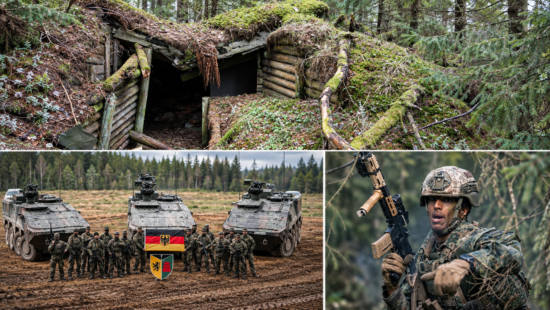
VILNIUS—There have been two new developments in the saga of Germany’s Forty-Fifth Armoured Brigade, to be established in the forests adjacent to the remains of Europe’s last Jewish partisan fort, where around one hundred escapes from the Vilna Ghetto lived and fought the Nazis and their local collaborators during the Holocaust. See report.
The 20 June updates: