


Tag Archives: Holocaust in Lithuania
Ponár (Paneriai) Memorial: No Rabbi, No Cantor, No Kaddish
Posted in Christian-Jewish Issues, Commemorations for Destroyed Communities, Events, Identity Theft of Litvak Heritage, Lithuania, Litvak Affairs, News & Views, Opinion, Politics of Memory, Ponár (Ponary, Paneriai)
Tagged Amir Maimon, Fania Yocheles Brantsovsky, Holocaust in Lithuania, Israeli Embassy in Vilnius, Mickey Kantor, Paneriai, Ponar, Rachel Margolis, Vilna Ghetto
Comments Off on Ponár (Paneriai) Memorial: No Rabbi, No Cantor, No Kaddish
New Jewish Monument in Rokiškis (Rákeshik), Lithuania, Commemorates 3 Synagogues
E V E N T S / O P I N I O N
by Dovid Katz
◊
For many years, international visitors to Rokiškis (in Yiddish: Rákishok, or less formally: Rákeshik), in northeastern Lithuania, have remarked that the town’s central area seemed to preserve little (or no) trace or commemoration of its erstwhile Jewish population, though a large monument now graces the entrance to the old Jewish cemetery outside town. Before the Holocaust, this town was home to around 3,500 Jews (some 40% of the total population, and the overwhelming majority in its central area). Luckily, a short film of pre-Holocaust Jewish Rákishok survives (from 1937), and is available on Youtube. Thanks to Polish film maker Tomek Wisniewski for circulating the link in recent days.
Posted in Christian-Jewish Issues, Commemorations for Destroyed Communities, Dovid Katz, Events, Exotic Jewish Tourism, Lithuania, Litvak Affairs, News & Views, Opinion, Rákishok (Rokiškis), Swastikas in Lithuania, Symbology
Tagged Antanas Vagonis, Aurimas Širvys, Berl Kagan, Dovid Katz, Holocaust in Lithuania, Jewish Lithuanian towns, Jewish Rokiskis, Julius Norwilla, Lithuanian-Jewish relations, Litvak issues, Litvak SIG, Meilach Balczuk-Felin, Philip Shapiro / Jewish Gen / Litvak, Rakeshik, Rakishok, Rokiskis + Jews, Rokiškis Regional Museum
Comments Off on New Jewish Monument in Rokiškis (Rákeshik), Lithuania, Commemorates 3 Synagogues
Public Shrines to a Holocaust Collaborator and a “Secret” Petition: A Summer’s Strange Media Circus
O P I N I O N / C O L L A B O R A T O R S G L O R I F I E D
by Evaldas Balčiūnas
◊
In the midst of this past summer’s heatwave here in Lithuania, Delfi.lt, one of the most popular news portals in the land, exploded with discussions on commemorations and memorials for Nazi collaborators in our country. Rimvydas Valatka, a columnist for the portal and signatory of the Declaration of Independence, started it all with his article of 26 July. The “current events background” was the recent removal of the controversial Soviet-era statues of soldiers on Vilnius’s Green Bridge. Valatka, a veteran of Lithuanian journalism with the rarefied street-cred of a Declaration of Independence signatory, appealed for removal of the memorial plaque for Nazi collaborator Jonas Noreika (“Generolas Vėtra”) from a central Vilnius library building, and wrote about a petition for its removal signed by a group of intellectuals and public figures, and addressed to the mayor of Vilnius as well as to the director of the relevant library (Library of the Lithuanian Academy of Sciences), where the plaque hangs prominently in the heart of Lithuania’s capital.
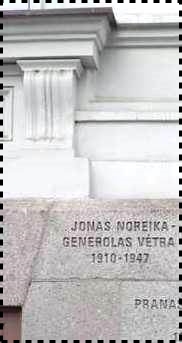 The stone honoring Holocaust collaborator Jonas Noreika tops the lot on the facade of the Genocide Museum on Gedimino Boulevard in the Lithuanian capital, a stone’s throw from the nation’s parliament. When are we going to stop glorifying those who helped annihilate Lithuanian Jewry during the Holocaust? When is this going to come down?
Posted in Debates on the Postwar "Forest Brothers", Dr. Arūnas Bubnys and State Holocaust Revisionism in Lithuania, Evaldas Balčiūnas, History, Human Rights, Lithuania, Litvak Affairs, Media Watch, News & Views, Opinion, Politics of Memory, State Glorification of Holocaust Collaborator J. Noreika, Vilnius's Genocide Center and the Genocide Museum it Manages
Tagged Evaldas Balciunas, Holocaust collaborators Glorified, Holocaust in Lithuania, Jonas Noreika (Generolas Vetra)
Comments Off on Public Shrines to a Holocaust Collaborator and a “Secret” Petition: A Summer’s Strange Media Circus
Dovid Katz: Spring 2016 North American Lectures
SCHEDULE:
Toronto (20-22 March 2016); Fairfield, Conn. (30 March – 2 April); Limmud / Parsippany, New Jersey (1 April); Stamford, Conn. (2-3 April); New York City (4-12 April); Teaneck, NJ (10 April); UCLA / Los Angeles (17-20 April); Yale / New Haven (27 April)
SEE ALSO: LISTING OF AVAILABLE TOPICS; CV; BOOKS; WEBSITE
◊
TORONTO (20—22 MARCH 2016)
TORONTO EVENTS ARE HOSTED BY
UJA FEDERATION’S COMMITTEE FOR YIDDISH, THE TORONTO WORKMEN’S CIRCLE
AND
THE ANNE TANENBAUM CENTRE FOR JEWISH STUDIES AT THE UNIVERSITY OF TORONTO
———
Sunday, 20 March 2016, 10:30 AM — 1:30 PM:
“Let’s Read Sholem Aleichem (on his 100th yórtsayt)”
At Toronto Workmen’s Circle, 471 Lawrence Ave West. RSVP to reserve space (25 participant limit): Ed Segalowitz: +1 416-631-5702 | esegalowitz{A}ujafed.org

Sunday, 20 March 2016, at 2 PM:
“Yiddish Literature as a Force for (Attempted) iberkérenishn
THE SIMCHA SIMCHOVITCH ANNUAL LECTURE
[delivered in Yiddish]
At Toronto Workmen’s Circle, 471 Lawrence Ave West
ADDITIONAL EVENT UNDER SEPARATE AUSPICES (UJA FEDERATION COMMITTEE FOR YIDDISH):
“Holocaust Revisionism, Antisemitism and Geopolitics in Eastern Europe”
Sunday 20 March 2016 at 7:30 PM at Sherman Campus, 4600 Bathurst St, Toronto. Details here.
Monday, 21 March 2016, at 4 PM
“600 Years of Conflicts About Yiddish”
At the Jackman Humanities Building, University of Toronto, 170 St. George Street, Room 100
Waks Family Fund in Yiddish and Jewish East European History and Culture
Tuesday, 22 March 2016, at 1 PM
York University Graduate Studies Seminar:
“Litvaks and Galitsyáner”
At the Centre for Jewish Studies, 7th floor seminar room, Kaneff Tower at York
◊
FAIRFIELD, CONN. (30—31 MARCH 2016)
◊
Wednesday, 30 March 2016
Fairfield University (Carl and Dorothy Bennett Center for Judaic Studies)
Fairfield University, Quick Center for the Arts, Kelley Theater, at 7:30 PM
“Exotic Exploits and Contentious Chapters in Modern Yiddish Literature”
Inaugural Diane Feigenson Lecture in Jewish Literature
Thursday, 31 March 2016
Fairfield University (Carl and Dorothy Bennett Center for Judaic Studies):
“The East European ‘Double Genocide’ Movement: Implications for Memory of the Holocaust”
Lunch-time Power Point Presentation and Discussion
Saturday, 2 April 2016
Congregation Ahavath Achim, Fairfield, Connecticut:
“The New (and Cunning) Holocaust Denial Coming Out of Eastern Europe”
After-Kiddush Sabbath Talk in the Synagogue Hall
◊
PARSIPPANY, NEW JERSEY (1 APRIL 2016)
◊
Friday, 1 April 2016
LIMMUD FSU at the Sheraton Hotel, 199 Smith Road, Parsippany, New Jersey:
◊
STAMFORD, CONN. (3 APRIL 2016)
◊
Sunday, 3 April 2016 at 8 PM
Congregation Agudath Sholom (Stamford, Connecticut):
“The Old Hebrew-Yiddish Conflict and its Ongoing Legacies”
In Memory of Louis and Edith Scheinberg
◊
NEW YORK CITY (4—12 APRIL 2016)
◊
Tuesday, 5 April 2016, at 6 PM
Institute for the Study of Global Antisemitism and Policy (ISGAP) at 165 East 56th Street, NYC, at 6 PM:
“The Special Case of Baltic-Ukrainian Holocaust Inversion”
Thursday, 7 April 2016, at 12:30 lunchtime
Baruch College, City University of New York (55 Lexington Avenue [Room 11-150], between 24th and 25th Street):
“Yiddish, The ‘Jew-Business’, Holocaust Politics, ‘Useful Jewish Idiots’: The Eerie Terrain of Jewish Lithuania”
SCHEDULE HERE. FOR FURTHER INFORMATION PLEASE CONTACT RABBI MOSES BIRNBAUM (ramab18{A}yahoo.com)
“Six Centuries of Conflicts About Yiddish”
at Congregation Rinat Yisrael, 389 West Englewood Ave, Teaneck, NJ 07666
Monday 11 April 2016 at 6:30 PM
42nd Street Mid Manhattan Library in New York City
and the Dorot Jewish Division, 455 Fifth Avenue NYC
AS PDF
◊
LOS ANGELES (17—20 APRIL 2016)
◊
Sunday, 17 April 2016 at 4 PM
UCLA Royce Hall, Room 314:
“Yiddish and Power (1016 to 2016): The Social, Intellectual and Political Empowering of the Masses by One of the World’s Most Exotic Languages”
Monday, 18 April 2016 at 4 PM
UCLA Royce Hall, Room 306:
“Fate of Yiddish in the Lands of the Soviet Empire”
Tuesday, 19 April 2016 (time to be announced)
At the California Yiddish Institute:
“Intensive Mini-Course in Intermediate Yiddish”
Wednesday, 20 April 2016 at 4 PM
UCLA Royce Hall, Room 334C:
“Methodologies for Cultural Reconstruction of Minorities in Eastern Europe: The Case of Yiddish”
◊
The above four events in Los Angeles are sponsored by the UCLA Center for European and Russian Studies, and cosponsored by the UCLA Department of Germanic Languages, the UCLA Alan D. Leve Center for Jewish Studies, and the California Institute for Yiddish Culture and Language
◊
YALE / NEW HAVEN (27 APRIL 2016)
◊
Wednesday, 27 April 2016 at Midday
Zucker Room at the Slifka Center:
“What is Classic Secular Yiddishism? Its Relevance Today”
[delivered in Yiddish]
THE SID RESNICK MEMORIAL LECTURE (part I)
Wednesday, 27 April 2016 at 4:30 PM
Zucker Room at the Slifka Center:
“The Dialects of Yiddish: More than Just Dialects”
[delivered in English]
THE SID RESNICK MEMORIAL LECTURE (part II)
BOTH EVENTS HOSTED BY THE YALE UNIVERSITY JUDAIC STUDIES PROGRAM
AND THE
YALE-NEW HAVEN YIDDISH READING CIRCLE
FOR FURTHER INFORMATION PLEASE CONTACT PROFESSOR VICTOR BERS (victor.bers{A}yale.edu)
◊
◊
EVERYONE WELCOME AT ALL EVENTS
◊
Tagged Dovid Katz, Dovid Katz + Holocaust Studies, Holocaust in Lithuania, Yiddish dialectology, Yiddish linguistics
Comments Off on Dovid Katz: Spring 2016 North American Lectures
What It Is to Defend Your Own History
O P I N I O N / C O L L A B O R A T O R S G L O R I F I E D
by Kristina Apanavičiūtė Sulikienė
◊
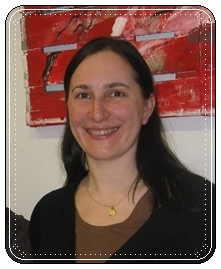
Kristina Apanavičiūtė Sulikienė
One can hear various stories about history here in Lithuania. The main narrative is about Bad Communists and Good Nazis. Yes, it is true. Especially very recently, after the civil (or whatever kind of) war broke out in Ukraine, the Nazis and those who justify and glorify them, both in Ukraine and Lithuania, have found new strength. Under the banner of “Ukraine Fights For All Of Us,” some have decided to bring back such “heroes” as the killer Antanas Baltūsis-Žvejas.
For my part, I would like to defend our Tauras district (in the Kaunas region) from the legacy of this genre of “hero.” For his history was not only one of guerilla warfare against Soviet forces but about what he was doing in 1941 when the wholesale slaughter of our Jewish population was underway. This has a lot to do with Lithuania, who we are as proud Lithuanians whose history, like every other people on this earth, has its high and its low moments.
Posted in Collaborators Glorified, History, Human Rights, Kristina Apanavičiūtė Sulikienė, Lithuania, Litvak Affairs, News & Views, Opinion
Tagged Antanas Baltūsis-Žvejas, glorification of Holocaust collaborators, Holocaust in Lithuania, Kaunas + Holocaust, Kristina Apanavičiūtė Sulikienė, street names in Lithuania
Comments Off on What It Is to Defend Your Own History
Wiesenthal Center Praises Vytautas Bruveris’s Call for Investigating Scope of Local Holocaust Participation
TAURAGĖ (TÁVRIK), LITHUANIA—The Simon Wiesenthal Center today praised an op-ed in the popular Lithuanian news portal Lrytas.lt by prominent journalist Vytautas Bruveris calling upon the government to finally undertake a comprehensive investigation of the scope of Lithuanian complicity in Holocaust crimes. In a statement issued here today by its chief Nazi hunter, Dr. Efraim Zuroff, who is currently in Lithuania on a research expedition, the Center expressed its appreciation and support for the content of the article and expressed the hope that the government would indeed implement the ideas raised by Bruveris.
Posted in Bold Citizens Speak Out, Efraim Zuroff, History, Lithuania, Litvak Affairs, Media Watch, News & Views, Opinion, Politics of Memory
Tagged Efraim Zuroff, Holocaust in Lithuania, Simon Wiesenthal Center, Taurage (Tavrik)
Comments Off on Wiesenthal Center Praises Vytautas Bruveris’s Call for Investigating Scope of Local Holocaust Participation
Protocol of 26 August 2009 Meeting in Vilnius on the Old Vilna Jewish Cemetery at Piramónt (in today’s Šnipiškės)
DOCUMENTS | VILNA JEWISH CEMETERY AT PIRAMÓNT
◊
Related: The 2015 saga. Paper Trail. DH section. Other descriptions of the same 2009 agreement. The U.S. ambassador’s dispatch mentioning the rabbis’ payment for supervising “beautification” of the grounds. Embassy’s dispatch on the secrecy of the document. What were they actually paid? What were the same rabbis promised in 2015? In the past, the slightest digging in the area revealed human remains throughout.
The Question: Does the agreement (which a US State Department cable, published by Wikipedia, makes clear was supposed to remain secret) really permit a twenty-five million dollar convention center in the heart of the old cemetery (and millions in subsequent development) where people will cheer, revel, drink in bars, use toilets and parking areas on top of and surrounded by tens of thousands of Jewish graves paid for by grieving Vilnius families over a period of more than five hundred years? Comment in 2015 by (inter alia) the chief rabbi of Lithuania, resident rabbinical Vilna Gaon scholar in Lithuania, a Christian leader, a Vilnius Holocaust survivor, Gaon of Vilna’s descendants in Israel at Tel Aviv’s Vilna Gaon Synagogue, and the Central Rabbinical Council of the United States and Canada.
Posted in Appeals to the European Commission on Piramónt, CPJCE (London), Defense of Old Jewish Cemeteries and Mass Grave Sites, Documents, Lithuania, Litvak Affairs, News & Views, Old Vilna Jewish Cemetery at Piramónt (in Šnipiškės / Shnípishok)
Tagged Committee for the Preservation of Jewish Cemeteries in Europe, CPJCE (Jewish cemeteries), Holocaust in Lithuania, Jewish cemetery at Piramont, Jewish cemetery in Snipiskes, Lithuanian-Jewish relations, Rabbi Gluck (CPJCE), Vilnius Jewish cemetery
Comments Off on Protocol of 26 August 2009 Meeting in Vilnius on the Old Vilna Jewish Cemetery at Piramónt (in today’s Šnipiškės)
What’s The Story With the Mass Grave Uncovered near Šiauliai (Shavl)?
O P I N I O N
by Evaldas Balčiūnas
◊
Last week, there was a flurry of reports in the Lithuanian media about human skeletons and personal effects turning up during routine roadworks at Pročiūnai in the region of Šiauliai (in Jewish history: Shavl). Reports and gory pictures appeared among other places in 15min.lt; Etaplius.lt; Skrastas.lt and Snaujienos.lt. I myself, a concerned resident of Šiauliai, commented on the subject on my own blog (here and here). Various articles published contained theorizations about the buried here being victims of Soviet crimes or even equally of Nazi and Soviet crimes.
Monday 13 July. It is probably correct to say that the international scandal was set alight when the “routine” BNS (Baltic News Service) report appeared in English in the Lithuania Tribune (amalgamated with English Delfi). The archaeologist placed in charge by the local government of the investigation of the human remains, Audronė Šapaitė, is quoted in the article as presenting the following certain conclusions. Excerpts follow:
Posted in Defense of Old Jewish Cemeteries and Mass Grave Sites, Evaldas Balčiūnas, Human Rights, Lithuania, Litvak Affairs, News & Views, Opinion
Tagged Chief Rabbi Chaim Burshtein (Lithuania), CPJCE (Committee for Preservation of Jewish Cemeteries in Europe), Evaldas Balciunas, Holocaust in Lithuania, Holocaust mass grave Siauliai (Shavl), Jewish cemeteries in Lithuania
Comments Off on What’s The Story With the Mass Grave Uncovered near Šiauliai (Shavl)?
Asra Kadisha Faults Lithuanian Authorities for Forming “Heritage Commission” to Preserve Cemeteries While “Doing the Opposite on the Ground”
NEW YORK—Rabbi Lazar Stern, New York area chairman of the international religious Asra Kadisha organization that calls for preservation of threatened Jewish cemeteries, issued a statement today concerning the latest prima facie instance of desecration of the final resting place of dead Jewish citizens of Lithuania. This time the fracas concerns a Holocaust-era mass grave site in Šiauliai (Shavl), in northwestern Lithuania. Published in a number of media outlets, including Baltic News Service (BNS), News.lt, Gnome.es, the Asra Kadisha statement calls for an immediate halt to the ongoing excavations. These works rapidly resulted in lurid pictures of human remains and personal possessions (including shoes) with which these people were murdered, being splashed over a number of Lithuanian online publications, including 15min.lt; Etaplius.lt; Skrastas.lt; Snaujienos.lt. Asra Kadisha is Aramaic for “Holy Place” and refers here to the sanctity of human burial grounds.
UPDATE OF 16 JULY:
Protests lead to Rapid U-Turn by Authorities
Posted in Christian-Jewish Issues, Defense of Old Jewish Cemeteries and Mass Grave Sites, Lithuania, Litvak Affairs, News & Views, Old Vilna Jewish Cemetery at Piramónt (in Šnipiškės / Shnípishok), Rabbi Chaim Burshtein
Tagged Asra Kadisha, Holocaust in Lithuania, Jewish cemetery in Vilnius, Jewish cemetery Snipiskes / Snipisek / Shnipishok / Piramont, mass grave in Siauliai (Shavl), Rabbi Chaim Burshtein
Comments Off on Asra Kadisha Faults Lithuanian Authorities for Forming “Heritage Commission” to Preserve Cemeteries While “Doing the Opposite on the Ground”
Lithuania’s Chief Rabbi Pleads for Preservation of Holocaust-Era Mass Grave in Šiauliai
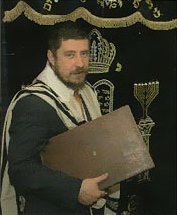
Rabbi Chaim Burshtein
VILNIUS—Rabbi Chaim Burshtein, chief rabbi of Lithuania (and of Vilnius) today issued a heartfelt appeal to both national government authorities, and to the municipal leadership of Šiauliai (known in Jewish history as Shavl), to call an immediate halt to the excavation of hundreds of victims’ remains from a Holocaust-era mass grave site uncovered during a highway construction project.
The discovery was widely reported in the Lithuanian and regional media, including the English-language Lithuania Tribune (English Delfi.lt). Various Lithuanian media outlets have reveled in publishing photos of skulls, bones and other remains from the mass grave being dismantled, sometimes including shoes and clothing (among others: 15min.lt; Etaplius.lt; Skrastas.lt; Snaujienos.lt).
The BNS (Baltic News Service) report quotes the official responsible archaeologist, Audronė Šapaitė on the decision reached (apparently without consultation with Jewish religious authorities): “It’s been decided to excavate the remains, do anthropological tests and then rebury them and also mark this place.”
UPDATE OF 16 JULY:
Protest leads to Rapid U-Turn by Authorities
Posted in Chaim Burshtein, Defense of Old Jewish Cemeteries and Mass Grave Sites, Human Rights, Lithuania, Litvak Affairs, News & Views, Politics of Memory, Rabbi Chaim Burshtein
Tagged Holocaust in Lithuania, Holocaust in Siauliai (Shavl), Mass graves in Lithuania, Rabbi Chaim Burshtein
Comments Off on Lithuania’s Chief Rabbi Pleads for Preservation of Holocaust-Era Mass Grave in Šiauliai
Dancing on Jewish Graves in Vilna
O P I N I O N
by Pinchos Fridberg
Editor’s note: Reprint from The Times of Israel, where this article, with several photographs, appeared on 25 June 2016.
◊
I am a Holocaust survivor. I was born here in Vilnius (Yiddish: Vílne), today’s capital of Lithuania, known forever as the “Jerusalem of Lithuania” for its vibrant Jewish culture, religious and secular, for hundreds of years. Today our post-Holocaust Jewish community is a tiny remnant, just a few thousand people, but we are vibrant, and, as always, a community of many opinions. Once again, a question has arisen that calls for robust discourse.
Posted in Appeals to the European Commission on Piramónt, Defense of Old Jewish Cemeteries and Mass Grave Sites, Human Rights, Lithuania, Litvak Affairs, News & Views, Old Vilna Jewish Cemetery at Piramónt (in Šnipiškės / Shnípishok), Opinion, Pinchos Fridberg, Yiddish Affairs
Tagged Holocaust in Lithuania, Jeish cemeteries in Eastern Europe, Pinchos Fridberg, Vilnius Jewish cemetery at Piramont (Snipiskes)
Comments Off on Dancing on Jewish Graves in Vilna
The June 2015 Memorial for the Lietūkis Garage Massacre in Kaunas, Lithuania
O P I N I O N / E Y E W I T N E S S A C C O U N T
by Julius Norwilla
◊
To mark the 74th anniversary of one of the iconic events of the Lithuanian Holocaust, the infamous Lietūkis Garage Massacre of 27 June 1941, the Kaunas Jewish Community organized its annual memorial event at the site, last Friday, 26 June 2015. The massacre, carried out by local Lithuanian “patriots” wearing the white armbands of the Lithuanian Activist Front (LAF), butchered dozens of Jewish passers-by at a garage on Kaunas’s Vytautas Avenue, using a variety of execution methods, including clubbing to death with crowbars, and particularly, forcing water from high-pressure hoses into bodily orifices of the victims until they burst. A growing crowd, including women holding up their young children to get the best views, cheered them on.
Posted in Bold Citizens Speak Out, Commemorations for Destroyed Communities, Events, History, Julius Norwilla, Lithuania, Litvak Affairs, News & Views, Opinion, Politics of Memory
Tagged Aleksandras Bosas, Amir Maimon, Embassy of Israel in Lithuania, Holocaust in Lithuania, Julius Norwilla, Lietukis Garage, Lithuanian Activist Front
Comments Off on The June 2015 Memorial for the Lietūkis Garage Massacre in Kaunas, Lithuania
Legacy of Rūta Vanagaitė’s 17 April 2015 Conference at Vilnius City Hall
[updated]
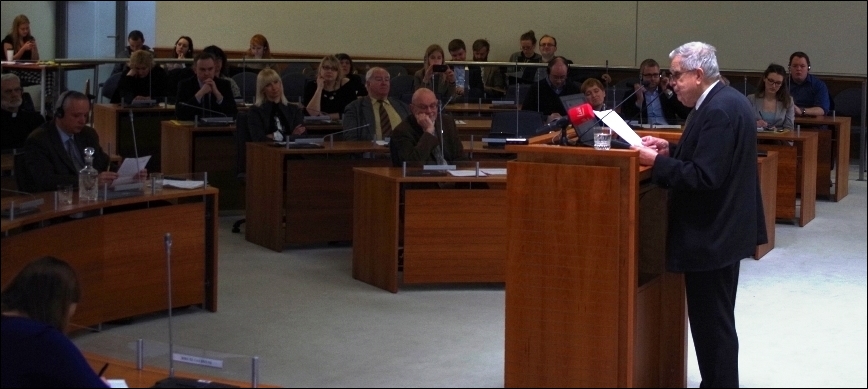
Tomas Venclova addresses Ruta Vanagaite’s conference at Vilnius City Hall on April 17, 2015. Photo: Julius Norwilla.
Posted in Events, History, Lithuania, News & Views, Rūta Vanagaitė, Views of Prof. Sarunas Liekis
Tagged Dovid Katz, Efraim Zuroff, Evaldas Balciunas, Holocaust in Lithuania, Ingrida Vilkiene, Julius Norvila, Julius Norwilla, Pavel Tychtl, Ruta Vanagaite, Sarunas Liekis, Saulius Suziedelis, Tomas Venclova
Comments Off on Legacy of Rūta Vanagaitė’s 17 April 2015 Conference at Vilnius City Hall
SLS’s 2015 Sutzkever Prize: Yiddish Poetry Serving Right-Wing East European Politics?
O P I N I O N
◊
The bizarre saga of the Montreal-based Summer Literary Seminars (SLS) “Jewish Lithuania Sutzkever Prize” continues apace with ever-increasing disrespect toward Abraham Sutzkever and his fellow Jewish partisans who helped liberate Lithuania from the Nazis, and ever more political entanglement with current geopolitical instrumentalization of Yiddish and Jewish causes in Eastern Europe in the context of East-West tensions.
Posted in "Jewish" Events as Cover?, A 21st Century Campaign Against Lithuanian Holocaust Survivors?, Canada, Foreign Ministries: Holocaust Politics Abuse?, Lithuania, Litvak Affairs, News & Views, Opinion, Politics of Memory, Sutzkever Prize in Lithuania, What Do Fake Litvak Games Look Like?, Yiddish Affairs
Tagged Abraham Sutzkever, André Aciman, Holocaust in Lithuania, Jamie Kirchick, Jewish partisans in Lithuania, Lithuanian Jewish partisans, Mikhail Iossel, SLS (Summer Literary Seminars) Lithuania, Sutzkever Prize in Lithuania, US Embassy in Vilnius, US State Department Holocaust policy
Comments Off on SLS’s 2015 Sutzkever Prize: Yiddish Poetry Serving Right-Wing East European Politics?
Lithuanian Translation of Dovid Katz’s 17 April 2015 Vilnius Conference Lecture
O P I N I O N
by Dovid Katz
Note: This text is the Lithuanian translation, provided by the Being a Jew project, of the written text of a lecture from the 17 April 2015 conference on the Holocaust in Lithuania organized by Rūta Vanagaitė. The original English is here.
Posted in "Red-Brown Commission", 70 Years Declaration, Dovid Katz, Dr. Rokhl (Rachel) Margolis (1921-2015), EU, Lithuania, Litvak Affairs, News & Views, Opinion, Politics of Memory
Tagged Dovid Katz, Dovidas Katzas, Dovydas Kacas, Holocaust in Lithuania, Holokaustas Lietuvoje
Comments Off on Lithuanian Translation of Dovid Katz’s 17 April 2015 Vilnius Conference Lecture
A Jewish Hideout Discovered in Butrimonys
E Y E W I T N E S S R E P O R T / O P I N I O N
by Andrius Kulikauskas
◊
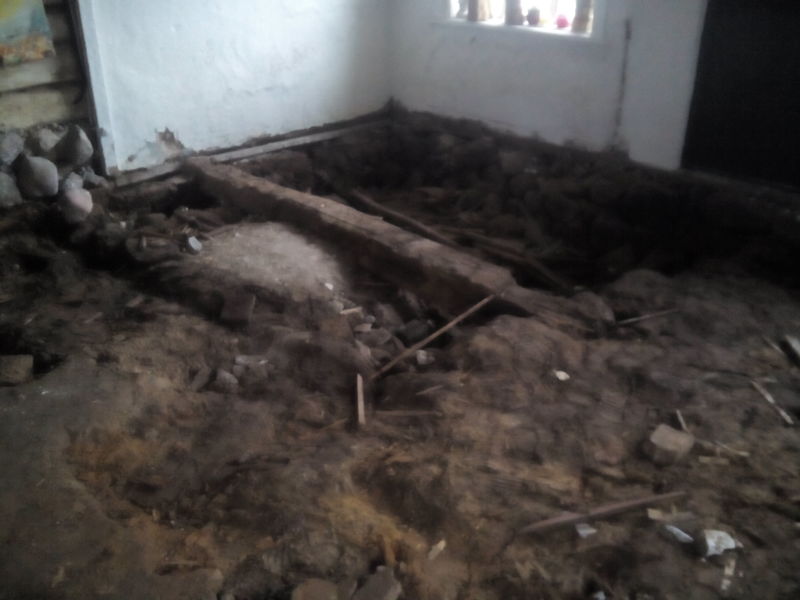
Renovation of the ground floor of an art gallery in the town of Butrimonys, Lithuania has revealed the existence of an unusual cellar that was apparently a Jewish hideout during the Holocaust. Daina Nemeikštienė, the owner of the gallery, “Dainos galerija”, is moving forward with the renovation, which means that what remains of the cellar will be cemented over, at least for now. Could some day this hideout offer an opportunity for respecting, valuing, studying, preserving and highlighting Litvak and Lithuanian heritage? For now, it illustrates the challenges in honoring even the most heroic aspects of the Holocaust.
Posted in Andrius Kulikauskas, Commemorations for Destroyed Communities, Lithuania, Litvak Affairs, News & Views, Opinion
Tagged Andriius Kulikauskas, Butrimants (Lithuania), Butrimonys, Dainos galerija (Butrimonys), Holocaust in Lithuania
Comments Off on A Jewish Hideout Discovered in Butrimonys
Text of Efraim Zuroff’s Prerecorded April 17th Video Address to Vilnius Conference
◊
O P I N I O N
by Efraim Zuroff
The following text is the authorized English transcription of the text of Dr. Efraim Zuroff’s prefilmed video address that formed part of the program at a conference on Holocaust issues, organized by Rūta Vanagaitė, held at Vilnius City Hall on 17 April 2015. The video is here. Conference program. Conference’s final press release. Dr. Zuroff is the Simon Wiesenthal Center’s chief Nazi hunter, the director of its East European Affairs Department and of the website Operation Last Chance.
—————
Basic Challenges of Holocaust Education
G
ood afternoon to everybody. I’m very happy to be given the opportunity to address this conference, even if it has to be by film. Unfortunately I could not be present personally, but because of the importance of the topic and the rare opportunity that this is to discuss these issues in a very serious way, I am addressing you through this film.
Posted in Efraim Zuroff, Lithuania, Litvak Affairs, News & Views, Opinion, Politics of Memory
Tagged Aleksandras Lileikis, Algimantas Dailidė, Efraim Zuroff, Holocaust in Lithuania, Kazys Gimžauskas, Lietukis Garage, Nazi war criminals (Lithuania)
Comments Off on Text of Efraim Zuroff’s Prerecorded April 17th Video Address to Vilnius Conference
Double Genocide in Action? Victims and Perpetrators Interchangeable
O P I N I O N
◊
VILNIUS—Ronaldas Račinskas, executive director of the Lithuanian-government financed “International Commission for the Evaluation of the Crimes of the Nazi and Soviet Occupation Regimes in Lithuania,” widely known for brevity as the “Red-Brown Commission,” has revealed — on camera, to the producers of the documentary film Liza Ruft — his thoughts about the “war crimes investigation” into Fania Brantsovsky. The video clip of his statement was released today on Youtube.
Posted in "Red-Brown Commission", A 21st Century Campaign Against Lithuanian Holocaust Survivors?, Double Games, Double Genocide: The New Form of Holocaust Revisionism & Denial, EU, Holocaust Policies of Mr. Ronaldas Račinskas and the State-Sponsored "International Commission" (ICECNSORL), Lithuania, Litvak Affairs, News & Views, Opinion, Ponár (Ponary, Paneriai)
Tagged Fania Brancovskaja, Fania Brancovskaya, Fania Brantsovsky, Holocaust in Lithuania, International Commission for the Evaluation of the Crimes of the Nazi and Soviet Occupation Regimes in Lithuania, Mickey Cantor, Red-Brown Commission, Ronaldas Racinskas
Comments Off on Double Genocide in Action? Victims and Perpetrators Interchangeable
Tomas Venclova’s Lecture at Vilnius Conference on 17 April 2015
O P I N I O N
by Tomas Venclova
The following text is the authorized English translation of Professor Venclova’s address at a conference on Holocaust issues, organized by Rūta Vanagaitė, held at Vilnius City Hall on 17 April 2015. The original Lithuanian text. Video of Tomas Venclova speaking. Conference program. Conference’s final press release.
Posted in A 21st Century Campaign Against Lithuanian Holocaust Survivors?, Antisemitism & Bias, Christian-Jewish Issues, Collaborators Glorified, Double Genocide: The New Form of Holocaust Revisionism & Denial, Kaunas, Lithuania, Litvak Affairs, Neo-Nazi & Fascist Marches, News & Views, Opinion, Politics of Memory, Tomas Venclova, Vilnius
Tagged Holocaust in Lithuania, Tomas Venclova, Venclova + Holocaust, Venclova + Jewish issues
Comments Off on Tomas Venclova’s Lecture at Vilnius Conference on 17 April 2015