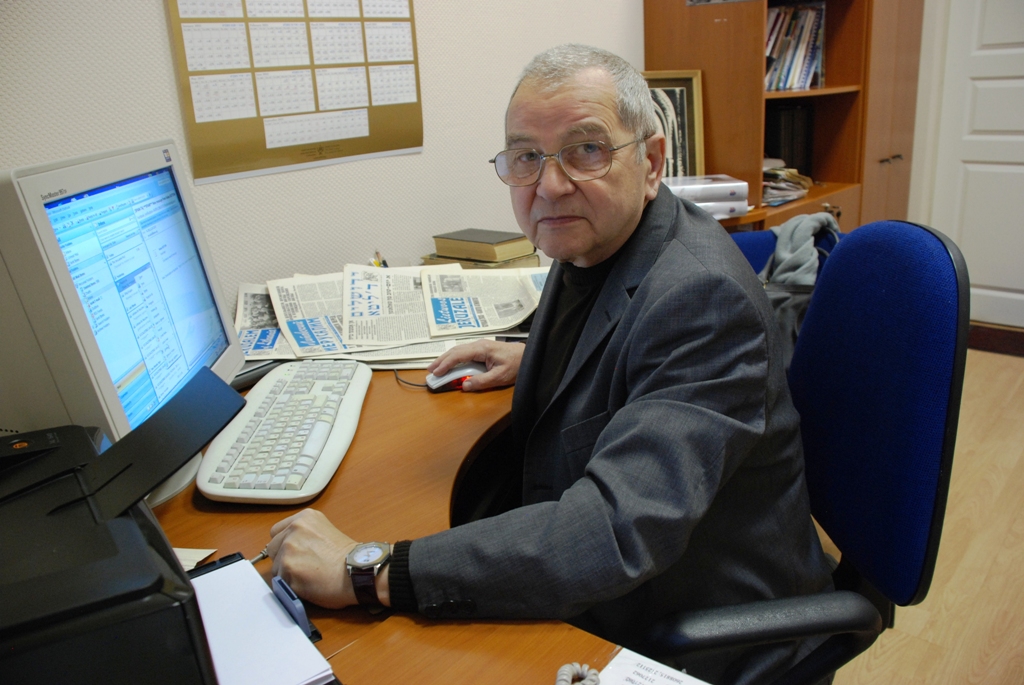
The following, for readers’ reference, is a translation of Professor Pinchos Fridberg’s article that appeared in Russian in Zman.com (on 9 April 2013). It was reprinted in Obzor and Shofar7.
It is gratifying that numerous scholars from different parts of the world, and indeed of differing opinions on the contentious issues that lie at the heart of Defending History, have on occasion found it a useful resource for data and views on various topics, including the Double Genocide movement, the Prague Declaration (2008), the Seventy Years Declaration (2012), the politics of memory, Holocaust Obfuscation, glorification of Holocaust perpetrators (and attempted criminalization of resistance heroes), East European antisemitism, racism, homophobia, and Litvak identity theft (more on contents and quick intro page).
On expeditions and on culture and history tours, we have on a number of occasions come across unusual Jewish gravestones (in Yiddish — matséyves), so far invariably on the territory of western Lithuania (and on occasion, in bordering Latvia) that is the land known in Litvak culture as Zámet (a Jewish person therefrom is a Zámeter, f. Zámeterin or deep Litvak Zámeterke).
In broad terms, it corresponds to historic Samogitia (Lithuanian Žemaitija). However, the specific cultural and linguistic borders relevant to Litvak culture and Yiddish dialectology often make for a unique Litvak geocultural configuration. For a general Yiddish orientation on the (pre-Holocaust) linguistic situation, see e.g. the maps for ‘ear’ and ‘dove’ vs ‘deaf’ in the in-progress Language Atlas of Lithuanian Yiddish.
This opinion piece and eyewitness report by Geoff Vasil relates to the July 10th event in honor of the Red-Brown Commission held at the Vilnius Jewish Public Library. See related reports on the library’s instrumentalization as a PR platform for the Commission and the more or less contemporaneous announcement of the Commission’s resumed activities, in the absence of apologies to Yitzhak Arad, Pinchos Fridberg, and the other accused Holocaust survivors.

Attendees at the July 10, 2013 event to honor the “International Commission for the Evaluation of the Crimes of the Nazi and Soviet Occupational Regimes in Lithuania” were treated to speeches and plentiful Katz-bashing by (from right) Ronaldas Račinskas, Saulius Sužiedėlis and Ilya Lempertas.
Increasing numbers of summer tourists, in the spirit of “dark tourism” (and, in an EU/NATO country, a spirit of incredulity) are seeking out street names, public plaques, university lecture halls and other monuments to both collaborators and actual perpetrators of the Lithuanian Holocaust.
Some find the following sections helpful to locating specific sites:
(1) Anthology of street names and honors for killers and collaborators in Lithuania.
(2) Section on events and memorials for collaborators and perpetrators in various parts of Eastern Europe.

Israel’s President Shimon Peres Welcomed in Lithuania
THE QUESTION: Did he remember in private at least to mention the fate of Litvaks (mostly Israeli citizens), in their late 80s to 90s, being “sent to hell” as “suspected criminals for posterity” on the basis of antisemitic governmental kangaroo pronouncements designed to invert the narrative of the Lithuanian Holocaust? Two of them, Yitzhak Arad and Joseph Melamed, are heroes of Israel’s 1948 War of Independence. Survivors correspond with president’s office.
SAMPLE IMAGES
Background:
Original 2 May 2013 report; Person identified by the media submits 13 May 2013 complaint to the Press Commission [draft English translation], citing Anarchija.lt, Balsas.lt, KaunoŽinios.lt, Lrytas.lt as well as DefendingHistory.com. He does not deny the identification but disputes the characterization of his work as in harmony with neo-Nazism.
23 July update: Zeppelinus greets Baltic Pride with a new hate image.
Dear Mr. Gustas,
Congratulations on your recent appointment as Economy Minister. May your tenure be blessed with success, wisdom and good fortune for all of Lithuania’s citizens.
We address you on the advent of your tenure on a human rights matter rather than an economic question. We feel certain you would agree that there is a demonstrable correlation between the long-term successful economies of the world and free and open democratic societies that reject all forms of state-supported fascism, racism, antisemitism, homophobia and other forms of hate and exclusionism directed at segments of the population.
See also: Andriukaitis’s 2012 reply to the foreign minister; on the floor of parliament; Andriukaitis section

Vytenis Povilas Andrukaitis, health minister of Lithuania. Photo: DefendingHistory.com
Vytenis Andriukaitis is a veteran politician. If you haven’t been following Lithuanian politics since 1990, there’s a good chance you’ve never heard of him, and even if you have, there’s a fair chance you didn’t notice him amid the various cults of personality which have dominated the political scene since about 1990.
The reason for that is fairly simple: Andriukaitis has never cultivated or even tolerated a cult of personality to grow up around him. From the very first days of Lithuanian independence, a freedom movement with which Andriukaitis was intimately involved, he has stubbornly clung to the idea of multiparty parliamentary democracy, largely by his own tenacity reviving the pre-World War II Lithuanian Social Democratic Party.
Professor Karen Sutton’s Essential Book on the Lithuanian HolocaustBooks Reviewed. Film and Theatre. Video and Radio.
DANNY BEN-MOSHE IN JERUSALEM REPORT
ON JEWISH COMMUNITY’S SITE. IN RUSSIAN: DH; LZB; Obzor.lt; Reporter; Shofar7.com
![]()
![]()


But where were all these “Jewish culture loving dignitaries” when over a thousand neo-Nazis, some sporting swastikas, marched passed the library’s entrance on the nation’s independence day?
IS THE “JEWISH” LIBRARY STILL COURTING NAIVE FOREIGNERS AND ‘USEFUL JEWISH IDIOTS’ IN ZINGERIAN RED-BROWN CAMPAIGN?
Commission’s executive director calls beloved Vilnius Holocaust survivor a “liar” on Commission’s website; Exec director’s performance in Riga; at Seimas (for a different audience…); in Rewriting History.
◊

SEE ARTICLES BY EVALDAS BALCIUNAS AND MILAN CHERSONSKI
This comment first appeared in The Times of Israel on 22 May 2013.
One of the predictable consequences of genocide is the spectacle of old cemeteries without relatives or descendants of the buried to care for the gravestones or the site. Some stones will fall, some will sink, and then some will just be taken as usable components for the foundations of houses, the ballast of roads or the walls of a basketball court.
This year’s summer celebration of Estonia’s Hitler-allied Waffen SS was held as scheduled, in the Sinimae hills of eastern Estonia last Saturday, the 27th of July. Images and reports were carried by Postimees and other media.

Source: Postimees

One would have thought that after the destruction of millions of Jews during the war and the creation of Israel, that antisemitism would have disappeared forever from Europe, the harsh and bloody lessons of the Holocaust having been learned. Yet, now, almost seventy years later, antisemitism is still an important factor to be reckoned with, both in Eastern and Western Europe.
The leading neo-Nazi blogger in Lithuania, “Zeppelinus,” who was unmasked several months ago by a number of publications as a high official at the Ministry for the Economy and chairman of the nation’s Tripartite Commission, did not deny the identification.
Instead, quite incredibly, he complained to the press commission against those who would dare deem to be unacceptable his hateful racist, antisemitic, homophobic and pro-fascist productions.
NOTE: This was written in response to “Foreign countries use far-right operations to undermine Lithuania’s image” published on June 7, 2013, on the Lithuania Tribune website.
Initially the editor-in-chief of the Lithuania Tribune agreed to publish the following reply in the Lithuania Tribune, but then changed his mind and finally refused, only informing the author a month later…
Colleagues at the prestigious European Humanities University in Vilnius (EHU, also known as the Belarusian Humanities University, in exile here in Vilnius) have passed on the public poster for this year’s series of seminars under the title Colloquium vilnense 2013, running from May to November 2013. The A3 size poster is reproduced (much reduced) at the bottom of this page in two halves.
On the 15 July 2013 centenary of the birth of the illustrious Yiddish poet of Vilna, Abraham Sutzkever (1913–2010), the last active association of Holocaust survivors from Lithuania released the statement below (also available as PDF). It urges organizers, participants, judges and prize winners to avoid being instrumentalized as cover-up props for Holocaust obfuscation. It proposes that they simply issue public statements calling for written public apologies from the Lithuanian government to the defamed Jewish partisans who knew Sutzkever well from the forests of Lithuania and dozens of years of contact in survivor circles. See the related debate on this year’s Sutzkever Prize.