VILNIUS—America’s new ambassador in Vilnius, HE Kara McDonald, made a dramatic entrance dramatic entrance that will go down in history, citing glorified Holocaust perpetrators Krikštaponis and Noreika by name, the first such specific and clear statement from the American Embassy here. Her words in a mainstream portal interview that have caused quite a reaction here in the Lithuanian capital:
“I will continue to speak out strongly against the glorification of individuals who are known and documented to have participated in the Holocaust. This is part of the definition of antisemitism.”
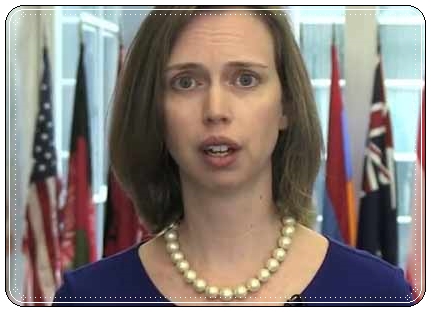
New US ambassador in Vilnius HE Kara McDonald
◊
THE INTERVIEW ON BNS/LRT.
Hopes are rising that the ambassador can succeed to persuade authorities to truly join West’s sensibilities in their imminent decision on…
To restore or not to restore a city-center plaque glorifying a brutal Holocaust collaborator? Noreika or no Noreika?
Plaque was taken down “for repairs” before last July’s NATO conference. Choice rich in symbolism confronts nation’s leaders as huge white builders’ sheet continues to cover up the indecision…
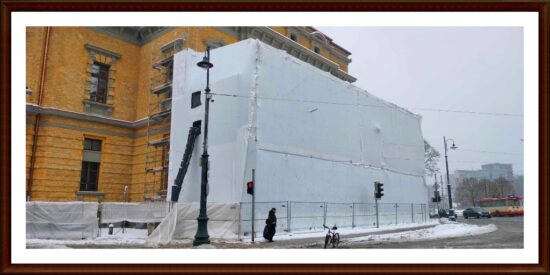
To put off the decision on whether to allow the ultranationalists to restore the Noreika plaque, the builders’ tarpaulin has been kept on that section of the Library of Sciences for months after completion of the restoration of the exterior brickwork.
◊
Doesn’t the proud 1000 year history of Lithuania deserve better than this in the heart of Vilnius?
Can a handful of antisemitic, ultranationalist, Holocaust-revising elites continue to stymie Lithuania’s progress?
The day will come, when the nation’s educators, journalists, parliamentarians and cultural leaders will appreciate who were the true friends of Lithuania in the 2020s. . .
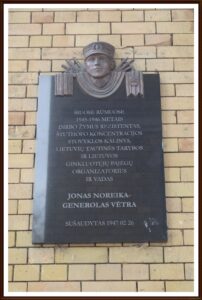
Coming back? Plaque with bas relief of the Holocaust collaborator. Photo: DefendingHistory.com
For a decade and a half, the Defending History community has been calling for an end to glorification of Holocaust perpetrators. See DH’s sections Perpetrators Glorified; J. Noreika. The far-right’s argumentation, that “Double Genocide” means that all perpetrators can also be heroes has been propagated for a quarter century by the “Red-Brown” Commission. It’s best-known iteration is on video, concerning the state’s attempts to prosecute anti-Nazi resistance heroes Fania Yocheles Brantosvsky, Rachel Margolis, Joseph Melamed, and others; official apologies to their families remain a vital issue. Defending History is proud to have brought these travesties to the world’s attention, and to have supported to the hilt the last survivors. Our community is certain that this constitutes a great service to the future of the delightful, democratic EU/NATO state of Lithuania, whose valiant people deserve much better than their taxes going to glorify Holocaust killers, or to rewrite history in the spirit of the far-far right’s ultranationalism, racism and antisemitism.
See now: Mark Blumberg on the Noreika plaque merry-go-round