RACHEL KOSTANIAN | LITHUANIA | LITVAK AFFAIRS
◊
◊
◊

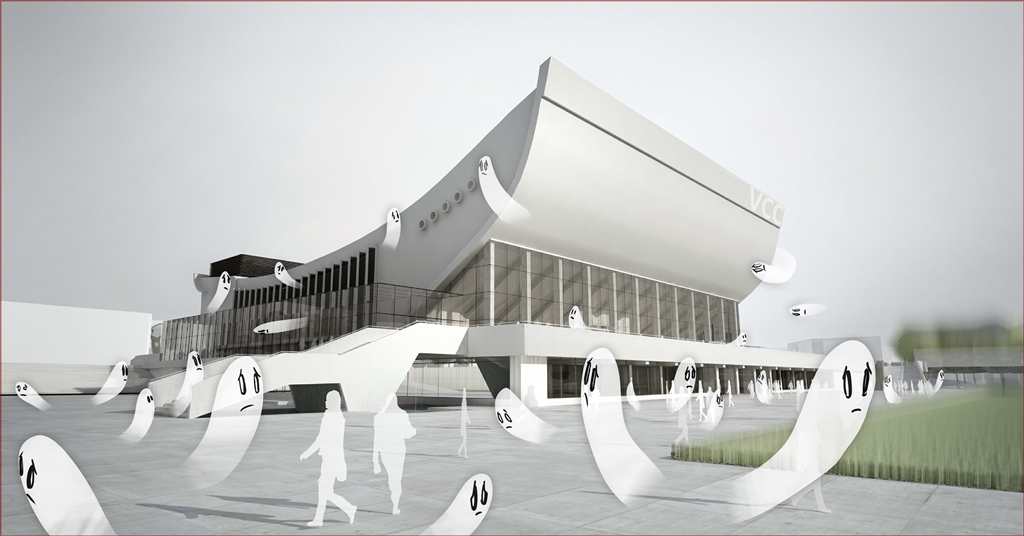
Look what you can see standing right by Vilnius’s Cathedral Square: The Soviet “Sports Palace” ruin that symbolizes not only antisemitism but also: Soviet/Russian Empire spiritual and political domination of Lithuania’s free spirit. High time to be rid of this carbuncle on the beautiful face of modern Vilnius?
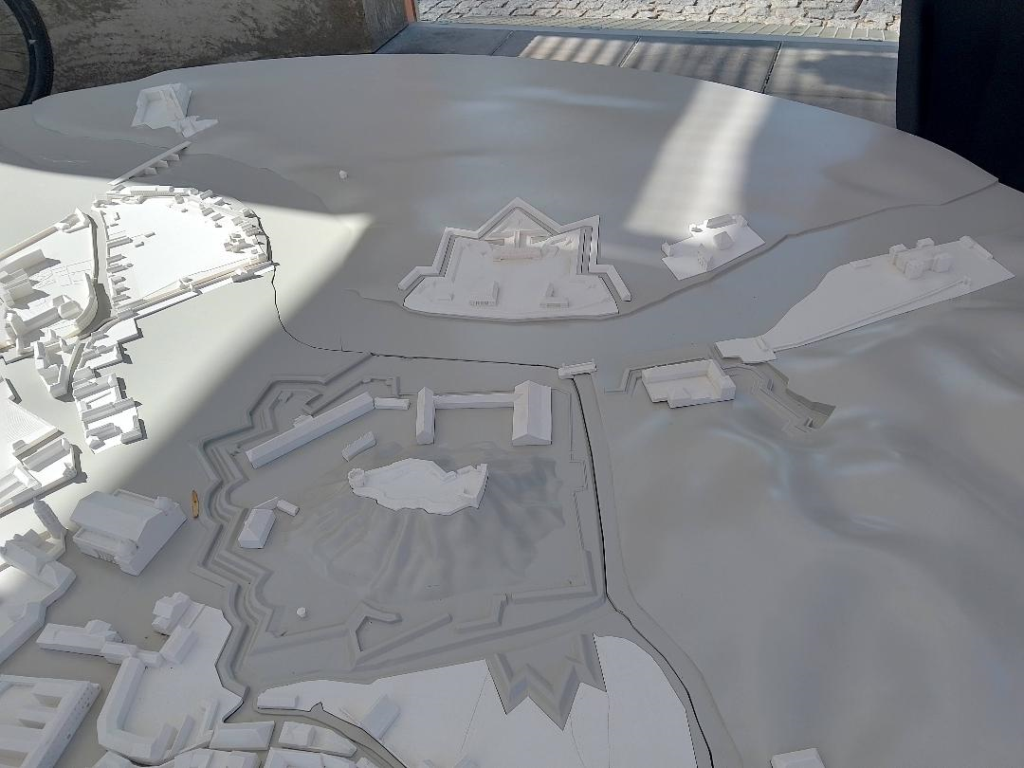
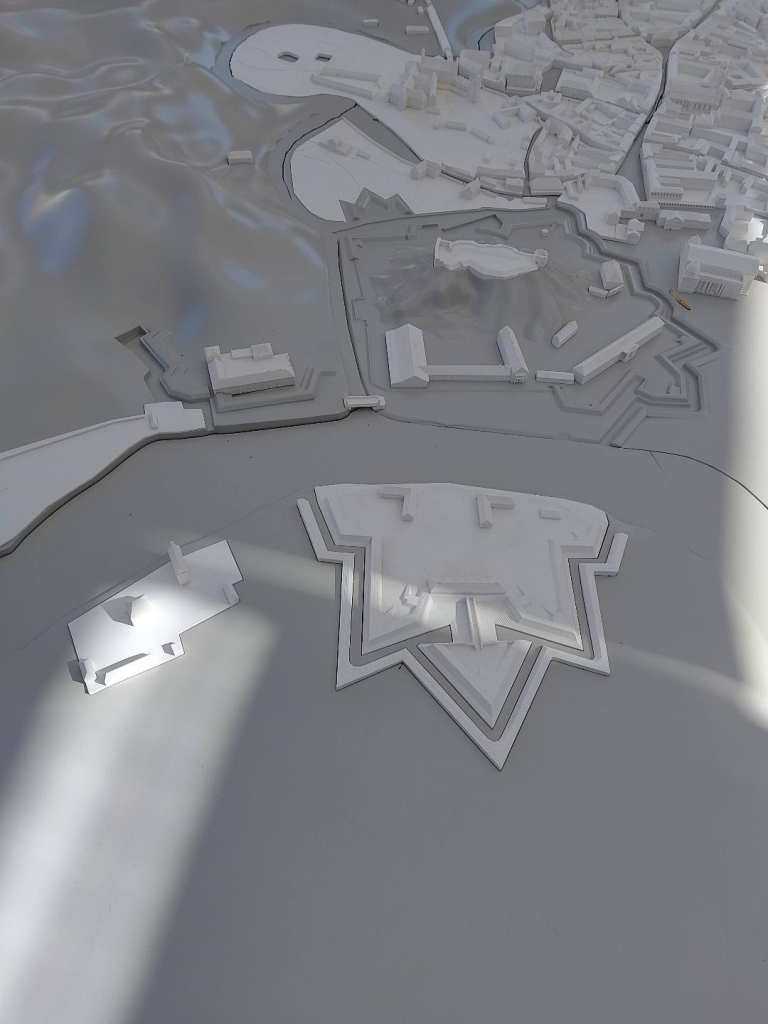
The first phase of the eradication of the Old Vilna Jewish Cemetery at Piramónt in Shnípishok — modern Šnipiškės — and of the people buried there, started back in 1830, contemporaneous with an uprising against the Russian Empire. The November Uprising, as it is now known, started with the will to resist the czarist government’s plans to send the army of Poland — at the time an autonomous kingdom within the Russian Empire — to Belgium and France, as well as with the dreams of restoring Polish independence. In 1831, seeing that the uprising for independence would soon take over Vilna, the Russian Imperial government expropriated a section of the Jewish cemetery by the bank of the Viliya (now Neris), and established an artillery citadel to keep the freedom-loving city at all times in the crosshairs of its cannon barrels. But even after the establishment of the citadel, more than three quarters of the actual graves (and their stoness or mini-mausoleums, oyhólim) remained untouched. This legendary cemetery is a Litvak pantheon, a monument to the civilization of Lithuanian Jewry. So it is meaningful that its first phase of destruction got underway just as the Russian imperial government’s project to enhance its military presence in Vilna, by making sure that the city’s inhabitants live in constant fear.

A small section of the Old Vilna Jewish Cemetery at Piramónt. The Soviet Sport Palace was built in its heart. All stones and inscriptions were trashed but thousands of graves survive on all four sides of the building, now an eyesore in the heart of modern Vilnius.
◊
My attention was recently caught by an article in a Flemish-language newspaper here in Belgium (“Living in fear of the Russian bear” in De Standaard of 5 September 2022), where the author writes that he had studied in 2005 at the University of Vilnius. The article speaks eloquently — and accurately — about the loss of freedom that came upon the people of Lithuania when the USSR invaded and occupied (for the long haul) Lithuania in 1940. It speaks of the many people deported to Siberia by the NKVD, it speaks warmly of the postwar fight of the Forest Brothers, and it speaks openly about the current fear that Putin’s Russian Federation might try again to incorporate their country into their revanchist program, a fear the author calls “Potsdam II.”
There is, however, disturbingly, quite a stupendous missing link in this abridged history of Lithuania in the twentieth century. Where had the quarter million Jews (the figure on the eve of the Holocaust) of the country disappeared to “overnight” (as centuries go), during that fateful century? Had there ever been a Jewish minority in Lithuania at all? When I looked at the author’s pedigree, I understood why the Jews had not played any role of significance in his biased dialectical discourse. Joren Vermeersch is a historian (of sorts) and an accomplished author. He is also a representative (stand-in, as we call it) for the Belgian House of Representatives, for the “N-VA.” This is the nationalist Flemish party that has its historical roots in the collaboration with the Nazis during World War II. The party that has systematically fought for an amnesty for Nazi collaborators. The party in which the grandparents or parents of some of the present actual leaders had been condemned by the Belgian State for collaboration with the enemy. Nobody is guilty of sins of their ancestors, but when there is a pattern of such pedigree being considered a great plus for current leadership, and that pedigree is subtly glorified rather than disowned, we have a current moral problem that merits discussion in the public square.Continue reading
◊
Congratulations to the city of Kaunas, Lithuania, once known also as Kovno (in Yiddish forever: Kóvne) on its selection as Europe’s “Capital of European Culture” in 2022, sharing the title with Esch-sur-Alzette in Luxembourg. But as the midpoint of the city’s co-reign rapidly approaches, it is necessary, albeit sad, to have to note that not a single public-space glorification of local Holocaust collaborators had been removed. Zero. No city on the planet has as many monuments to local partners in the genocide of that city’s Jews. The 30,000 Litvaks (Lithuanian Jews) of Kaunas were brutally murdered, and the city played the primary role in the launch of the Lithuanian genocide on 23 June 1941, before the arrival of the first German forces. Thousands were murdered before the Germans arrived and/or set up their administration.
See Lev Golinkin’s updated 2022 catalogue in the Forward of public space shrines to Nazi collaborators worldwide
Lithuanian government authorities have reportedly invested large sums to lure “Useful Jewish Idiots” from the UK, US, Israel, and further afield to participate in “cultural events” intended to obfuscate and deflect from the primary issue: Why are the enablers of the slaughter of Kovno Jewry still honored by street names, plaques and university lecture halls and statues in the city? Local Jewish leaders who have dared to speak up have rapidly been smeared as “Putinists” for daring to criticize the far right’s hold over national history policy (and indeed, the need for such a policy to start with).
But in the waning days of 2021, a “waterfall of truth” began to cascade from an unanticipated quarter. Michael Levinas, son of the celebrated Lithuanian-Jewish born French philosopher Emanuel Levinas, forbade authorities to name a fancy new institute after his father. This was kept under wraps until his 21 Dec. Le Figaro opinion piece broke the story, and it was duly reported in Lithuania by LRT.lt. See Defending History’s media tracker page for background and updates.
Compilation of articles, documentaries, videos, and photos. Plus: from the saga of 2008…
See Defending History’s Fania Yocheles Brantsovsky Section
“Putin’s criminal and barbaric invasion must be countered to the hilt and we must rally unfettered to the cause of Ukraine’s freedom. But for far-right double-genocider revisionists in the Eastern E.U. to take advantage of it for Holocaust obfuscation is just plain wrong.”
Defending History’s statement on the war in Ukraine
☰
When Ottawa Citizen and The New York Times broke taboo on wartime discussion of East European state-sponsored Holocaust obfuscation
☰
But what is the “Prague Platform”?
◊
My good friend and colleague for two and a half years in Vilnius, Dónal Denham, has written a book with the title Nine Lives: The Reflections of a Dedicated Diplomat
. The book is an interesting, fascinating read about an eventful career in the service of Ireland at home and abroad, enriched by an excellent selection of photos that add life and substance to the text. The author also draws a vivid picture of his early formative years in Ireland and England and student years at Trinity College. He writes warmly about his family, not avoiding the pain of personal losses, exacerbated by separation and distance. Diplomats from all countries would subscribe to his tribute to his wife Siobhan (“without whom nothing worthwhile would have happened to me”) who “as an unpaid ‘trailing spouse’ was a treasure beyond measure, largely unrecognized by officialdom.”
So, which are Dónal Denham’s nine diplomatic lives?
VILNIUS—The New York Times reports today that Ukrainian president Volodymyr Zelensky has dismissed his country’s ambassador to Germany after the ambassador’s worshipful antics glorifying the World War II Hitlerist, fascist figure Stepan Bandera, who was the leader of groups that murdered hundreds of thousands of Polish and Jewish civilians in Ukraine.
See G. Rossolinski-Liebe’s authoritative study of Bandera’s Hitlerist history and the racist, fascist leader’s inspiration of hundreds of thousands of murders of Polish and Jewish civilians. See also Erika Solomon’s update in the New York Times.
Defending History was ahead of the curve. See from earlier years our Bandera section and some of Dr. Rossolinski-Liebe’s earlier writings in Defending History; DH’s Collaborators Glorified section for the wider context of the issue in contemporary Eastern Europe (more details on Sections page).
◊

VILNIUS—In the days following publication by Defending History of a report reacting to press releases about a (secret?) “memorandum” signed by the heads of the official “Lithuanian Jewish community” (LJC), the head of international affairs for the American Jewish Committee (AJC), the “Good Will Foundation” (GWF) and the Mayor of Vilnius, a number of conscience-stricken employees at LJC have been sending around copies of various versions of the memorandum, signed on 25 May, during the recent “Fifth Litvak Congress” here in Vilnius.
Update of 13 June 2022: One day following publication of this report, the “Good Will Foundation” published the signed English memorandum, using the wording “is now dying out altogether” to refer to today’s Jewish community in Lithuania, its hopes, and its dreams.
◊
Arūnas Bubnys, Holokaustas Lietuvos provincijoje. Vilnius: Margi raštai, 2021
◊
Dar vienas Tarptautinės komisijos okupacinių režimų nusikaltimams Lietuvoje įvertinti leidinys. Lig šiol šios komisijos leistos knygos buvo akademiškos ir skaitytojų vertinamos. Be to, jos būdavo leidžiamos ne tik lietuvių, bet ir anglų kalba. Ši – kitokia. Išleista tik lietuviškai. Jei anksčiau leistose monografijose, be kita ko, būdavo komisijos patvirtintos išvados, tai šioje knygoje tokių išvadų nėra. Kiek teiravausi – komisijos mokslininkai šio leidinio tarpusavyje neaptarinėjo…
Bet apie viską nuo pradžių.
Knygos apimama geografija gana plati. Daugiau ar mažiau minimos 23 apskritys ir 140 miestelių. Tai tikrai daug, bet krinta į akis, kad aprašyti miesteliai pagal apskritis pasiskirstę labai netolygiai. Pvz., Šilutės apskrityje prabėgomis minimos kelios stovyklos ir atskirų žydų likimai, bet nėra aprašyto nė vieno miestelio. Iš Marijampolės apskrities aprašytas tik pačios Marijampolės žydų likimas. Gausiausia miestelių aprašymų iš Šiaulių (15) ir Alytaus (12) apskričių. Suprantama, autorius ir taip atliko didelį darbą – lig šiol neturėjome tokio išsamaus aprašymo. Žudynių geografijos prasme platesnis yra „Holokausto Lietuvoje atlasas“, kuriame paminėtos visos didesnės žudynių vietos. Tačiau tame aprašyme nekeliamas klausimas, kas gi atsitiko su atskirų miestelių žydų bendruomenėmis. Mano nuomone, Bubnio knygoje trūksta paaiškinimo, kodėl viskas taip fragmentiška. Skaitydami apie Šiaulių apskritį, galime rasti vieną iš galimų paaiškinimų:
◊

It has not been easy for our embattled team to keep Defending History going for over a dozen years now, based here in Vilnius. But as with other small but committed projects committed to speaking out for historic justice whomever it will please or displease, misconceptions can flourish. For example, this journal has indeed opposed the misuse of millions of Lithuanian citizens’ hard earned tax euros for campaigns to “equalize” for new generations (and today’s West) Nazi and Soviet crimes (the “Red-Brown” Commission); to target Holocaust survivors who joined the anti-Nazi resistance by smearing them as “war criminals” (state prosecutors); to establish as European heroes brutal participants in the Holocaust (the Genocide Center and Museum); efforts by government bodies (foreign ministry under some governments) to insist on European Union cave-in to the revised Baltic far-right historiography (note the Prague Declaration and DH’s response: the Seventy Years Declaration received personally a decade ago by the president of the European Parliament).
◊
◊

Evaldas Balčiūnas at the Vilnius court where he was repeatedly harassed for telling the truth about local Holocaust perpetrators and collaborators. Defending History came to each and every hearing to provide support. After years of harassment he was found ‘not guilty’…
◊
◊
Most Lithuanian government officials in diverse branches of its democratic government, including so many in its Culture and Education ministries, its local museums and libraries, its schools and cultural centers, have a warm and healthy attitude toward both the historic weight and tragic fate of the nation’s Jewish minority. This is important to keep in mind as we come yet again to provide a voice for the voiceless: the manipulation of the fragile Litvak and Yiddish culture, of the last survivors and their families, and of Holocaust history by some small and lavishly financed “Jewish fix-it units” including the Genocide Center, Genocide Museum, Red-Brown Commission, and a scattering of “Jewish, Yiddish and Litvak” centers in central Vilnius, a good part of which exclude from all professional participation people — including top specialists in the relevant field — who dare disagree with state revisionism on the Holocaust. In some cases, this policy brings about the succeeding phase of “Jewish” addresses without a single Jewish member of staff (think African American Cultural Center in Alabama, staffed by pure lily-whites who won’t mess up and peradventure say something contrary to local “patriotic” history-book narratives demanded by nationalists).
Even as the civilized world joins in condemning the barbaric, medieval Putinist invasion of peaceful Ukraine, and unites to embrace its people, and the freedom and simple peace they seek, the Lithuanian Seimas (parliament), is hosting the grand opening of the latest “Litvak Congress” (program here and here), at which none of Lithuania’s great Litvak achievers of recent years, have been invited to speak, or in most cases to even attend. They are being cancelled during their lifetime. The list is long. Just a few examples: Genrich Agranovski, Anna Avidan, Chaim Bargman, Roza Bieliauskienė, Ruta Bloshtein, Fania Yocheles Brantsovsky (Brancovskaja), Dalija Epšteinaitė, Prof. Pinchos Fridberg, Simon Gurevich (Simonas Gurevičius), Irina Guzenberg, Elen Janovskaja, Regina Kopilevich, Arkady Kurliandchik, Polina Pailis, Prof. Josif Parasonis, and (now in retirement in Berlin) Rachel Kostanian. These and others have made empirically demonstrable and durable contributions to the Litvak heritage and its documentation and perpetuation well into the future, and have valiantly and selflessly fought for Litvak causes, a category in which defense of history is a cause as paramount as any.
◊
◊
Clockwise from upper left: Fania is at far left in family photo from 1932 or 1933 in front of her father’s shop on Vilna’s Zavalna St. (today Pylimo in Vilnius); Fania showing visitors the underground bunkers where she lived while fighting the Nazis in the Jewish partisan fort in the forest (now sinking into the ground, Fania’s last wish is that it be restored and preserved for posterity); Fania and fellow partisan veteran Chasia Langbord Shpanerflig sing the partisan hymn at a May 9th memorial; Fania bring honored at a banquet at the residence of the Irish ambassador to Lithuania, HE Dónal Denham in a pushback against state attempts to prosecute and defame her and other veterans of the Jewish partisans with ambassadors from Norway, Austria, France, the UK and other Western nations joining in; Fania in the Vilna Ghetto (1941-1943); with Dovid enjoying looking at some old Vilna Yiddish books together.
◊

Just another street name in a pleasant part of Kaunas, this year’s Capital of European Culture? Author thinks that “Kaunas and its people deserve better”…
◊
Antanas Baltūsis-Žvejas (1915–1948) is remembered by the Republic of Lithuania for his anti-Soviet guerilla activities after the war but without regard for the three separate periods of his activity in service to Nazi activities to exterminate the Jewish people. He did indeed join the anti-Soviet partisan resistance movement in the spring of 1945. And, before his death, he did become the head of its Tauras County unit. Those who heroize this period of his activities emphasize his efforts in establishing military discipline and order in the county. His critics, in turn, are more likely to make reference to his order to the Žalgiris Detachment, subordinate to the Tauras County, to annihilate Russian (Soviet) civilian settlers (“colonists”) in Opšrūtai, who had been transferred to Lithuania according to the Soviet-Nazi repatriation agreement (often with little or no input from these folks themselves). Thirty-one persons perished in Opšrūtai, including fourteen children. In the partisans’ descriptions of the battle, it is easy to notice that their task was to eradicate all colonists, including children. Those who justify the atrocity against civilians, including children, say that it was necessary to thwart the russification of Lithuania.
Lithuania’s policy of historical memory was quite straightforward on this issue: it built a monument to the partisans of the Žalgiris Detachment in Opšrūtai. Ethnic cleansing of Jews, if done by “our own nationalist heroes” in Lithuania, is still seen, it seems, as acceptable.
◊
On the 4th of April 2022, the website of our Ministry of Foreign Affairs published a news item titled (in Lithuanian, here translated) “Lithuania will expand cooperation with Yivo Jewish Research Institute, preserving and publicizing Lithuanian Jewish history” (as PDF). The site’s English language section uses the headline wording “Lithuania to expand cooperation with Yivo Institute for Jewish Research to protect and promote the history and heritage of Lithuanian Jews” (as PDF).
The news article contains information about the visit of the esteemed American scholar, Dr. Jonathan Brent, the executive director and CEO of the Yivo Institute for Jewish Research in New York, also a famed educator and academic publisher, with his colleagues, and their meeting with the deputy foreign minister. The news item appears intent on communicating to the world how much our country’s Ministry of Foreign Affairs cares about its Jewish and Yiddish legacy and how sensitive it is to the history of Lithuanian Jewry.
Both the Lithuanian and English versions are illustrated with a three-photo gallery portraying three scenes of the meeting: shaking hands at the welcome, a moment at the meeting table and the final with those at the meeting posing for the official photo-op.
Everything seems to be done according to the usual protocols of such meetings, at which the professional photographer takes numerous photos from start to finish, culminating with the final photo-op. Then the few dozen shots are whittled down to the most informative and appropriate handful for publication. The ones that make the point best. Elementary.
◊
◊
Arūnas Bubnys’s book The Holocaust in the Lithuanian Provinces (Holokaustas Lietuvos provincijoje, Margi
raštai, Vilnius, 2021) is another publication of the International Commission for the Evaluation of the Crimes of the Nazi and Soviet Occupation Regimes in Lithuania (ICECNSORL). Up until now, books published by the Commission were academically written and appreciated by a sophisticated readership. Moreover, they were always published in both Lithuanian and English. This book is different. It is available only in Lithuanian. Previously published monographs would also include Commission-approved conclusions; this book has no such thing. As far as I have been able to ascertain, the Commission’s academics did not discuss the book among themselves before its publication. But let’s start at the beginning.
The book is geographically quite extensive: 23 counties and 140 towns are cited. This is really a lot, but it is also quite obvious that the coverage of towns in different counties is unequal. When it comes to Šilutė county in western Lithuania, for example, several camps and fates of individual Jews are mentioned in passing, but no single town is described. For the Marijampolė county, only the fate of the Jews of Marijampolė itself is presented. Šiauliai xounty (15 towns) and Alytus County (12 towns) are the most extensively covered.
◊
◊
◊
Mainstream Western media has, it seems, finally begun to “notice a detail” that has been rather inscrutable to the wider public. Ukraine is a country where in 2019, 73.22% of voters chose a Jewish president, Volodymyr Zelensky in the second and final round of voting, a result verily impossible in any of today’s great Western democracies, including the United States and Britain. Indeed a Jewish president whose family boasts proud World War II veterans of the Holocaust-era Red Army’s and the Allies’ struggle against Hitler. That is no “pro-fascist” country. Period, full stop. Having been a regular visitor to Ukraine for a period spanning more than a decade (for Yiddish expeditions and sometimes delightful conferences), I can attest to the open, welcoming, multiethnic and multicultural tolerance and grand humor of this great country’s people.
What is the upshot? That just as elsewhere in pro-Western Eastern Europe, a small but disproportionately powerful coterie of far-right pseudo-patriotic history rewriters, among them highly educated and sophisticated historians, politicians and state apparatchiks, all Holocaust revisionists in their passion to have as national heroes Hitler collaborators, have done so much harm to their own countries. It’s enough to peruse Defending History’s sections on Croatia, Estonia, Hungary, Latvia, Lithuania, Ukraine, and more (see Countries). Incidentally, the motivation of these small, overly influential elites is (mis)guided by two forms of racism: inability to concede their nations’ leaders acted wrongfully during the Holocaust (what country’s history has no dark spots?), and the demented desire for a (supposedly) ethnically pure country (in other words, quiet satisfaction with the results of accomplished ethnic purification).