


◊
BOOK REVIEW
by Roland Binet (De Panne, Belgium)
◊
Takis Würger, Noah. Von einem, der überlebte, Penguin: München 2021, 188 pp., ISBN: 978-3-328-60167-8.
◊
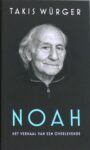 Reading “NOAH”, by Der Spiegel journalist Takis Würger, here in Dutch (originally published in 2021 in German), I felt that Noah Klieger had been made of the stuff of heroes. Klieger was born in 1925 in Strasbourg, France. When he started school in Brussels, Belgium, his teachers quickly ascertained that this small-sized boy of five years had a prodigious memory. Whether arithmetic or written text he seemed to never forget what he had heard or read. At the same time, he seemed not to show any actual interest for the subjects taught. He was therefore shifted to higher grades with pupils sometimes two or three years older.
When Belgium was invaded by the Germans, his father joined later the “White Brigade” resistance movement. Noah had begun, at 16 or 17 years old, with undercover operations. He went on his own to different addresses — which he had naturally memorized by heart — to distribute stolen food coupons to hundreds of Jewish families around Brussels. His mother had removed the Yellow Star from his coat in order for him to mingle with the crowds. Later he specialized in smuggling Jews to Switzerland. It is in that capacity that he was arrested in Mouscron in the autumn of 1942. He was sent on to the Gestapo HQ in Brussels, later to the transit camp for the Jews of Dossin in Mechelen. From there he got deported by train to Auschwitz.
There, asked whether there were any boxers among a group of waiting Jews, Noah had raised his hand. Although he could not box nor did he have any technique, when he was brought to a group of boxers training, he made some vague boxing moves, enough, it seemed, to qualify him as a boxer. Beginning to train he had noticed one young man: “Never had Noah seen a man punching a punchbag so quickly and hard.” He learned that the man was Victor Young Perez. He was a boxer from France who had been world champion in the flyweight category in 1931 and one of his heroes.
He boxed only once in Auschwitz (he lost of course), then he was dispatched to Monowitz where he worked in a building Kommando. He got used to the barbarity, the arbitrariness in everything, the corpses, the beatings, the electrical wire, the hunger, the insane working and living conditions. He kept hoping to be reunited one day with his parents.
He had a major trump card, he was good at languages, could speak German because he had lived in Alsace. But, faced with the day-to-day horrors of Auschwitz, Noah nearly lost his humanity. Until one day he saw a toothless shadow of a man approaching the Blockältester saying that someone had stolen his shirt and that he wanted it back. That man was lucky because the Blockältester die not beat him to death on the spot. Noah took charge of the man, a philosophy professor, a Jew from Hungary. “For the first time in months, he had a feeling that he thought had been lost forever, he felt empathy.”
The months passed but he nearly died. He suffered bouts of pneumonia and dysentery, surviving thanks to a French doctor from Alsace. He had lost his faith, he, the grandson of a rabbi from his mother’s side.
When, in January 1945, the surviving slaves from Auschwitz were sent on the roads of Poland on death marches, he found himself in good company, with a well-known swimmer, the boxer Young Perez and two other Frenchmen. He survived the death march although he saw Young Perez getting killed by bullets. He then was transported on an open train to Germany where he had to work in Mittelbau-Dora (building site of V1 and V2 missiles) for a number of weeks.
At the end of April 1945, he was freed by the Red Army. He was barely 19 years old.
Back home in Belgium, he was overjoyed to see that both his parents had survived being sent to Auschwitz. In Brussels, Noah became the only writer in Atid, the newspaper his father had founded. But, in 1947, Noah wanted to make Aliyah to Eretz Israel. He went to Sète/France where a ship lay, the “President Warfield” and was meant to sail with a number of surviving Jews to Palestine. The ship sailed from France in the night of July 10, 1947 carrying 1,561 passengers, many responding, when asked their place of origin, that they came from the gas chambers.
At that time, the British Navy still kept in force a sea blockade forbidding all Jews to sail for Eretz Israel. Noah became part of the crew as a member of security. Before reaching Palestine the ship received a telegram asking the captain to change the name of the ship to Exodus 47. So, after Auschwitz, Noah became an actor in another important and tragic part of the modern history of the Jews. He saw British soldiers shooting and killing Jewish passengers, survivors from the Holocaust, unable to do anything. The “security detail” had not been armed.
Noah was sent back to Europe but he later made his way to Israel, fought in Israel’s War of Independence, and became a well-known journalist in his country of destiny, covering the Olympic Games between 1952 and 2004. He had gone back to Auschwitz for the first time when he was 50 years old (1975). He also went to Germany in order to cover the trials of Nazis. He covered Eichmann’s trial in Israel. And, perhaps more importantly, as the author, Würger points out: “Noah gave lectures over the Shoah, before women soldiers of the Israeli army, before German students of the secondary grades and before the General Assembly of the United Nations.”
He died in 2018, having had no child of his own but having regained his faith in God.
This is the stuff of real heroes.