


OPINION | ARTS | FILM | MEDIA WATCH | GLORIFICATION OF COLLABORATORS
◊
by Roland Binet (De Panne, Belgium)
◊
We are accustomed to the frequent excellence of BBC broadcasts, documentaries, and investigative reports. On January 23, 2023, with its documentary How the Holocaust Began featuring historian James Bulgin, BBC 2 struck a welcoming chord, demonstrating powerfully and convincingly that the Holocaust ― in the sense of the genocide per se, unleashed upon Operation Barbarossa in June 1941 ― started in the Baltic States of Lithuania and Latvia.
Through the works of Michaël Prazan (Einsatzgruppen as a book and TV documentary in French), Efraim Zuroff’s untiring crusade against the states in Eastern Europe that still cover up their complicity in the murder of millions of Jews during World War II (see his renowned book Operation Last Chance and the site of the same name at the Wiesenthal Center in Jerusalem), through the vigorous and constant series of articles on in the web journal Defending History (see also the documentary Rewriting History by Danny Ben Moshe), we, the attentive and honest readers know what the reality of the Holocaust had been in the Baltic States when Jews were hunted as animals, slaughtered as animals by the German forces, and in many cases before they even arrived, also by the local populations “activists.”. We are cognoscenti but it is reassuring to see that the BBC broadcasts an image of far-reaching collaboration by the local populations in the Baltic States with the focus primarily on Lithuania.
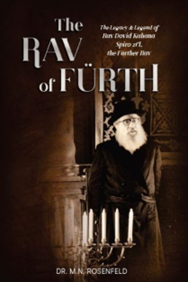 (Fürther Rav) was buried in the Har Hamenuchos Cemetery in Jerusalem. A picture of his tombstone can be found in Moshe Rosenfeld’s recently published book on Rabbi Spiro. The book’s thirteen chapters cover in great detail the origins of the family Spiro, their pre-war life in Poland, the Warsaw Ghetto, survival, rebuilding, dialogue with a bishop, divorce cases and much more.
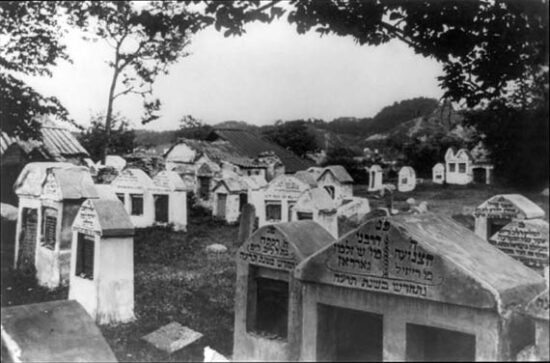
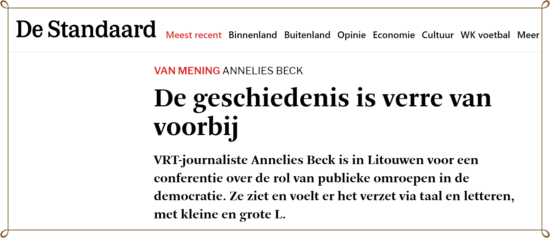
 There is, however, disturbingly, quite a stupendous missing link in this abridged history of Lithuania in the twentieth century. Where had the quarter million Jews (the figure on the eve of the Holocaust) of the country disappeared to “overnight” (as centuries go), during that fateful century? Had there ever been a Jewish minority in Lithuania at all? When I looked at the author’s pedigree, I understood why the Jews had not played any role of significance in his biased dialectical discourse. Joren Vermeersch is a historian (of sorts) and an accomplished author. He is also a representative (stand-in, as we call it) for the Belgian House of Representatives, for the “N-VA.” This is the nationalist Flemish party that has its historical roots in the collaboration with the Nazis during World War II. The party that has systematically fought for an amnesty for Nazi collaborators. The party in which the grandparents or parents of some of the present actual leaders had been condemned by the Belgian State for collaboration with the enemy. Nobody is guilty of sins of their ancestors, but when there is a pattern of such pedigree being considered a great plus for current leadership, and that pedigree is subtly glorified rather than disowned, we have a current moral problem that merits discussion in the public square.


