[updated]
In the Debate to Late 2017
YEAR OF PUBLICATION VARIES.
See DH’s BOOKS SECTION


[updated]
See DH’s BOOKS SECTION
◊
VILNIUS—Defending History today inaugurated a new section, in the Lithuanian language, on the international efforts calling for restoration of the old Vilna Jewish cemetery at Piramónt and for the Jewish heritage of Vilna and Lithuania to not be defiled by a convention center surrounded by a half millennium of Litvak graves. The convention center project can easily be moved to another appropriate venue. The section aims to provide content stemming from various communities within Lithuania as well as translations of the international outcry over the convention center project.
Vilniaus senosios žydų (Piramonto) kapinės Šnipiškėse
Lietuvių kalba
◊
Neseniai, 5775 žydų kalendoriaus metų Avo mėnesį (2015 m. liepos 16-rugpjūčio 15), buvo hebrajiškai ir angliškai paskelbta rabinų deklaracija dėl senųjų žydų kapinių Vilniuje (tekstas buvo paskelbtas abiem kalbomis 2015 m. liepos 30 d. „Hamodia“ numeryje; liepos 29 d. „Hamodia“ tinklapyje ir liepos 30 d. defendinghistory.com buvo paskelbta apie šį dokumentą).
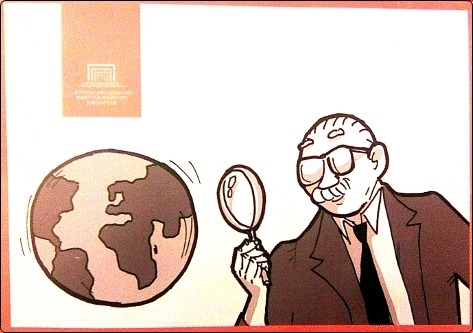
Renowned Lithuanian-French thinker Algirdas Julius Greimas (1917-1992) was more forthcoming than most about his dubious, or frankly, criminal behavior as a young man.
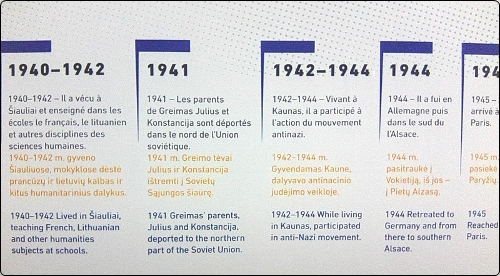
From his interviews we know that in 1940, he gave public speeches in support of Soviet annexation of Lithuania. And in 1941, he served as an editor for the newspaper Tėvynė in Šiauliai, which repeatedly called for ethnic cleansing of Jews from Lithuania.
◊
In response to a protest from the World Jewish Congress, after the Ukrainian city of Vinnitsa unveiled a statue celebrating nationalist leader Symon Petliura — whose troops killed tens of thousands of Jews in pogroms between 1918 and 1921 — a regional official from the extremist Svoboda party threatened Jewish citizens. In a Facebook rant, the Svoboda official warned Jews opposed to the Petliura statue to fall in line or face the consequences. The Svoboda official stated that “the only time we comfortably coexisted with kikes is Koliyvishchyna,” a reference to an 18th century pogrom against Jews in Ukraine.
Related: Ukraine’s Minister for Infrastructure Plans to Build Actual “Road to Bandera”
◊
In a 2012 article in Defending History, I asked why Holocaust perpetrator Jonas Noreika is made into a “national hero” here in Lithuania, one honored by street names and public plaques. Since then protests have come, among others, from a somewhat obscured petition by Lithuanian intellectuals, an appeal from journalist and Declaration of Independence signatory Rimvydas Valatka, Lithuania’s official Jewish community, Grant Gochin, a South African born author resident in the United States, and others. These appeals, all from 2015, were crowned by a rare protest by Jewish students at a Noreika shrine in central Vilnius (see Defending History’s guide for English readers to the links in the 2015 debate).
◊
◊
On March 16, 2017, the annual march honoring Waffen SS Latvian Legion veterans took place in Riga as usual. A co-ruling political party had called the legionnaires “freedom fighters”[1], the Security Police had denounced opponents of the march as “so-called Anti-Fascists” and put them in the chapter “Manifestations of Russia’s compatriot policies in Latvia” of its annual report.[2] The counter-picket applied for by the Latvian Anti-Nazi Committee had been ordered to move farther from the march route. Again, a pretty usual development.
◊
During the last two years a notable number of streets in Ukraine have been named after World War Two-era Ukrainian nationalists who collaborated with the Nazis and were involved in the Holocaust as well as the mass ethnic cleansing of Poles in Western Ukraine. Josh Cohen explained in a recent Reuters column that it is part of Ukraine’s post-Maidan Government attempt to create a new national memory for Ukraine:
In 2015, Ukraine passed a law honoring the Organization of Ukrainian Nationalists and its military wing, the Ukrainian Insurgent Army (OUN-UPA). Since then, other streets have been named after the group and its leaders, and the Ukrainian Institute of National Memory (UINM) is drafting a law to posthumously exonerate OUN-UPA members convicted of murdering Polish and Jewish civilians during and after the war.
VILNIUS—In comments reported today by the Lithuanian press service ELTA, the nation’s prime minister, Saulius Skvernelis has announced and hailed the decision to proceed with a national convention center in the heart of the old Vilna Jewish cemetery as one that “will lift the Lithuanian capital to a higher level of competitiveness in tourism.” He also notes that “the lack of a modern congress center in Vilnius is the main obstacle for the development of conference tourism in Lithuania,” not mentioning that there are numerous alternative sites for much more rapid and hassle-free construction of such a center.
◊
◊
◊
What makes Rūta Vanagaitė’s Ours (Mūsiškiai) very different from all other Lithuanian books on the Holocaust is that it was from the start written as a bestseller. Written by an experienced public relations professional as an appeal to the Lithuanian public, the book raises the painful issue of historical responsibility. The author does not refrain from giving a personal twist to the story (it would be impossible otherwise, as the Holocaust is an issue of individual position and individual responsibility). The author is piercingly direct and uses black comedy. She approaches the topic with composure and a sense of supremacy. These two features may irritate the reader. However, she is entitled to it as she aims to confront the reader, which she so eloquently achieves.
◊
◊
One does not have to be a theoretical champion of Free Enterprise vs. Government Intervention to take stock of this week’s incredible contrast between the two major products of this last week in September, the annual week of intensive Jewish commemoration activity in Lithuania, and particularly, in its fabled capital, Vilnius. By “products” we mean things of substantive physicality that will outlive by far the week’s posturing, speeches, and meetings with glittering public officials and national leaders.
◊
◊
◊
Evolution of Self-Identity in the Intercultural Debate on Whether to Restore Vilnius’s Oldest Jewish Cemetery. My name is Andrius Kulikauskas of Vilnius Gediminas Technical University in Lithuania. I will be speaking about a question important to me, How do things come to matter? and I will relate it to the topic of Lithuanian Jewish heritage: The Evolution of Self-Identity in the Intercultural Debate on Whether to Restore Vilnius’s Oldest Jewish Cemetery. So I am very grateful to the organizers and to our last speaker for having a very much related topic and I’ll be focusing on my own philosophical question but as a citizen of Lithuania I am very glad to be able to think about this very concrete issue. In our case, the cemetery is from the 1500s. As you know, the Grand Duchy of Lithuania had fantastic relations with Jews up until the Holocaust when Lithuania was I think the first place where all of the Jews were killed, in our countryside in 1941 even before the Wansee conference.
◊
◊
◊
Methods of authoritarian and obtuse governance, evident for many years in the management of the Lithuanian Jewish Community (LJC), have recently reached the public sphere. Despite the fierce resistance and brutal interference of the chairwoman of the LJC (and, until recently, of the Vilnius Jewish Community, too) Faina Kukliansky, the Vilnius Jewish Community (VJC) [on 24 May 2017] organized a general conference of Vilnius Jews according to all legal procedures — with, incidentally, record-high attendance — and elected its new council [of 21 members] democratically. But the notion that Jewish people solve their problems in a wise manner, although prevalent in society, demonstrably did not take root in this case. As a former deputy chairman of the LJC (2000–2005), I feel an obligation to share my thoughts on why this has happened. It seems to me that I have a moral right to share these thoughts.
◊
VILNIUS—Beware of any academic conference hosted by a nation’s parliament. This isn’t about Lithuania, the Baltics, or Eastern Europe. It’s about the intellectual independence and academic integrity of bona fide academic conclaves anywhere. There are elementary questions. Was there a public call for papers? Was there an academic committee established to select those papers by the most competent specialists on the actual topic of the conference? An academic committee that would guard against the petty jealousies, politics of revenge and personal exclusions, as well as larger political correctnesses or state-sponsored-agency attempts to predetermine the proceedings or (ab)use them for governmental PR? Is the conference a free tribune for the exchange of ideas in an atmosphere of collegiality and mutual respect? One where scholars of opposing views can thrash it out, robustly and publicly — without the loss of interpersonal respect — to yield positive results for the area of human enquiry to which the conference was dedicated in the first place. One of the ironies is that Vilnius is nowadays host to some of the world’s best (and most academically free) conferences in an array of fields, both in the humanities and the sciences. That Soviet-style rigging should survive in the case of Judaic studies, of all things, will itself be studied one day.
VILNIUS—After a number of readers reported technical difficulties in accessing the publicly posted and widely read blog of Rabbi Sholom Ber Krinsky, in the interests of preserving the history of the Lithuanian Jewish community these are here offered in chronological order with separate links for each (the original is also available in internet libraries). Rabbi Krinsky’s respectful call for the resignations of leaders of the Good Will Foundation is perhaps the best known, covering the wider issue of integrity of restitution payments far beyond Chabad issues alone. For highly divergent views on the events the rabbi covers in these blog posts, see the Defending History section tracking Rabbi Krinsky’s recent history in Vilnius, and the official website of the state-sponsored Jewish Community of Lithuania (e.g. here; here).
◊
VILNIUS—“There is nothing new under the sun,” as the Good Book says (Ecclesiastes 1:9). Sure, on occasion, Irish communities will feud in Boston, Italians in New York, Chinese in LA and Lithuanians in Chicago. It is part of the professional training, posture, and policy of diplomats to negotiate such inevitabilities by way of common sense, wisdom, and fairness. For years now, the widely admired German ambassador to Lithuania, HE Jutta Schmitz has kept her embassy’s diplomatic table open to people and organizations, governmental and non-governmental, from across the colorfully diverse spectrum of opinion in Lithuania. It is not known whether the recent completion of her Vilnius ambassadorship and departure from Lithuania, and the temporary vacancy, had anything to do with the embassy’s recent, and quite innocent, faux-pas.
Our take? NATO needs to stand for Western values. Putin’s shameful “Zapad 17” military exercise demo, in regions bordering the eastern democratic lands of NATO and the EU — including the three Baltic states, Lithuania, Latvia and Estonia — is intended to intimidate their peaceful populations and to provoke regional unease. Not to mention the very real danger that various of the troops will find one way or another “to stay in the region after the exercises are over” in a very tired old Soviet spirit of things. These military exercises need to be exposed for what they are, and countered with stalwart determination. NATO’s commitment to its members must remain sacrosanct and permanent, while remaining true to the ideals for which, ultimately, it exists.
That makes it all the more critical for the North Atlantic alliance (and the EU) not to succumb to regional far-right, ultranationalist, chauvinist, Holocaust-revisionist, and antisemitic forces in the course of the proceedings.
◊
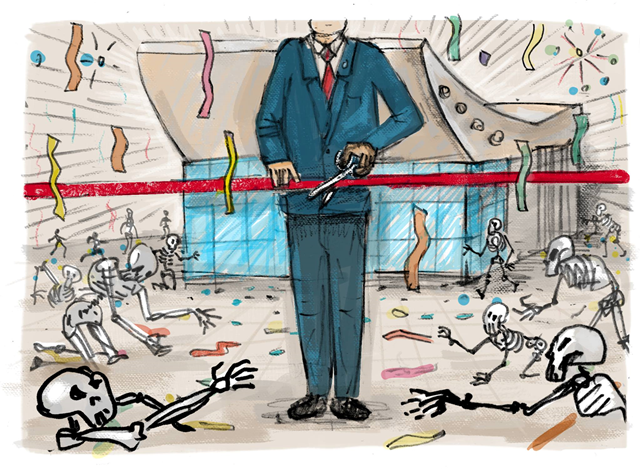
Vulovak for DefendingHistory.com
◊
VILNIUS—The following statement by Professor Shnayer (Sid) Leiman, appeared today in the respected American weekly Five Towns Jewish Times. It is a reaction to the comments by Lithuania’s top leaders, made after receiving a letter of protest from twelve United States congressmen concerning plans to site a projected new national convention center in the heart of the territory of the Old Vilna Jewish Cemetery at Piramónt (in the Šnipiškės district of modern Vilnius). International opposition to “the convention center in the old Jewish cemetery” continues to mount.