МНЕНИЕ
Пинхос Фридберг
◊
◊
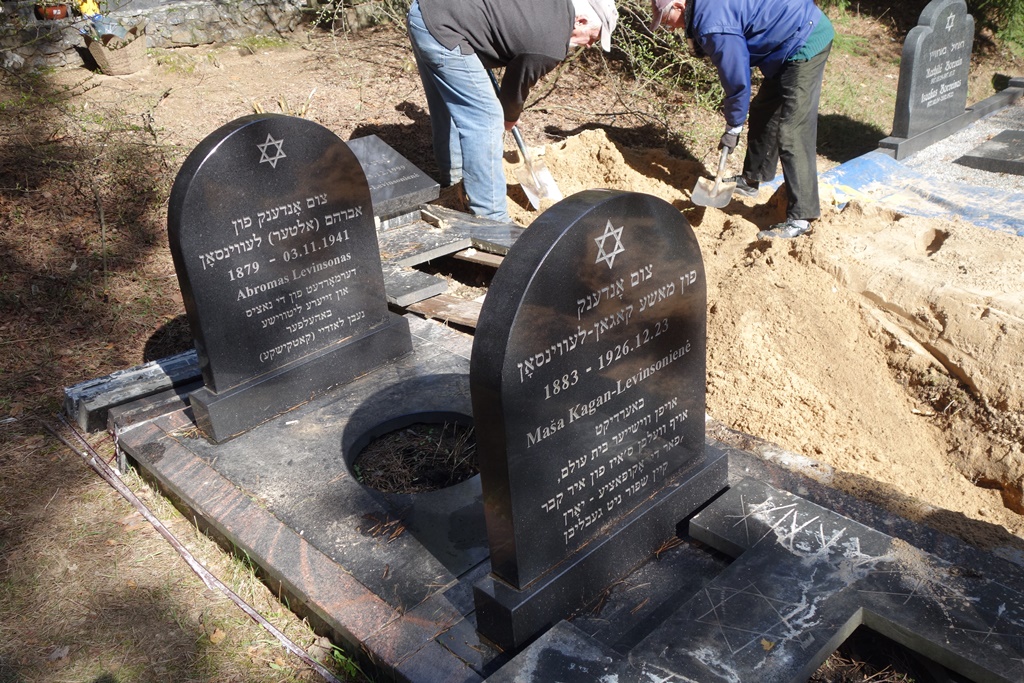
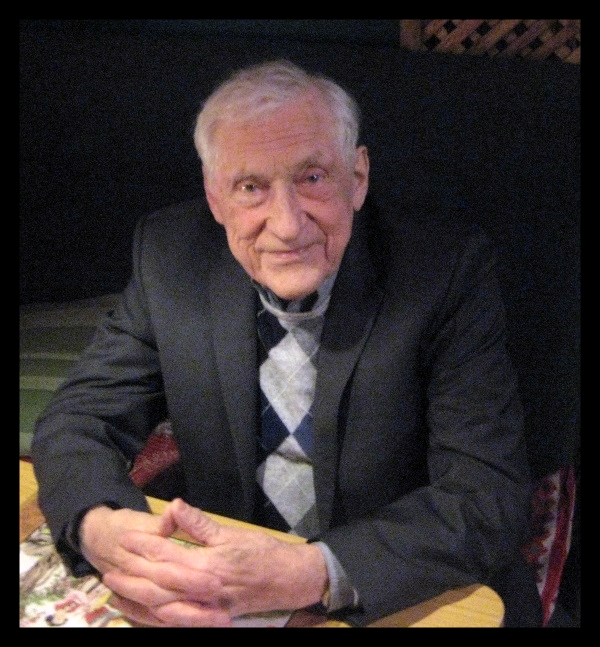
Вянваре прошлого, 2014-го года из печати вышла новая книга стихов литовского поэта, публициста, члена Международной ассоциации «Литва без нацизма» Александраса Босаса под названием «IŠ TEN SUGRĮŽTANTIEMS. Apie ŠOA RIMTAI IR SU IRONIJA» («ТЕМ, КТО ВОЗВРАЩАЕТСЯ ОТТУДА. О ШОА СЕРЬЁЗНО И С ИРОНИЕЙ».
Далее «Тем, кто возвращается оттуда» – М.Х.). А.Босас стал первым в истории литовской литературы поэтом, который не только обратился к самой болезненной и негласно табуированной теме в истории Литвы – к теме Шоа, – но и посвятил ей не одно и не несколько стихотворений, а всю третью, к сожалению, последнюю книгу. В ней поэт не шопотом и не намёками, а «во весь голос» открыто и откровенно заявил о своём отношении к трагедии Шоа и так называемого «окончательного решения еврейского вопроса».
В годы нацистской оккупации германские нацисты при активной добровольной помощи весьма значительного количества организованных и вооружённых местных гражданских лиц, вступивших в военизированные подразделения полиции, уничтожили почти всю еврейскую общину, которая до Второй мировой войны была самой знаменитой и высокоразвитой общиной всемирной еврейской диаспоры в первой половине ХХ века. Евреи представляли в Литве самое многочисленное национальное меньшинство населения. Еврейская община жила в мире и согласии с местным литовским, польским, русским населением, с другими национальными группами.
VILNIUS—The Defending History team based here wrote today to Targum Shlishi in the United States to thank its board and director for offering support to the Defending History project at a critical juncture in its seven year history. The Vilnius-based project began in the spring of 2008, its web journal Holocaust in the Baltics got underway in 2009 and was renamed Defending History in 2010.
Targum Shlishi cited Defending History’s work in its newsletter today. The relevant paragraph reads as follows:
◊
Iwill speak about painful things, and so I understand if some of you won’t want to listen and will step out.
It is most important that we empathize with the victims of the Holocaust, and yet we must also empathize with the perpetrators if we wish to understand what happened and who was responsible for what. Litvaks outside of Lithuania feel hurt that Lithuanians shirk responsibility for the Holocaust.
I won’t be indifferent. I am a deliberate Lithuanian. I was born in the diaspora. I chose to be Lithuanian. Is the Lithuanian worldview harmful? I must investigate.
◊
Somewhere in his voluminous correspondence, correspondence that far surpasses in quantity any of his literary endeavors, H. P. Lovecraft mentions what he sees as the almost arbitrary adoption of Christianity by northern European peoples, and comments that another religion might work just as well. That sense of another religion operating in parallel runs heavily throughout his stories, and nowhere is his notion better illustrated than in his short piece The Festival, roughly centered around an “I’ll be home for Christmas” motif in an unknown village of New England that turns terribly strange but somehow familiar for all its strangeness.
KAUNAS—As in previous years (for example, 2013), the Kaunas District Police Department today informed Defending History that it has issued no permits for a march on February 16th, referring us instead to the body that would have issued the permit — the Kaunas City Municipality, which has not (yet) responded to our queries. The letter received (image below) states “We inform you that Kaunas County Police have not issued a permit for organizing a march / rally” on 16 February 2015, and suggests “you refer to Kaunas City Municipality.”
This year much of the world commemorates the seventieth anniversary of the liberation of Auschwitz in 1945. The day of its liberation, January 27th, is International Holocaust Remembrance Day. To mark the day this year, on the 26th of January, the Jewish Community of Lithuania organized three events, as reported in Defending History.
The final event of the day was the book launch for The Šiauliai Ghetto featuring as sole announced speaker its author, Dr. Arūnas Bubnys, director of the Genocide and Resistance Research Department of the Genocide and Resistance Research Center of Lithuania; for a critical view of the Genocide Center, as it is known for short, see Defending History’s page and news section on the institution.
The following statement appeared today on the website of the Jewish Community of Lithuania:
It is not surprising that experienced journalists and politicians as well as leaders of well-known Jewish institutions, who are following Ms. Kukliansky’s activities devoted to expose Nazi criminals as well as to fight Neo-Nazism, were left in a complete state of confusion after reading Mr. Zuroff’s so called protest.
VILNIUS—Defending History today announced its launch of a modest poetry section which will aim to harness the inspire the work of East European poets whose work includes verse in defense of history and human rights and exposing racism and antisemitism.
The section starts with the work of two poets in Lithuania: Ken Slade’s My Dream of When the Witch is Found; and Nine Poems by the late Aleksandras Bosas (1951-2014), a posthumous awardee of Defending History’s inaugural series of Prophet Amos Awards for Human Rights for 2014-2015.
The Simon Wiesenthal Center today issued a statement expressing dismay that Vilnius’s state-sponsored Genocide Center (full name: Genocide and Resistance Research Center of Lithuania) was included in the Lithuanian Jewish Community’s annual program marking Holocaust Remembrance Day. The third of three events was dedicated entirely to a book produced by the Center. The only announced speaker for the event, the book’s author, is known for rejecting known elements of the historic narrative of the annihilation of Lithuanian Jewry, for his support for monuments for pro-Hitler forces, and for participation in far-right pro-fascist journals.
◊
For some reason held on 26 January, a day before International Holocaust Remembrance Day, three events were announced together in a flyer posted by the Jewish Community of Lithuania and disseminated by other interested organizations in Vilnius.
◊
The following text is the original draft, submitted on 20 January 2015 at the invitation of the London Jewish Chronicle. An edited version (processed with all courtesies to the author) appeared in the JC on 22 January. This version is posted here simply to emphasize the author’s belief that ceremonies at Auschwitz that do not address the current massive campaign by eastern EU states to downgrade and obfuscate the Holocaust are unwittingly part of a cover-up of the very unique historical phenomena they are meant to accurately preservce and pass on. The related issue of whether Russia’s leaders will be invited to the ceremonies has been analyzed in recent pieces by Efraim Zuroff and Pinchos Fridberg.
JERUSALEM—The Simon Wiesenthal Center today harshly criticized steps taken by the Latvian delegation to UNESCO which effectively cancelled an exhibition about the Holocaust in Latvia scheduled to open this coming Sunday at UNESCO headquarters in Paris.
SEE ALSO JTA REPORT
In a statement issued here by its Israel director, Holocaust historian Dr. Efraim Zuroff, the Center called the action by the Latvians “an outrageous and ultimately futile attempt to hide the extensive Latvian collaboration with the Nazis in perpetrating Holocaust crimes” and urged UNESCO officials to consider steps to enable the exhibition, titled “Stolen Childhood: Holocaust Victims Seen by Child Inmates of the Salaspils Nazi Concentration Camp,” to be shown to the public.
According to Zuroff:
“This step by the Latvians is part of a systematic effort by the Baltic countries to hide the truth about the extensive collaboration with the Nazis of Balts in the implementation of the Final Solution in their native countries, as well as in Poland and Belarus. Instead of complaining that the exhibition risked damaging her country’s reputation, Latvia’s chief delegate to UNESCO should have welcomed an effort to expose the wartime collaboration of so many Latvians as part of an honest confrontation with her country’s bloody Holocaust past.”
For more information: 972-50-721-4156
www.operationlastchance.org or www.wiesenthal.com
Reposted from the LGL site with permission
On January 18th, 2015, a member of the Lithuanian Parliament (the Seimas), Algirdas Vaclovas Patackas publicly warned the Board Chair of the national LGBT human rights association LGL that the organization is “playing with fire” and that its activities might result in a “black, repulsive and totally unacceptable response” similar to what “happened in Paris.” The statement by the MP was issued as a response to the organization’s humorous suggestion to store 10-litas notes as LGBT souvenirs in the wake of the switchover to the euro on 1 January 2015.
The Stahlecker Reports offer a rare glimpse into the inner workings of what was the onset the Final Solution: the Baltic invasion within Operation Barbarossa. Naturally, Most wartime documents deal with the effect and aftermath of the war. In the sea of war documents, the Stahlecker Reports are pivotal, in that in that they shed some light on the backdrop and the motives behind the war’s operations.
◊
Coming across the Jewish Life in Poland section of Yivo’s website, I decided to write this short memoir. This photograph shows the teachers and graduates of the Vilner Yiddish Real-Gymnasium (Vílner yídishe reál-gimnázye) in 1930. The school’s principal was Leyb Turbowich, and the literature teacher (until his migration to Minsk in 1928) was the great Jewish poet Moyshe Kulbak, the author of a well-known Yiddish poem Vílne, among many others.
◊
Christmas-time congratulations are due to the four architects who have won the Vilnius state Jewish museum’s competition for plans to build a Holocaust museum at the mass murder site known as Ponár in Yiddish, Ponary before the war in Polish, and currently Lithuanian Paneriai. It is a short ride outside the capital city Vilnius. The victory of the foursome, Jautra Bernotaitė, Ronaldas Pučka (team leader), Andrius Ropolas and Paulius Vaitiekūnas, is announced on the museum’s website (and on Mr. Ropolas’s site). The competition was jointly run with the Ministry of Culture of the Republic of Lithuania. The elaborate description of the project’s conception, by the Union of Architects, includes many sophisticated concepts, with multiple learned citations, from Freud to Foucault. Just one rather simpler word, a word (and exhibit) needed for any Holocaust museum, is missing from the text: collaboration.