5777 New Year’s Greeting to Our Jewish Readers Everywhere
Vilnius Municipality Leak Suggests Plan to Dismantle Jewish Cultural Center in Vilnius Old Town
VILNIUS—Just as Jewish people in Vilnius were getting down to intense preparations for the Jewish new year (Rosh Hashonnah, Rosheshóne in Yiddish), an official at Vilnius City Hall (the municipality) provided to Defending History (and presumably other publications) a letter that purports to be from the official Jewish community’s lay leader, Faina Kukliansky (in professional life the nation’s top EU citizenship lawyer for foreigners) that would sound the death knell for the internationally admired Jewish Cultural and Information Center (JCIC) on Mesiniu Street in the Lithuanian capital’s scenic Old Town.
New “Rules of the Synagogue” Document Brings Disquiet to Single Vilnius Synagogue
DOCUMENTS
◊
The following new Rules of the Synagogue document appeared in two long-standing dusty frames in the entrance hallway on approximately 29 September 2016, at the Vilnius Choral Synagogue on Pylimo Street 39 in Vilnius, Lithuania. The document, dated 22 September 2016, in Lithuanian alone, replaces a set of rules that were posted bilingually for many years, in Yiddish and Lithuanian. Some members of the congregation believe that these Rules were enacted only after a 27 September 2016 morning services incident, at which a rabbi resident in Vilnius for 22 years was asked by the gabbai (Yiddish gábe, the official synagogue administrator), at a time when the official rabbis were not present, to blow the traditional ram’s horn (shofar, Yiddish shóyfer, Litvak Yiddish shéyfer, Israeli shofár), in the run-up to the Jewish New Year.
World Famous Litvak Rabbi Condemns Plans for Congress Center in Old Vilna Jewish Cemetery
PIRAMÓNT | PAPER TRAIL | OPPOSITION | CEMETERIES
◊
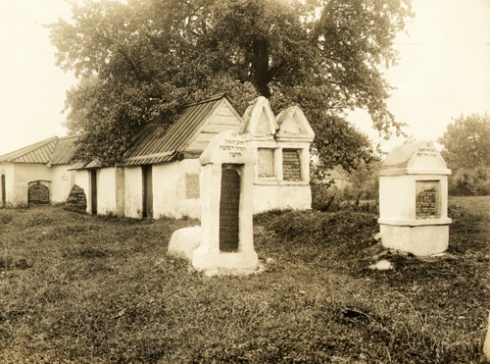
Rabbi Tzvi Rotberg, One of the world’s top Litvak rabbis and head of the world-famous yeshiva (rabbinical academy) Beth Meir, in Bnei-Brak, Israel, issued a public letter, in rabbinic Hebrew, on 25 September 2016 pleading with Lithuanian state authorities to intervene to stop the building of a planned National Congress Center atop the graves of some of the greatest Lithuanian rabbis of the last thousand years. He refers metaphorically to the “outcry of those that lie in the dust from the previous generations who were righteous and pure” and condemns plans for celebrations and unholy events on top of their remains. Rabbi Rotberg is the grandson of the fabled Rabbi Tuvia Rotberg, a close disciple and associate of the Chofetz Chaim (Yiroel-Meir of Radin).
All Welcome at Q & A Session with DH Editor in Vilnius
IN VILNIUS ON THURSDAY EVENING:
ALL WELCOME AT QUESTION-AND-ANSWER & DISCUSSION EVENING WITH OUR EDITOR, DOVID KATZ, AT THE JEWISH CULTURAL AND INFORMATION CENTER
THIS THURSDAY, 29 SEPTEMBER 2016 AT 6:15 PM AT MESINIU 3 IN VILNIUS OLD TOWN
September 23rd Events in the Vilnius Region
DEFENDING HISTORY WAS THERE
Annual Sept. 23 Official Commemoration Ceremony at the Ponár (Paneriai) Mass Murder Site Outside Vilnius, Lithuania
Historic Breakthrough as Lithuanian Jewish Community’s Faina Kukliansky Finally Calls for Removal of Street Names and Memorials for Holocaust Collaborators, Boldly Citing Juozas Krikštaponis, Jonas Noreika, and Kazys Škirpa; Sharp Contrast with Last Year’s Failed Event
Run-Up to Lithuania’s Sept. 23rd 2016 Holocaust Commemoration Day
Events in the Week of Lithuania’s Official September 23rd Holocaust Commemoration Day
Vilnius mayor — and nation’s president and prime minister — face a stark choice on whether to speak out with moral clarity on painful issues of city-center street names and plaques honoring Holocaust collaborators, and the desecration of the country’s oldest Jewish cemetery by a new congress center, prior to this year’s series of official gala Vilna Ghetto commemoration events, 20-28 September 2016
OUR TAKE ON THE NEW HEBREW-YIDDISH STREET SIGN IN THE OLD JEWISH QUARTER
Leonidas Donskis (1962—2016)
◊
The Defending History Community Mourns our Colleague
◊
LEONIDAS DONSKIS
13 August 1962 — 21 September 2016
HIS WORK IN DEFENDING HISTORY INCLUDES ESSAYS ON:
♦ Inflation of the word “genocide” and criminalization of debate
♦ The campaign against Holocaust survivors who joined the anti-Nazi Soviet partisans and its implications
♦ Response to proposals to “reevaluate” the Hitlerist LAF and Provisional Government collaborators of 1941
Yiddish Loses Last Global Position as Symbolic “First Jewish Language” in Vilnius
OPINION | COMMEMORATION OF DESTROYED COMMUNITIES | YIDDISH AFFAIRS | LITVAK AFFAIRS | IDENTITY-THEFT LITVAK INDUSTRY
by Dovid Katz
◊
VILNIUS—For close to three decades, Vilnius has been the only city in the world with municipally sponsored public plaques and signs that regularly include Yiddish. Symbologically for a small, weak, stateless, threatened and “threat-to-nobody” language in this part of the world, it was an equally important statement of respect for the language, literature and culture of the murdered Jewish people of the city that Yiddish sometimes came first, “on top,” and always so when it was a question between Yiddish and modern Israeli Hebrew.
Jewish Community Complains About Works at Old Vilna Jewish Cemetery
Dramatic Pre-Annual Litvak Conference About-Face as Official Jewish Community Finally Protests Something of 2016 Desecration of Vilna’s Old Jewish Cemetery
Defending History published images of these new works last February
But new alarm bells as community calls in as “fixers” the same anti-Litvak London rabbis exposed in “$$$ for graveyard permissions” scandal by Wikileaks, Jerusalem Post, JTA, and DH; They get royal treatment by politicians with interest in the building projects, and have utterly rejected heartfelt pleas from the world’s great Litvak rabbis to move the new congress center away from the old Jewish cemetery to another venue where it can be a source of pride for all the people of Europe and beyond.
Att. Mr. Mayor of Vilnius: Streets Named for Hitler’s Local Partners, and Plans for Congress Center on Top of Old Jewish Cemetery
Sept. 2016 Discourse over “Historic Soul” of Central Vilnius
Will Vilnius Mayor & Lithuania’s PM & President Issue Morally Clear Statements on Two Sites Visible from Grand Dukes’ Medieval Hill?
THERE ARE FIVE JEWISH FORMS OF THE FABLED CITY’S NAME: ווילנא, ווילנע, ווילנה, וילנה, ווילניוס
(1) Changing the name of a city center street that glorifies a Nazi collaborator who enthusiastically supported the removal of his country’s Jewish citizens?
Vanagaitė and Zuroff’s “Mūsiškiai”
[last update]
For the first time, a Lithuanian author teamed up with an Israeli Holocaust scholar in search for the truth about widespread local enthusiasm, seventy-five years ago, for mass murder of civilian neighbors, and today’s failures in coming to grips with that history, in a land of hundreds of Jedwabnes. A genuine historic advance in Lithuanian-Jewish relations is seen in the startling partnership of Rūta Vanagaitė and Dr. Efraim Zuroff in Vanagaitė’s Mūsiškiai: Kelionė su priešu (“Our People: Journey with an Enemy”), published in Vilnius in January 2016. See also the media tracking page on the Simon Wiesenthal Center’s Operation Last Chance website.
English Lithuanian German Polish Russian
The following listing of coverage by language (English, Lithuanian, Russian, Polish) is far from exhaustive. The humongous reaction needs to be studied in its own right.
Nov. 2017 Update: Renewed media conflagration launched by the author’s 26 October 2017 PR rollout of multiple initiatives, two of which were directly relevant to the legacy of Mūsiškiai.
12 Holocaust Massacre Sites in Vilnius Region; Taking a Closer Look at 2
CEMETERIES AND MASS GRAVES | COMMEMORATIONS | LITHUANIA
◊
by Julius Norwilla
◊
There are at least twelve Holocaust mass murder sites in the immediate Vilnius region that are marked by some kind of memorial. They are noted in the online Holocaust Atlas of Lithuania, founded by Milda Jakulytė. In Lithuania, there are over 227 such sites that are described in the atlas, which is historically a continuation of the painstaking 1990s work of the late Joseph Levinson, published in his The Book of Sorrow (Vilnius 1997) that documented close to 200 such sites.
The best known is the Paneriai Memorial as the largest mass grave in the country, known as Ponár in Yiddish and Ponary in Polish. It is the site where 100,000 people were humiliated and murdered, around 70,000 of them Jews. This is where official commemorations take place, particularly each year on September 23rd, the day (controversially) designated by the Lithuanian government as the Holocaust Remembrance Day, rather than the international day, on January 27th, or days specific to the Lithuania-wide Holocaust such as June 23rd when violence against and humiliation of Jewish neighbors broke out across Lithuania.
Other mass murder sites in the Vilnius region are visited much less frequently and very often — not at all. But visiting these places is important for the respect for those murdered there and for a deeper understanding of the Holocaust which has so distorted our nation’s qualities.
Editor’s Comment on a Yad Vashem Group Visiting Lithuania
◊
The following comment appeared on Facebook today:
◊
YAD VASHEM’S “political department” and the group that visited Lithuania last week:
Thanks to both members of the group who quietly reached out to the Defending History team for a meeting. As you saw, nothing but good comes from relaxed, pleasurable, respectful and frank exchange of ideas and knowledge, over a cup of coffee. It was sad that the group was (again) hermetically sealed from “The Second Opinion” here in Vilnius (and those Holocaust survivors who hold such opinions), as if Israeli citizens cannot be trusted to cope with a rich tapestry of opposing views when they visit Eastern Europe. (That various “Yiddish” institutions gleefully, at times, play the role of gatekeeper of ideas here is another issue.) For background on the issues from our team’s perspective, please see:
https://defendinghistory.com/…/political-pressure-on-yad-vas…
https://defendinghistory.com/israel-debates/43340
https://defendinghistory.com/blaming-the-victims
https://defendinghistory.com/category/israel
Over the years some amazing Israeli heroes of truth and courage have indeed spoken out.
My Take On Malát
OPINION | SHTETL COMMEMORATIONS | EVENTS | POLITICS OF MEMORY | COLLABORATOR GLORIFICATION
◊
by Julius Norwilla
◊
The year 2016 marks the 75th anniversary of the genocide of the Jews of the Lithuanian shtetls, the smaller towns, villages and countryside, in fact, a solid majority of Lithuanian Jewry (with a smaller component being kept alive in four cities for slave labor and rolling annihilation over the remaining years of the Holocaust). Marking the anniversary, at the end of August and beginning of September this year (a period in 1941 when a number of the local massacres were concentrated), there have been commemorative events in (Yiddish names first) Birzh (now: Biržai), Dusát (Dusetos), Malát (Molėtai), Shádov (Šeduva), Vílkomir (Ukmergė) and more. By far the largest event took place at Malát on the 29th of August. The project, leading to establishment of a new foundation, was initiated by Tzvi Kritzer. The speakers included high representatives from the Lithuanian government, its official Jewish community, and various public and cultural representatives.
Grigory Tzvi Kritzer’s Speech on the 75th Anniversary of the Malát Massacre
Grigory Tzvi Kritzer, a native of Vilnius, Lithuania, who settled many years ago in Israel, is a well-known Israeli soccer (football) agent. He was the primary organizer of the series of events that culminated in a march by thousands, unveiling of a multilingual monument, and launch of an exhibition, book, and film, in the small town (former shtetl) Malát (Molėtai, northeastern Lithuania) on 29 August 2016. The book and exhibition were the products of the initiative and creative work of regional museum director, Viktorija Kazlienė, in close cooperation with Leon Kaplan who edited and translated the book.
The day marked the 75th anniversary of the 1941 massacre of the town’s 2,000 Jews, then a majority of its population. This year’s day of memorial events there has drawn wide and varied media comment and coverage.
The following is the English text of Tzvi Kritzer’s speech, provided by his office at the request of Defending History. The translation is by Aleksandras Federas.
◊
We decided to walk that road one and a half years ago, and then I imagined that there would be only a few people here… Now, look around, my heart is beating with joy that our relatives and loved ones, who perished here in Molėtai, have not been forgotten.
Thanks to all of you, to those who have come from faraway countries and to those who live here, in Lithuania. I am particularly moved to see here people from all corners of Lithuania. I would like to thank the mayor of Molėtai, Mr. Stasys Žvinis, and all his team for their help and support.
Leon Kaplan’s Speech on the 75th Anniversary of the Malát Massacre
Leon (Liova) Kaplan (in Lithuanian: Leonas Kaplanas) is a native of Vilnius, Lithuania who settled in Washington DC in the early 1970s. He founded the Washington Conservatory of Music and is a noted pianist and master piano educator. He returned to live in Vilnius in 2004, and has over the past year and a half been one of the people involved in enabling the major series of events that culminated in a march by thousands, unveiling of a multilingual monument, and launch of an exhibition, book, and film, in the small town (former shtetl) Malát (Moletai, northeastern Lithuania) on 29 August 2016. The day marked the 75th anniversary of the 1941 massacre of the town’s 2,000 Jews, then a majority of its population. This year’s day of memorial events there has drawn wide and varied media comment and coverage.
The following is the English text of Liova Kaplan’s speech, provided by his office at the request of Defending History. At the event the speech was given in both English and Lithuanian.
◊
Honorable Guests,
Thank you to all gathered here, thanks to all those whose conscience does not allow them to forget the tragic events that happened here in Molėtai (Malát), and in almost 300 places across Lithuania, seventy-five years ago. Allow me to quote the book Night by Nobel prize laureate, the late Elie Wiesel:
Will the EU, the OSCE and the Council of Europe Ask Latvia to Revoke the 1998 Declaration?
OPINION | POLITICS OF MEMORY | GLORIFYING COLLABORATORS | LATVIA | ANNUAL WAFFEN SS MARCHES IN RIGA
◊
by Aleksandr Kuzmin (Riga)
◊
On 29 October 1998, a few weeks after the parliamentary elections, the outgoing Parliament of Latvia had adopted the Declaration on Latvian Legionnaires in the World War II. The vote was as follows: 50 ayes, 8 nays, 3 abstentions.
The text contains several questionable statements. Those include claiming that “The aim of soldiers who were drafted into the Legion or who joined it voluntary was to protect Latvia from the restoration of Stalin’s regime” and asking the government to “prevent insults against the honour and dignity of Latvian soldiers.” To make it clear — the ones whose reputation was intended to be defended were Nazi collaborators, voluntarily or not. And the intention was pretty obvious — as the rapporteur MP, Mr. Mauliņš, said before the vote, “this decision will be our position towards our soldiers who truly fought for the independence of Latvia”.
August and September 2016 Memorials for Destroyed Jewish Communities
Summer and Fall 2016: 75th Anniversary
of the Nazis’ annihilation, with vast local collaboration, of Lithuania’s Jews in the towns, villages, provinces; implementation of ghettoization and mass murder in the cities.
Perhaps among the simplest, most minimalist measures of a municipality’s sincerity (beyond PR bonanzas, photo-ops and legitimizations via useful foreigners): (a) Modest town-center information board on the origins, history, culture, contributions and (true) fate of the town’s Jewish citizens; (b) Rapid removal of any local shrines, street names, museum tributes etc. to the local collaborators and murderers. “You just can’t make heroes out of the killers and expect to cover it up with some annual PR event for the foreigners.”
Language and respect for the victims: In addition to Lithuanian and English, will new memorial texts (including those at forest mass graves and old cemeteries) continue to include Yiddish, the language of 100% of the murdered Jews in all these towns? For many years, Lithuania has had a uniquely admirable record in this regard.
Some High Latvian Politicians Think the Waffen SS Fought for Freedom
OPINION | POLITICS OF MEMORY | GLORIFYING COLLABORATORS | LATVIA | ANNUAL WAFFEN SS MARCHES IN RIGA
◊
by Aleksandrs Feigmanis (Riga)
◊
There are here in Latvia some high-ranking Latvian politicians who actually believe that the country’s Waffen SS fighters fought for freedom of their country. Every year on the 16th of March Latvian nationalists gather at the Freedom Monument in the heart of Riga, the nation’s capital, and in the cemetery at Lestene, a village some seventy-two kilometers from Riga, to remember and honor (honor!) the living and dead veterans of the Latvian Legion of the Waffen SS.
Established by order of Adolf Hitler on the 10th of February 1943, they fought for Nazi Germany against the Red Army on the Volkhov front near Leningrad, and later in Great River region, Kurzeme (Kurland), in Poland, Germany and elsewhere.
Although the alarming series of annual events commemorating and glorifying the Latvian SS Volunteer Legion events are now officially non-governmental, some MPs and even ministers do not hesitate to not only participate publicly, setting an example for the nation’s youth, but also to publicly refer to Waffen SS legionnaires as heroes and national freedom fighters. Had Hitler won the war, there would have been no Latvia left to become free in 1991. By swearing and oath to Adolf Hitler’s genocidal regime, and then in fact delaying the liberation of the concentration camps by the Allies, they were pawns of the Nazis who do not deserve to be glorified by a modern, democratic member of the European Union and NATO.