


Politics of Memory
Danny Ben-Moshe’s “Rewriting History” Back in Melbourne
Posted in 70 Years Declaration, A 21st Century Campaign Against Lithuanian Holocaust Survivors?, Arts, Australia, Danny Ben-Moshe, Film, News & Views, Politics of Memory
Comments Off on Danny Ben-Moshe’s “Rewriting History” Back in Melbourne
Double Genocide Discourse Now Standard for the New York Times?
O P I N I O N / M E D I A W A T C H
VILNIUS—Naturally the New York Times cannot publish or even post very many of the Letters to the Editor that it receives. But when a dozen or so reactions from different parts of the world to a single article are all discarded, it is perhaps worth someone posting a submitted letter elsewhere for the record. This is especially true where there is a larger concern. In this case, it is the paper’s imposition, in recent years, of a wall of silence about the Holocaust Obfuscation, World War II revisionism and far-right historiography peddled by East European countries. These are, as it happens, the same countries who are in today’s geopolitics America’s and the West’s most reliable European allies in the New Cold War against the authoritarian, revanchist Putin regime.
The Times’ policy has sometimes extended to misrepresenting the East European far right’s history revisionism as accepted fact by publishing multiple op-eds from only one side of the argument. When the Times did (obliquely) cover the Seventy Years Declaration in early 2012, its reporter, tightly controlled by the State Department, would not mention the declaration by name, would not meet any of the government’s critics to hear their views, confused the two declarations in contest, and quoted a famous Brandeis professor without mentioning he was in town to receive a medal from the Lithuanian president for helping the state’s PR.
Posted in Double Genocide: The New Form of Holocaust Revisionism & Denial, Dovid Katz, Lithuania, Litvak Affairs, Media Watch, Museums, News & Views, Opinion, Politics of Memory
Tagged Double Genocide + Lithuania, Dovid Katz, Genocide Center Vilnius, Genocide Museum Vilnius, New York Times + Holocaust, New York Times + Jewish Affairs, New York Times + Lithuania, Western media + Eastern Europe
Comments Off on Double Genocide Discourse Now Standard for the New York Times?
Who Has Yet to Express a Public View on the Wisdom of Planting a Convention Center in the Middle of the Old Jewish Cemetery in Vilnius?
VILNIUS—Public opposition to the placing of a twenty-five million dollar convention center in the heart of Vilna’s old Jewish cemetery has come from an array of individuals and organizations, in Vilnius and internationally.
Posted in Defense of Old Jewish Cemeteries and Mass Grave Sites, Lithuania, Litvak Affairs, News & Views, Old Vilna Jewish Cemetery at Piramónt (in Šnipiškės / Shnípishok), Opinion, Politics of Memory, USCPAHA (US Commission for Preservation of the American Heritage Abroad)
Tagged Committee for Preservation of Jewish Cemeteries in Europe, CPJCE, Department of Cultural Heritage (Lithuania), European Jewish Cemeteries Initiative, Jewish cemetert at Piramont (Snipiskes), Litvak Cemetery Catalogue, Lo Tishkach, Maceva, Snipiskes, The U.S. Commission for the Preservation of the American Heritage Abroad, USCPAHA, Vilnius Jewish cemetery
Comments Off on Who Has Yet to Express a Public View on the Wisdom of Planting a Convention Center in the Middle of the Old Jewish Cemetery in Vilnius?
Lithuania’s Chief Rabbi Pleads for Preservation of Holocaust-Era Mass Grave in Šiauliai
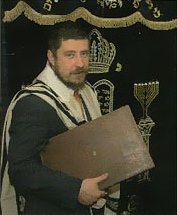
Rabbi Chaim Burshtein
VILNIUS—Rabbi Chaim Burshtein, chief rabbi of Lithuania (and of Vilnius) today issued a heartfelt appeal to both national government authorities, and to the municipal leadership of Šiauliai (known in Jewish history as Shavl), to call an immediate halt to the excavation of hundreds of victims’ remains from a Holocaust-era mass grave site uncovered during a highway construction project.
The discovery was widely reported in the Lithuanian and regional media, including the English-language Lithuania Tribune (English Delfi.lt). Various Lithuanian media outlets have reveled in publishing photos of skulls, bones and other remains from the mass grave being dismantled, sometimes including shoes and clothing (among others: 15min.lt; Etaplius.lt; Skrastas.lt; Snaujienos.lt).
The BNS (Baltic News Service) report quotes the official responsible archaeologist, Audronė Šapaitė on the decision reached (apparently without consultation with Jewish religious authorities): “It’s been decided to excavate the remains, do anthropological tests and then rebury them and also mark this place.”
UPDATE OF 16 JULY:
Protest leads to Rapid U-Turn by Authorities
Posted in Chaim Burshtein, Defense of Old Jewish Cemeteries and Mass Grave Sites, Human Rights, Lithuania, Litvak Affairs, News & Views, Politics of Memory, Rabbi Chaim Burshtein
Tagged Holocaust in Lithuania, Holocaust in Siauliai (Shavl), Mass graves in Lithuania, Rabbi Chaim Burshtein
Comments Off on Lithuania’s Chief Rabbi Pleads for Preservation of Holocaust-Era Mass Grave in Šiauliai
What Does the Mayor of Vilnius Think About His City’s Thousands of Jewish Graves?
O P I N I O N
by Julius Norwilla
◊
Back in May, the story broke about an electrical station on an uninhabited hillside by a highway here in the Lithuanian capital, Vilnius, being made out of pilfered old Jewish gravestones. It quickly spread to the international press, including London’s Daily Mail. The city’s recently elected mayor, Remigijus Šimašius reacted with lightning speed, getting the city’s sign-making maestros to create and mount a handsome solid-metal smartly round-edged bilingual sign condemning the “example of Soviet barbarism” and promising the rapid removal of the stones to a place of dignity where they will form part of a memorial. A PR disaster was spun into a rapid reaction force’s PR triumph against discrimination that could only do our great city proud.
Posted in Defense of Old Jewish Cemeteries and Mass Grave Sites, Double Games, Julius Norwilla, Lithuania, Litvak Affairs, Media Watch, News & Views, Old Vilna Jewish Cemetery at Piramónt (in Šnipiškės / Shnípishok), Opinion, Politics of Memory, Vilnius Mayor Remigijus Šimašius
Tagged Jewish gravestones in Vilnius, Lithuania + matseyves / maceva / macevot, Lithuanian Jewish cemeteries, Remigijus Šimašius
Comments Off on What Does the Mayor of Vilnius Think About His City’s Thousands of Jewish Graves?
Dr. Rachel Margolis Dies in Rehovot; Didn’t Get to See Her Native Vilna One Last Time
רחל מאַרגאָליס (מַרְגָלִית) ז″ל
Rachel Margolis
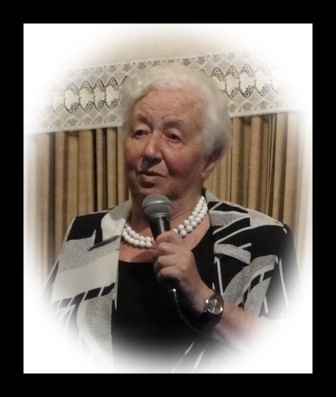
Vilna, 28 October 1921 — Rehovot, 6 July 2015
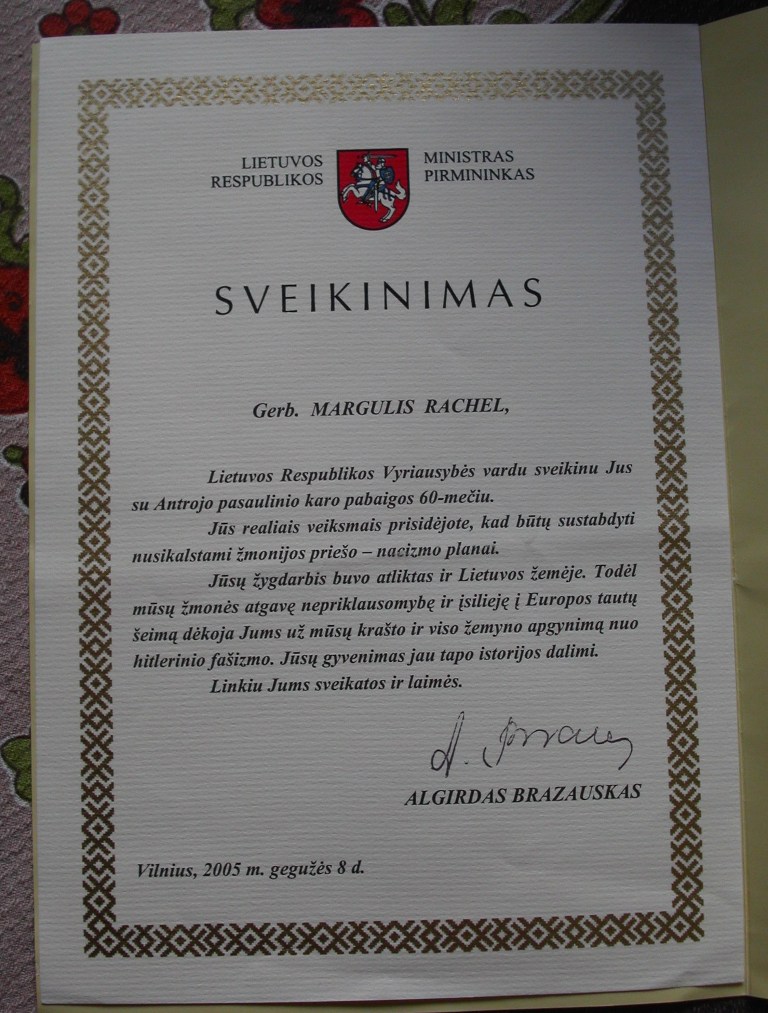
About Rachel Margolis: Shimon Alperovich, Algirdas Brazauskas, Gordon Brown, Abraham Foxman, Steinar Gil, Martin Gilbert, Chen Ivri Apter, Dovid Katz (Y), Francois Laumonier, NCSJ, Geoff Vasil. UK House of Lords, 5 US Congressmen, 9 Western ambassadors in Vilnius.

Posted in A 21st Century Campaign Against Lithuanian Holocaust Survivors?, Dr. Rokhl (Rachel) Margolis (1921-2015), Lithuania, Litvak Affairs, News & Views, Obituaries, Politics of Memory, Yiddish Affairs
Tagged anti-Nazi resistance, Dr. Rachel Margolis, Jewish partisans in Lithuania, Prosecutor General of Lithuania, Sakowicz's Ponary Diary
Comments Off on Dr. Rachel Margolis Dies in Rehovot; Didn’t Get to See Her Native Vilna One Last Time
A Letter from Leffond, France to the Mayor of Vilnius, Capital of Lithuania
O P I N I O N
by Christian Bonneville
◊
Leffond, France, 5 July 2015
Hon. Remigijus Šimašius, Mayor of Vilnius, Lithuania
Monsieur le Maire,
- Convention and Congress Center
- Conversion of the Sport Palace Center along the Neris at the Piramónt Location
Congratulations on your election and your determination to develop the cohesion and the attractiveness of the city to be enriched with new facilities and services including a new Conference and Congress Center.
Posted in Defense of Old Jewish Cemeteries and Mass Grave Sites, France, Lithuania, Litvak Affairs, News & Views, Old Vilna Jewish Cemetery at Piramónt (in Šnipiškės / Shnípishok), Opinion, Politics of Memory, Vilnius Mayor Remigijus Šimašius
Tagged Cemetery in Snipiskes (Shinipishok), Christian Bonneville, Jewish cemetery at Piramont (Snipiskes, Remigijus Šimašius
Comments Off on A Letter from Leffond, France to the Mayor of Vilnius, Capital of Lithuania
Central Rabbinical Congress of the USA and Canada Protests Desecration of Old Vilna Jewish Cemetery
BROOKLYN, NEW YORK—The Central Rabbinical Congress (CRC) of the U.S.A. and Canada today released to the media the facsimile of the original Hebrew letter it has issued concerning plans for a convention center at the old Vilna Jewish cemetery at Piramónt, now in the Šnipiškės district of modern Vilnius, the capital of Lithuania (background; the paper trail to date). The facsimile is followed by an English translation provided by the CRC.
EXCERPT:
“We turn to the enlightened government of Lithuania, and to the European Union, and say: Please Brothers—do no evil! O Heaven! Aren’t we all children of the same father and mother? Why are we different than every other nation, that you decreed such terrible things against us?”
Posted in Appeals to the European Commission on Piramónt, Defense of Old Jewish Cemeteries and Mass Grave Sites, Lithuania, Litvak Affairs, News & Views, Old Vilna Jewish Cemetery at Piramónt (in Šnipiškės / Shnípishok), Politics of Memory
Tagged Central Rabbinical Congress + Lithuania, Jewish cemetery at Piramont, Jewish cemetery in Shnipishok, Jewish cemetery in Snipiskes, Jewish issues + Lithuania, Jewish Vilna (Vilnius), Lithuanian Jewish issues, Vilnius Jewish cemetery
Comments Off on Central Rabbinical Congress of the USA and Canada Protests Desecration of Old Vilna Jewish Cemetery
The June 2015 Memorial for the Lietūkis Garage Massacre in Kaunas, Lithuania
O P I N I O N / E Y E W I T N E S S A C C O U N T
by Julius Norwilla
◊
To mark the 74th anniversary of one of the iconic events of the Lithuanian Holocaust, the infamous Lietūkis Garage Massacre of 27 June 1941, the Kaunas Jewish Community organized its annual memorial event at the site, last Friday, 26 June 2015. The massacre, carried out by local Lithuanian “patriots” wearing the white armbands of the Lithuanian Activist Front (LAF), butchered dozens of Jewish passers-by at a garage on Kaunas’s Vytautas Avenue, using a variety of execution methods, including clubbing to death with crowbars, and particularly, forcing water from high-pressure hoses into bodily orifices of the victims until they burst. A growing crowd, including women holding up their young children to get the best views, cheered them on.
Posted in Bold Citizens Speak Out, Commemorations for Destroyed Communities, Events, History, Julius Norwilla, Lithuania, Litvak Affairs, News & Views, Opinion, Politics of Memory
Tagged Aleksandras Bosas, Amir Maimon, Embassy of Israel in Lithuania, Holocaust in Lithuania, Julius Norwilla, Lietukis Garage, Lithuanian Activist Front
Comments Off on The June 2015 Memorial for the Lietūkis Garage Massacre in Kaunas, Lithuania
Rewriting History in Latvia
B O O K S / L A T V I A
by Roland Binet (Braine-l’Alleud/Belgium)
◊
Since I became interested in the fate of the Jewish victims of the Holocaust in Latvia, rather late (2009), I never failed to buy books when I visited that country, first and foremost written by Jewish survivors of these terrible times, but, also, some books written by non-Jewish Latvians in order to see how they perceived these tragic events, how they related to the Jewish victims of the Holocaust and how they presented the history of the German occupation and the mass slaughter of more than 95% of the Jewish population of their country (using the figures of Jews on site at the time of the Nazi invasion as the basis for historians’ estimates).
Posted in Books, Herberts Cukurs, History, Latvia, News & Views, Opinion, Politics of Memory, Roland Binet
Tagged Holocaust in Latvia, Janis Straume, Riga Ghetto, Roland Binet, Rumbula
Comments Off on Rewriting History in Latvia
Why Was Richard Maullin, Head of California ISO, Honored by the Foreign Minister of Lithuania?
O P I N I O N
◊
LOS ANGELES—Richard A. Maullin, elected less than a year ago as the chair of the California Independent System Operator (ISO) Board, was lavishly honored here on May 31st by both the Lithuanian ambassador to the United States and the Foreign Minister of Lithuania. The latter, in the tradition of royalty, meticulously placed the Lithuanian Diplomatic Star around the neck of Dr. Maullin, a major American pollster and principal of the LA polling and public policy research firm FM3, often still known by its older name Fairbank, Maslin, Maullin, Metz & Associates.
Posted in "Jewish" Events as Cover?, Double Games, Foreign Ministries: Holocaust Politics Abuse?, Lithuania, Litvak Affairs, News & Views, Opinion, Politics of Memory, Richard Maullin, United States, Views of Prof. Sarunas Liekis, Vilnius Yiddish Institute, Yiddish Affairs
Tagged California ISO, Fairbank, FM3 (Los Angeles), FM3 (Oakland), Friends of the Vilnius Yiddish Institute, L:ithuanian consulate Los Angeles, Maslin, Maullin, Maullin + ISO + California, Metz & Associates, Natasha Yatskevich, Richard A. Maullin, Richard Maullin, Sidney Rosenfeld, Vilnius Yiddish Institute, Zane Buzby
Comments Off on Why Was Richard Maullin, Head of California ISO, Honored by the Foreign Minister of Lithuania?
In Defense of Transparency at the Milwaukee Symphony Orchestra
O P I N I O N / M U S I C
by Ronald C. Kent
◊
In January 2012 I became aware of a then-upcoming performance of Carl Orff’s “Carmina Burana” by the Milwaukee Symphony Orchestra. Since I knew that Carl Orff was a Nazi-approved composer, who created this work in 1936, I wrote a letter to Maestro Andreas Delfs and Music Director Edo de Waart, requesting that they place the biography of Orff during the Nazi period in the program, in the interest of enlightenment, transparency, and full disclosure, thereby situating “Carmina Burana” in its historical context for listeners.
Posted in Christian-Jewish Issues, Collaborators Glorified, Germany, Media Watch, Music, News & Views, Opinion, Politics of Memory
Tagged Andreas Delfs, Carl Orff, Carmina Burana, Edo de Waart, ILHA, International Labor History Association, Milwaukee Journal Sentinel, Milwaukee Symphony Orchestra, Ronald C. Kent
Comments Off on In Defense of Transparency at the Milwaukee Symphony Orchestra
Ukrainian Hitlerist Icons Celebrated in Weston-on-Trent in Derbyshire, England
O P I N I O N / U K / U K R A I N E
by J. North
◊
Earlier this month, the Ukrainian Youth Association (CYM Great Britain) held a remembrance day at the Tarasivka camp at Weston-on-Trent in Derbyshire. They advertised the event on their website (http://cym.org/uk) and with a poster replete with (ultra)nationalist imagery.
Posted in Bandera, Celebrations of Fascism, Collaborators Glorified, Events, Human Rights, News & Views, Opinion, Politics of Memory, Ukraine, United Kingdom
Tagged Bandera + Ukraine, fascism in Ukraine, J. North, Stepan Bandera, Ukrainian far right + UK
Comments Off on Ukrainian Hitlerist Icons Celebrated in Weston-on-Trent in Derbyshire, England
Herbert Block’s Clarification on Participation in Lithuanian Government’s New Heritage Commission
NEW YORK—Herbert Block’s office today issued the following statement which in effect modifies the Lithuanian government’s published list of members of its new commission on the Lithuanian Jewish heritage. This clarification is now linked at relevant points in Defending History’s recent report on the cemetery saga in Vilnius.
Herbert Block has informed Defending History that, while he was appointed to the new Commission by the Government of Lithuania without prior notice, and was honored by the designation, he formally resigned this position. As a Member of the US Commission for the Preservation of America’s Heritage Abroad, a US federal government agency, Mr. Block is not permitted to serve on any body appointed by a foreign government.
Mr. Block attended the May 7, 2015 meeting in Vilnius only as an Observer on behalf of the US Commission.
Posted in Defense of Old Jewish Cemeteries and Mass Grave Sites, Herbert Block, Herbert Block and Issues of Lithuanian Jewish Cemetery Preservation, Lithuania, Litvak Affairs, News & Views, Old Vilna Jewish Cemetery at Piramónt (in Šnipiškės / Shnípishok), Politics of Memory, USCPAHA (US Commission for Preservation of the American Heritage Abroad)
Tagged Herbert Block, Jewish cemetery in Snipiskes / Piramont, Lithuanian gov. commission on Jewish heritage, US Commission fr the Preservatin of America's Heritage Abroad, Vilnius Jewish cemetery
Comments Off on Herbert Block’s Clarification on Participation in Lithuanian Government’s New Heritage Commission
High Intrigue Over the Fate of the Old Vilna Jewish Cemetery
by Dovid Katz
Updates in [brackets] to 12 July 2015
◊
VILNIUS—According to Lithuanian media sources, including the highly respected English-language Lithuania Tribune (now merged with Delfi.lt), the government, working in concert with property developers, plans to declare the controversial project of a huge convention and entertainment center in the heart of the old Vilna Jewish cemetery site as a “project of national importance.” The move enables an application to the European Union for a grant of 13 million euros (14.64 million US dollars at current rates) as part of a grand-total (for now) of 22.8 million euros (25.67 million US dollars) for the new complex. The nation’s prime minister has told Lithuanian media that “after the modern congress center is completed, private investors could build a hotel, parking lots and other infrastructure,” eliciting fears that all of the old Jewish cemetery is becoming a cash cow slated for developers for years to come. The Lithuania Tribune / Delfi.lt report concludes with an estimate of “110 million euros in economic and social benefits over 15 years” in addition to “600,000 foreign tourists and 2.2 million local tourists to Vilnius over that time period, with their spending estimated at 183 million and 60 million euros, respectively,” in other words, with profits from the old Jewish cemetery exceeding the equivalent of 250 million dollars, apart from the millions to be had from the building projects per se. Some estimates are provided in Baltic Course.
Posted in American Jewish Committee (AJC) in Lithuania, Antisemitism & Bias, Appeals to the European Commission on Piramónt, CPJCE (London), Defense of Old Jewish Cemeteries and Mass Grave Sites, Double Games, EU, Foreign Ministries: Holocaust Politics Abuse?, Herbert Block and Issues of Lithuanian Jewish Cemetery Preservation, In the Era of Yivo's 100th, Lithuania, Lithuania: Textbook Case of East European Restitution (for Lost Jewish Assets) Abused to Dismantle a Vibrant Jewish Community, Litvak Affairs, News & Views, Old Vilna Jewish Cemetery at Piramónt (in Šnipiškės / Shnípishok), Politics of Memory, United States, US State Department
Tagged American Heritage Abroad Commission, Andrew Baker, Antisemitism in Eastern Europe, Commission for the Preservation of the American Heritage Abroad., Herbert Block, Jewish cemeteries in Lithuania, Jewish Heritage Research Center, Jewish Sites Survey, Jonathan Brent, Jules Fleischer, Lina Saulenaite, Lithuanian-Jewish relations, Michael Maass, preservation of jewish historic sites in Europe, Rabbi Chaim Burshtein, Rabbi Israel Isaac Kalmanovitz, Rabbi Meir Soloveitchik, Rabbi Tzvi Rotberg, Samuel Gruber, Samuel Gruber's Jewish Art & Monuments, US government + Vilna Jewish cemetery, Vilna Jewish cemeter Piramont, Vilnius Jewish cemetery Snipiskes, Yivo + Vilnius, YIVO Institute for Jewish Research, Yivo Lithuania
Comments Off on High Intrigue Over the Fate of the Old Vilna Jewish Cemetery
Evaldas Balčiūnas at Vilnius County Court Next Monday 15 June 2015
VILNIUS THIS MONDAY:
FRIENDS OF HUMAN RIGHTS, FREE SPEECH AND DEFENDING HISTORY INVITED TO COME OBSERVE / SUPPORT OUR WRITER
Evaldas Balčiūnas
Posted in Collaborators Glorified, Double Genocide: The New Form of Holocaust Revisionism & Denial, EU, Evaldas Balčiūnas, Free Speech & Democracy, Lithuania, Litvak Affairs, News & Views, Politics of Memory, Prosecutors & Police 'Investigate' DH Author Evaldas Balčiūnas, State Glorification of Holocaust Collaborator J. Noreika
Tagged Evaldas Balciunas, Free Speech in Eastern Europe, Free speech in Lithuania, Free speech in the Baltics, Holocaust Obfuscation
Comments Off on Evaldas Balčiūnas at Vilnius County Court Next Monday 15 June 2015
New Conflict Over Old Vilna Jewish Cemetery, As New Heritage Commission Gets Underway
Updates on the new conflict over the old Vilna Jewish cemetery site at Piramónt (now part of the Šnipiškės [Yiddish: Shnípishok] district), and the related issues surrounding a concurrently established new commission on Jewish heritage will be added here as they become available.
THE PAGE IS HERE
Posted in Defense of Old Jewish Cemeteries and Mass Grave Sites, Human Rights, Lithuania, Litvak Affairs, Media Watch, News & Views, Old Vilna Jewish Cemetery at Piramónt (in Šnipiškės / Shnípishok), Politics of Memory
Tagged Commission on Jewish heritage in Lithuania, Jewish cemeter at Piramont (Snipiskes, Old Vilna Jewish cemetery, Shnipishok)
Comments Off on New Conflict Over Old Vilna Jewish Cemetery, As New Heritage Commission Gets Underway
Would this Building Project be Pursued if the Cemetery Were the Resting Place of Christians?
O P I N I O N / C H R I S T I A N – J E W I S H R E L A T I O N S / C E M E T E R I E S
by Pastor Michael Maass
◊
I would like to make an observation concerning the use of Jewish cemeteries for building projects, as this has come to be a major issue of controversy in Lithuania, and in other nations as well.
I would like to pose a question: Would these building projects be pursued if the cemeteries in question were the resting places of Catholics, Protestant Christians, or other non-Jewish people?
Posted in Antisemitism & Bias, Appeals to the European Commission on Piramónt, Christian-Jewish Issues, Defense of Old Jewish Cemeteries and Mass Grave Sites, Human Rights, Lithuania, Litvak Affairs, Michael & Fausta Maass, News & Views, Old Vilna Jewish Cemetery at Piramónt (in Šnipiškės / Shnípishok), Opinion, Politics of Memory, Racism
Tagged cemetery at Piramont (Snipiskes, Christian-Jewish relations in Lithuania, Jewish cemetery in Vilnius, Lithuania, Shnipishok)
Comments Off on Would this Building Project be Pursued if the Cemetery Were the Resting Place of Christians?
Lithuania’s President and Entourage Lay Wreaths at Ponár on May 8th…
VIDEO
Dovid Katz in Times of Israel (11 May)
Efraim Zuroff in i24 (12 May)
“Equally” at Monuments for Jewish, Lithuanian and Polish Victims, but Skipping the Stone Commemorating the 7,514 Red Army Prisoners of Various Nationalities Starved and Murdered at the Site.
Posted in "Jewish" Events as Cover?, Defense of Old Jewish Cemeteries and Mass Grave Sites, Double Games, Double Genocide: The New Form of Holocaust Revisionism & Denial, Events, History, Lithuania, Litvak Affairs, News & Views, Politics of Memory
Tagged May 8th memorial at Ponar (Paneriai), Ponar (Paneriai, President Dalia Grybauskaite + Holocaust
Comments Off on Lithuania’s President and Entourage Lay Wreaths at Ponár on May 8th…
SLS’s 2015 Sutzkever Prize: Yiddish Poetry Serving Right-Wing East European Politics?
O P I N I O N
◊
The bizarre saga of the Montreal-based Summer Literary Seminars (SLS) “Jewish Lithuania Sutzkever Prize” continues apace with ever-increasing disrespect toward Abraham Sutzkever and his fellow Jewish partisans who helped liberate Lithuania from the Nazis, and ever more political entanglement with current geopolitical instrumentalization of Yiddish and Jewish causes in Eastern Europe in the context of East-West tensions.
Posted in "Jewish" Events as Cover?, A 21st Century Campaign Against Lithuanian Holocaust Survivors?, Canada, Foreign Ministries: Holocaust Politics Abuse?, Lithuania, Litvak Affairs, News & Views, Opinion, Politics of Memory, Sutzkever Prize in Lithuania, What Do Fake Litvak Games Look Like?, Yiddish Affairs
Tagged Abraham Sutzkever, André Aciman, Holocaust in Lithuania, Jamie Kirchick, Jewish partisans in Lithuania, Lithuanian Jewish partisans, Mikhail Iossel, SLS (Summer Literary Seminars) Lithuania, Sutzkever Prize in Lithuania, US Embassy in Vilnius, US State Department Holocaust policy
Comments Off on SLS’s 2015 Sutzkever Prize: Yiddish Poetry Serving Right-Wing East European Politics?