On the 15 July 2013 centenary of the birth of the illustrious Yiddish poet of Vilna, Abraham Sutzkever (1913–2010), the last active association of Holocaust survivors from Lithuania released the statement below (also available as PDF). It urges organizers, participants, judges and prize winners to avoid being instrumentalized as cover-up props for Holocaust obfuscation. It proposes that they simply issue public statements calling for written public apologies from the Lithuanian government to the defamed Jewish partisans who knew Sutzkever well from the forests of Lithuania and dozens of years of contact in survivor circles. See the related debate on this year’s Sutzkever Prize.
Opinion
Holocaust Survivors from Lithuania Issue Statement on Sutzkever Prize in Vilnius
Would a Jewish Museum in Vilnius Graywash the Lithuanian Holocaust?
O P I N I O N
by Dovid Katz

A recent visit to Vilnius’s “Jewish Museum — Tolerance Center” has revealed a shocking panel purporting to convey the “facts” of June 23rd 1941, the darkest date in Lithuanian Jewish history. It is the date on which the Holocaust in Lithuania began. No need, incidentally, to take our word for it. Ask any Lithuanian Jew, of any generation, current abode or political persuasion: When did the Holocaust in your country start?
Chief Lithuanian Bureaucrat/Historian Rehabilitates Nation’s Quislings, Again
O P I N I O N
by Geoff Vasil
In an interview posted on the Delfi website on June 21, 2013, Lithuanian government historian Arūnas Bubnys, head of department for the Orwellian- or even Kafkaesque-sounding Center for the Study of the Genocide and Resistance of the Residents of Lithuania, once again lent support to the pro-Nazi Lithuanian Quisling government that seized power on June 23, 1941.
The interview, titled “Lithuanian Historian: June Uprising was Rehabilitation for Shameful Surrender to Soviets,” is available here. An English translation is provided here.
What follows is my commentary on that interview.
Statement for London Panel by Michael Pinto-Duschinsky
O P I N I O N
by Michael Pinto-Duschinsky
The following is the author’s prepared statement for a panel discussion this evening on rights and freedoms prior to a performance of Harold Pinter’s “Hothouse” at Trafalgar Studios, London SE1. Panelists are: Shami Chakrabarti, Jonathan Cooper, Nicolas Kent and Michael Pinto-Duschinsky.
In 1970, twelve years after the first performance of “Hothouse”, Harold Pinter chose to accept a valuable award called the “Shakespeare Prize”. The series of Shakespeare Prizes were donated from the 1930s onwards by a Hamburg multi-millionaire with a record for actively supporting the Nazis before, during and after the Second World War.
Marching with the Words: “No to Falsification of History!”
O P I N I O N
by Milan Chersonski
Authorized translation from the Russian by Ludmila Makedonskaya (New York)
In accordance with the law of the Republic of Lithuania for days of commemoration, June 23rd has been declared a national memorial day. It is the day of the 1941 June Uprising. As known, the extermination of the Lithuanian Jewish minority began on the same day as this “uprising.”
An Unmarked Holocaust Mass Murder Site in Riga, the Latvian Capital
INTERVIEW WITH RIGA HISTORIAN MEYER MELLER (MELERS)
by Aleksandrs Feigmanis
The great Russian author Lev Tolstoy wrote in his story “From the Notebook of Prince D. Nekhlyudov. Luzern.”
“Seventh July 1857 in Luzern in front of the Schweizerhof Hotel, where most rich people would stay the itinerant beggar-singer sings songs for half an hour and plays his guitar. About a hundred people heard him. Three times the singer asked the crowd to give him some money or food. Nobody gave him anything and many laughed at him.” […] This is the event which the historian of our times should write about with fiery irascible letters. This event is much more important and serious and has much more sense than the facts written in newspapers and history books. […] This is not a fact for the history of human acts, but for the history of progress and civilization.”

All that marks this major Holocaust mass grave in Riga, the Latvian capital, is a plastic bucket of flowers near the empty frame of a long-destroyed Soviet-era tin sign.
If you wish to see the mass grave take number 13 bus from the central station headed for Plavnieki and get off at the stop called Darzenu baze (roughly a half-hour ride). When you get off, turn from Lubanas street to the right until you come to Darzenu baze (“warehouse for vegetables”). In the pine woods some 300 meters from the warehouse you will see a little hill, without any mark, inscription or tombstone. Just a few primitive buckets of plastic flowers mark the site. They are placed near a wood frame stand that once, in Soviet times, held within it a bilingual tin sign about the site, that has long been destroyed and removed. The site is about 600 meters from the nine-floor apartment houses in Riga’s Plavnieki district.
Double Genocide: A Literary Jackpot?
B O O K S
by Leena Hietanen

The book’s moral is on the front cover: “Those who deny history are doomed to repeat it.” But the book itself virtually deletes the Holocaust from the region’s history…
The most famous Finnish contemporary author, Sofi Oksanen, now 36 years old, has made a fortune from her books about Estonian history that are in some ways conceptually steeped in the Double Genocide movement. According to the Finnish financial daily, Kauppalehti, the turnover of her publishing enterprise, Silberfeldt Co. reached 3.4 million euros with a net profit of 1.8 million euros since 2011, when she established the company.
The bestseller has been the novel, Purge, which phenomenally sold over 150,000 copies in Finland alone. The book has been translated into dozens of languages and has been quite a success in France and Scandinavia. The stage version (which is the original) of Purge came to New York (though still off-off Broadway). By Finnish standards her popularity and business skills have made Ms. Oksanen the “Harry Potter – Joanne Rowling” of Finland.
Tone and Moral Judgment in a Famous Book on the Latvian Holocaust
B O O K S
by Roland Binet (Braine-l’Alleud, Belgium)
I became interested in the Holocaust in Latvia during my first visit there in 2009 and, above all, after having visited the Museum of the Jews in Latvia with its detailed exhibition of the tragedy that befell the Jewish population of that country. I had earlier read some books about the massacres that took place in Latvia between 1 July 1941 and the re-conquest of that country by the Red Army in 1944. Books written by survivors depicted a horrific environment including mass slayings, pogroms, denunciations, refusal of help for someone still alive. For those few who survived as slaves (roughly one out of ninety), there were living conditions far worse than what Dante could ever have imagined in his own time.
Thus, after a number of years, it was with great expectations that I began to read Andrew Ezergailis’s renowned book, The Holocaust in Latvia (first edition, 1996).[1]
Rehabilitation of the Past as a Tool in Today’s Politics
O P I N I O N
by Milan Chersonski

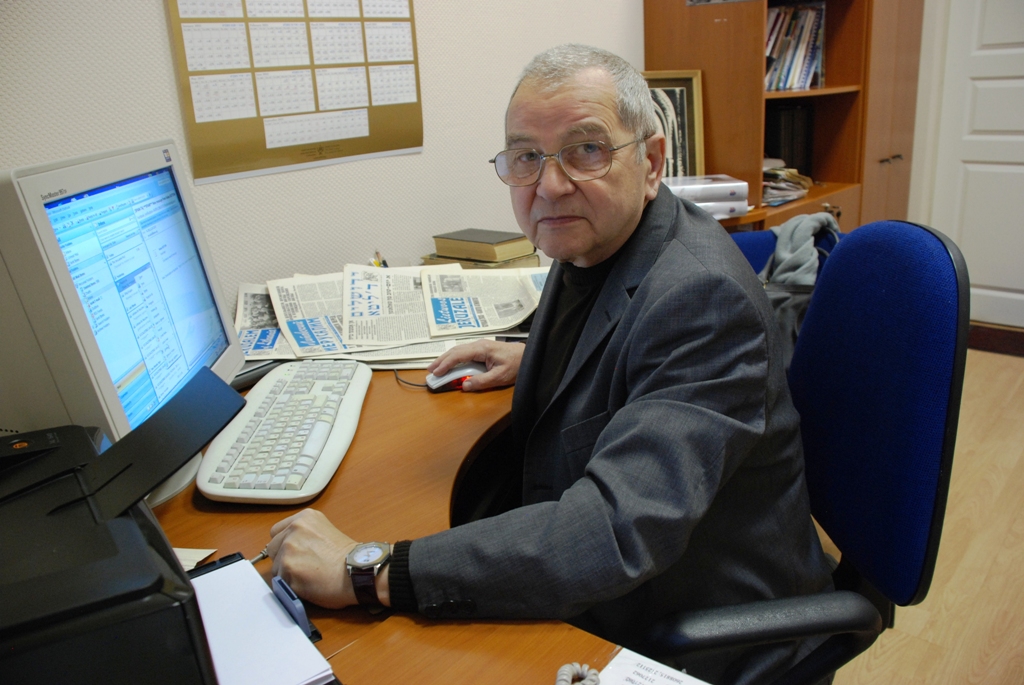
Milan Chersonski reads his paper at the Riga conference, 27 May 2013
The following is the authorized English version of the paper read by Milan Chersonski in Riga on 27 May 2013 at the Second International Conference on Holocaust Museums and Memorial Places in Post-Communist Countries.
Milan Chersonski (Chersonskij), longtime editor (1999-2011) of Jerusalem of Lithuania, quadrilingual (English-Lithuanian-Russian-Yiddish) newspaper of the Jewish Community of Lithuania, was previously (1979-1999) director of the Yiddish Folk Theater of Lithuania, which in Soviet times was the USSR’s only Yiddish amateur theater company.
See also the Milan Chersonski section of Defending History.
I
In Eastern European countries occupied by Nazi Germany during World War II there was a phenomenon called “collaborationism”: the cooperation of individuals and organizations with the Nazi occupation regime. In the modern historiography of these countries, events of that fateful time are often presented not by historians, but primarily by right-wing or extreme right-wing politicians, who continue today to convince the public that the collaboration was in fact nothing but a form of struggle for independence, and a kind of resistance to the Nazi regime.
Sometimes this approach to the evaluation of historical events is called whitewashing. The purpose of this manipulative activity is clear: to absolve the erstwhile Nazi collaborators and pro-Nazi national organizations from the responsibility for the crimes against humanity committed during the Nazi occupation, and their countries from responsibility for Nazi crimes.
The Unwritten Biography of Jonas Žemaitis: A Tale of Twists and Turns
O P I N I O N
by Evaldas Balčiūnas
◊
The modern Republic of Lithuania has been creating a cult of the partisans. Statues are built to memorialize them. There are commemorative plaques and streets are named after them, as well as schools. One of the most prominent to be hallowed by the cult is Jonas Žemaitis, also called Vytautas, Luke, Matthew, the Silent and general as well as president. His biography is a tapestry of events and adventures. One could write an adventure novel about them, except that… Žemaitis isn’t necessarily a hero.

Rehabilitation of the Past as a Tool of Modern Politics
O P I N I O N
by Milan Chersonski
RIGA—The following is the authorized text, in the original Russian, of Milan Chersonski’s paper delivered today at the international conference on Holocaust Commemoration and Memorials in Post-Communist Countries. See also: Milan Chersonski section.
Baltic Times: Hitting a New Low with “Paid Advertisement” Advocating Migration of Latvia’s Russian Speakers?
O P I N I O N / M E D I A W A T C H
The half-page article on the “Business” page of the Baltic Times (dated 4-17 April 2013 but widely available this week here in Vilnius) carries at its end the words “This is a paid advertisement.”
But these words do not succeed in mitigating the moral responsibility of the increasingly ultranationalist, far-right newspaper in disseminating hate material against any minority, least of all of in an EU / NATO member state. The inherent equality of peoples and their races and languages and national and personal identities are an inseparable component of what the European Union and NATO are all about.
The Neo-Nazis Hate the Feminists, Too
Protesters against ultranationalist groups must face police and prosecutors
O P I N I O N
by Lina Žigelytė

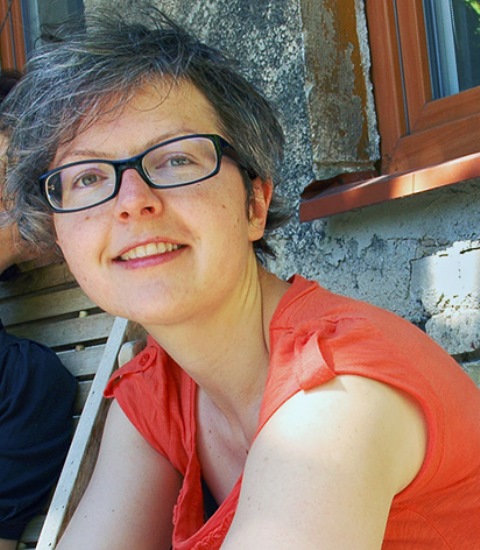
Lina Žigelytė
A spectre is haunting Lithuania — the spectre of feminism. All the powers of far-right Lithuania (this includes also far-rightists who know how to present themselves as center-right) have entered into a holy alliance to exorcise this spectre: puritans and watchful police officers, bloggers and self-described patriots.
The word “feminist” has become the most recent label to define the enemy of the state. This is because grassroots strategies — theatrical protests, DIY media, art projects, and solidarity with social minorities — are rapidly changing the landscape of local feminism. What is important, these strategies also invigorate the broader fight against neo-Nazism.
Estonian Fascist Admirers Preparing Midsummer Waffen SS Fest
O P I N I O N
by Leena Hietanen
Estonian ultranationalists traditionally celebrate Hitler’s victory on the Sinimae Hillls in eastern Estonia annually at the end of July. This year is no exception. The festivities are slated to start on the 27th of July at Sinimae.
As usual, the Estonian government is quietly giving its blessing to the proceedings. Old Estonian Waffen SS Legionaries gather on the hills to commemorate their participation on the Second World War on the side of Nazi Germany. In the battles of Sinimae Hills during the spring and summer of 1944 Estonian Waffen SS soldiers together with their fellow pro-Nazi combatants from Scandinavia, Belgium, Holland and Germany halted the progress of the Allied/Soviet front for half a year in the Eastern part of Estonia postponing the collapse of Nazi-Germany and condemning untold civilians to ongoing Nazi atrocities. Almost half of a million Hungarian Jews lost their lives in Auschwitz thanks to Estonian Legionaries. They would have survived had the Soviet advance not been tied up the Germans’ prime allies among the Estonian fascists.Continue reading
The Homophobic Track Record of MEP Vytautas Landsbergis
O P I N I O N
by Anna Shepherd
Lithuanian conservative politician, former Head of the Lithuanian Parliament and current EPP Member of the European Parliament Vytautas Landsbergis has consistently expressed homophobic views and spoken out against initiatives to strengthen LGBT (lesbian, gay, bisexual and transgender) rights in the European community, and particularly in Lithuania itself.
SEE ALSO:
LANDSBERGIS’S TRACK RECORD ON JEWISH ISSUES
ON THE GLORIFICATION OF LOCAL NAZI COLLABORATORS
Landsbergis expressed his views about LGBT rights unambiguously in his outlandish claim in 2010 that paedophilia is connected to homosexuality. This claim was made at a parliamentary hearing on the sexual abuse on children organised in the European Parliament. According to Landsbergis, children should be protected from “homosexual propaganda” and “homophilic [sic] paedophilia”. Landsbergis’ claims were condemned by Cecilia Malmström, the European Commissioner for Home Affairs; and the European Parliament’s Intergroup for LGBT Rights, which stated that it condemns paedophilia unreservedly, as do all recognized LGBT organizations worldwide.
On the Preservation of Lithuania’s Old Jewish Cemeteries
O P I N I O N
by Joseph Levinson

Joseph Levinson (Josifas Levinsonas) in Vilnius, 2013. Courtesy of the Levinson family.
On April 25th 2013 an event dedicated to the recording, maintenance and preservation of old Jewish cemeteries in Lithuania was held at the Vilnius premises of the Lithuanian Jewish Community. It was organized by the NGO “Maceva” and chaired by one of the NGO’s founders and leading figures, himself a resident of Brussels.
The April 25th evening in Vilnius went “smoothly” until a veteran member of the Jewish Community politely pointed out that much of the work that the NGO was taking credit for and presented as a miracle dropped from the heavens had in fact been carried out many years earlier by the very Jewish Community in whose premises the event was held. There was a moment of shock when the event’s chairman reacted by saying “There are different kinds of Jews!” instead of thanking the senior member of our community for his well-intentioned, polite and factual corrective remarks from the floor.
Facebook Discussion of 23-29 April 2013 on the May 2013 Global Forum in Jerusalem
A paste-in of the Facebook discussion to date on the upcoming Global Forum conferences in Jerusalem is available at:
https://defendinghistory.com/facebook-discussion-on-2013-global-forum-23-29-april-2013.
The Wehrmacht: One of Hitler’s Killing Machines
by Roland Binet (Braine-l’Alleud, Belgium)
Some people interested in military history have perhaps kept in mind a picture of the German Army during World War II – the Wehrmacht – as having been an army not essentially different from other belligerent armies, although, admittedly, it acted brutally and, sometimes, at the limit of what would have been deemed acceptable in times of war.
In Obeliai (Abél) and Rokiškis (Rákishok): More State-Sponsored Glorification of Nazi Collaborators
O P I N I O N
by Geoff Vasil
Years ago, when I first started doubting the veracity of certain propaganda intended to diminish the culpability of local forces in the Holocaust, I interviewed an elderly woman who was an eye-witness to what happened in late June of 1941 in Rokiškis (in Yiddish: Rákishok) in northern (or northeastern) Lithuania.

Obeliai (Abel) 1942: Is curiosity or concern sparked by this “celebration of 1941 partisans” coming from the apex of Nazi rule in Lithuania (1942, when the local Jews were already all murdered)? It seems not. This photo is of the 1942 Nazi-era memorial torn down by the Soviets, and just replaced by a new one, commemorating the same pro-Nazi “partisans” …
She told me how a bunch of young men turned savage, rounded up Jewish men, stuck them in what amounted to a pig sty surrounded by barbed wire in the center of town, and then tortured and humiliated them until they murdered them. She said this gang of savages went by the name of Savisaugos batalionas, which is Lithuanian for self-defense battalion. Were they led by Germans? No, she said, there hadn’t been a single German to be seen.
Charles Adès Fishman Adds Voice, on Yom Hashoah, to Sutzkever Prize Fracas
O P I N I O N
by Charles Adès Fishman
Dear Ed,
I could hardly believe it when I was told that you were participating in the Sutzkever Translation Prize competition as a judge. The Ed Hirsch whose work I’ve read and admired for years—the Ed Hirsch I’ve admired for years—wouldn’t allow himself to be used in a way that will help the Neo-Nazi forces in Lithuania remove the stain of antisemitism from its persecution of individuals who served as Jewish partisans during the Holocaust years.