


News & Views
Genocide Center Greets New Year’s 2016 With More Adulation of Holocaust Perpetrators
Posted in Celebrations of Fascism, Christian-Jewish Issues, Collaborators Glorified, Double Genocide: The New Form of Holocaust Revisionism & Denial, Human Rights, Kazys Škirpa, Lithuania, Litvak Affairs, Museums, News & Views, Politics of Memory, State Glorification of Holocaust Collaborator J. Noreika, Vilnius's Genocide Center and the Genocide Museum it Manages
Comments Off on Genocide Center Greets New Year’s 2016 With More Adulation of Holocaust Perpetrators
When Both Law Enforcement and Politicians Cover Up Racism
HUMAN RIGHTS | RACISM | ROMA | OPINION
by Vilma Fiokla Kiurė
◊
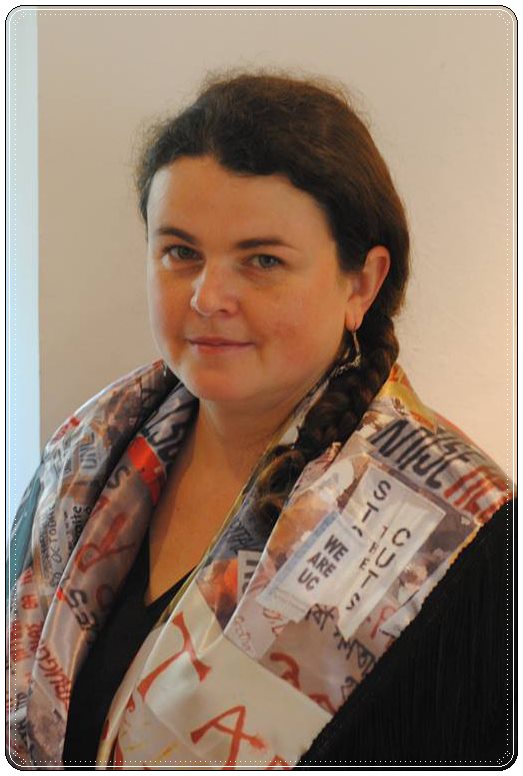
Vilma Fiokla Kiurė
A Nigerian citizen was attacked with a knife and injured in Kaunas, Lithuania, earlier this month. Trying hard to avoid describing the assault as a racially motivated hate crime, law enforcement officials and the mainstream media alike explained that the incident was purely part of a private dispute. Strange to tell, reading through official statistics you would rapidly come to the conclusion that racist and xenopohobic crimes in Lithuania stand at about zero. And, that neo-Nazi minded youth are “just patriotic.”
It is no great secret in this part of the world that law enforcement officials and some politicians like to beautify the statistics, or to terminate or redefine proceedings brought in respect of racial or xenophobic hatred. One example comes to mind from 2011, when MPs J. Narkevičius and E. Zingeris appealed to the General Prosecutor’s Office to do something about the neo-Nazi ideology espoused in the song “Diktatūra” by the group “Šalčininkų rajonas” (Šalčininkai District).
Posted in Bold Citizens Speak Out, Human Rights, Lithuania, Media Watch, News & Views, Opinion, Racism, Roma, Vilma Fiokla Kiurė
Tagged Diktatūra, Human rights in Lihtuania, neo-Nazis in Lithuania, Racism in Lithuania, Roma in Lithuania, Šalčininkų rajonas, Vilma Fiokla Kiure
Comments Off on When Both Law Enforcement and Politicians Cover Up Racism
Lithuanian Shtetl Malát (Molėtai) to be Commemorated in 2016
LITVAK AFFAIRS | EVENTS
by Tzvi-Hirsh (Gregory) Kritzer
◊
Iam making a documentary film about the Jewish history and legacy of Malát (now Molėtai), a small shtetl in Lithuania. The film will endeavor to cover the history, life and culture of the Maláter, the Jews of Malát, and also the genocide of the entire community carried out by the Nazis and their local collaborators. My father’s family was killed there together with about 1000 Malát Jews.
Posted in Commemorations for Destroyed Communities, Events, Lithuania, Litvak Affairs, Malát (Molėtai), News & Views, Tzvi-Hirsh Kritzer
Tagged Gregory Kritzer, Holocaust in Lithuania, Malat (Lithuania), Malater Benevolent Association, Moletai (Lithuania), Tzvi Kritzer
Comments Off on Lithuanian Shtetl Malát (Molėtai) to be Commemorated in 2016
Is Lithuania’s President Distancing Herself from Prime Minister’s “Religious Zeal” for the “Convention Center in the Old Jewish Cemetery”?
PIRAMÓNT | PAPER TRAIL | OPPOSITION | CEMETERIES
◊
NEW YORK—In response to his 20 Nov. 2015 letter that has been described by some who have seen it as “powerful,” New York businessman Berel Fried, an Orthodox Jewish scholar and descendant of many people buried at the old Piramónt Jewish cemetery in Vilnius received a reply this week from the office of Lithuania’s president, Dalia Grybauskaitė. Her reply, dated 18 Dec. 2015, was released today by Mr. Fried’s office in New York City. Mr. Fried has been a frequent visitor to Vilnius and Kaunas for many years and is a celebrated guest reader of the Torah when he visits the Choral Synagogue on Pylimo Street in Vilnius.
Posted in Berel Fried, Christian-Jewish Issues, CPJCE (London), Defense of Old Jewish Cemeteries and Mass Grave Sites, Documents, Lithuania, Litvak Affairs, News & Views, Old Vilna Jewish Cemetery at Piramónt (in Šnipiškės / Shnípishok)
Comments Off on Is Lithuania’s President Distancing Herself from Prime Minister’s “Religious Zeal” for the “Convention Center in the Old Jewish Cemetery”?
Lithuania’s Liveliest Cemetery
OPINION | PIRAMÓNT | PAPER TRAIL | OPPOSITION | CEMETERIES
by Dovid Katz
Editor’s note: Reprint from The Times of Israel, where this op-ed appeared on 13 December 2015.
◊
Back in 2009, a rancorous dispute over the old Vilna Jewish cemetery was ostensibly solved. Two new buildings, despite worldwide protests, would be allowed to remain, and in return, no more land would be pilfered from the cemetery at Piramónt, in the Šnipiškės district of modern Vilnius, the capital of Lithuania. The burial ground goes back to the late fifteenth century, at least. After the Holocaust, with virtually no descendants left to worry about, Soviet authorities helped themselves to the gravestones for use in building projects, but left many thousands of graves intact. A galaxy of eminent European rabbinic scholars and authors were buried there. But once the 2009 “Peace of Piramónt” was brokered (with help from Western embassies here), emotions cooled as all sides got on with their lives.

Future symbol for a capital city in the European Union? by VULOVAK / DefendingHistory.com
Posted in Antisemitism & Bias, Christian-Jewish Issues, Citizenship, Defense of Old Jewish Cemeteries and Mass Grave Sites, Double Games, Dovid Katz, Dovid Katz on the Old Vilna Jewish Cemetery at Piramónt, Human Rights, Lithuania, Litvak Affairs, News & Views, Old Vilna Jewish Cemetery at Piramónt (in Šnipiškės / Shnípishok), Opinion, Politics of Memory, Rothschild Foundation Europe (Hanadiv): Lithuanian Issues, USCPAHA (US Commission for Preservation of the American Heritage Abroad)
Tagged Beata Nemcova, Commission on Lithuanian-Jewish Heritage, CPJCE, Dovid Katz, Feinstein, Jewish cemeteries in Lithuania, Jews in Lithuania, Kotler, Lithuanian-Jewish relations, Litvak Affairs, Piramont (Snipiskes), Snipiskes, Snipiskes Jewish cemetery, Soloveichik, Tomasz (Tomek) Wiśniewski, US Commission for the Preservation of America's Heritage Abroad, Vilnius national convention center
Comments Off on Lithuania’s Liveliest Cemetery
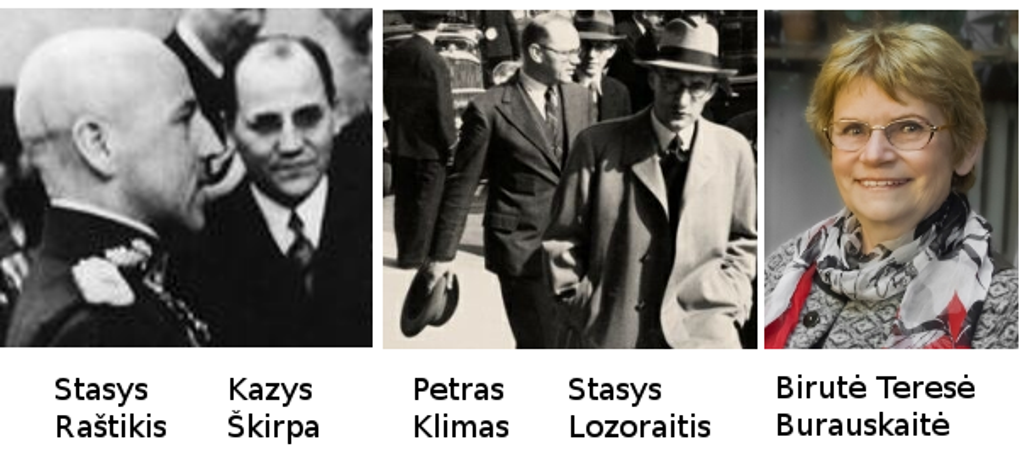
Documents Which Argue for Ethnic Cleansing (by Kazys Škirpa, Stasys Raštikis, Stasys Lozoraitis and Petras Klimas in 1940-1941 and by Birutė Teresė Burauskaitė in 2015)
O P I N I O N / H I S T O R Y
◊
2023 update: Readers experiencing difficulty accessing sources linked are referred to the archived version where original links are operative.
◊
by Andrius Kulikauskas
◊
◊
As of October 28, 2015, the home page of the Genocide and Resistance Research Center of Lithuania has a link to an authorative statement by General Director Birutė Teresė Burauskaitė about Kazys Škirpa. She responds to a request for information by the City of Kaunas, which has a street in Škirpa’s name. Škirpa was Lithuania’s representative in Berlin, the leader of the Lithuanian Activist Front, organizer of Lithuania’s anti-Soviet rebellion and Prime Minister of Lithuania’s Provisional Government in 1941. In bold letters she emphasizes:
Posted in Andrius Kulikauskas, Antisemitism & Bias, Bold Citizens Speak Out, Christian-Jewish Issues, Collaborators Glorified, Documents, Dr. Arūnas Bubnys and State Holocaust Revisionism in Lithuania, History, Human Rights, Kazys Škirpa, Legacy of 23 June 1941, Lithuania, Litvak Affairs, Museums, News & Views, Opinion, Vilnius's Genocide Center and the Genocide Museum it Manages
Comments Off on Documents Which Argue for Ethnic Cleansing (by Kazys Škirpa, Stasys Raštikis, Stasys Lozoraitis and Petras Klimas in 1940-1941 and by Birutė Teresė Burauskaitė in 2015)
It’s Not Just About Old Jewish Cemeteries
O P I N I O N / P I R A M Ó N T / P A P E R T R A I L / O P P O S I T I O N / C E M E T E R I E S
by Milan Chersonski
◊
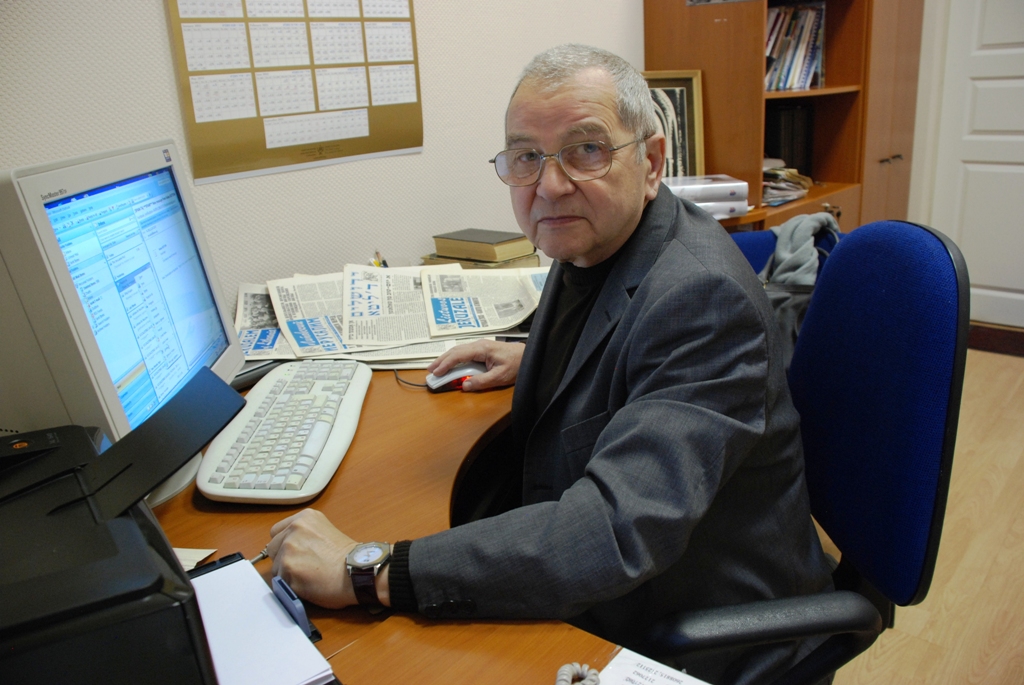 Translated from the Russian by Ludmila Makedonskaya (Grodno); English version approved by the author, Milan Chersonski (Chersonskij), longtime editor (1999-2011) of Jerusalem of Lithuania, quadrilingual (English-Lithuanian-Russian-Yiddish) newspaper of the Jewish Community of Lithuania. He was previously (1979-1999) director of the Yiddish Folk Theater of Lithuania. The views he expresses in Defending History are his own. See also Milan Chersonski section. Photo © Jurgita Kunigiškytė.
◊
There were many festive occasions celebrated once Lithuania declared its independence in 1990. So many hopes and expectations were inspired by the sweet word freedom. Free-ee-dom! Laisvė! Had it ever been possible to even imagine beforehand, taking one example, that Lithuania would hold a celebration to honor Israeli Independence Day, dear to Jews all over the world? The new state organized a large event at the Palace of Culture of the Trade Unions in Vilnius in honor of a faraway state, which in Soviet times was mentioned only as “the aggressive state of Israel.”
Posted in Antisemitism & Bias, Christian-Jewish Issues, Defense of Old Jewish Cemeteries and Mass Grave Sites, Human Rights, Lithuania, Litvak Affairs, Milan Chersonski (1937-2021), News & Views, Old Vilna Jewish Cemetery at Piramónt (in Šnipiškės / Shnípishok), Opinion, Politics of Memory
Tagged Jewish cemeteries Vilna, Milan Chersonski, Milan Chersonskij, Piramont Snipiskes cemetery, Snipiskes cemetery
Comments Off on It’s Not Just About Old Jewish Cemeteries
Why Would the “Genocide Center” in Vilnius Manipulate History and Glorify Murderers?
O P I N I O N / C O L L A B O R A T O R S G L O R I F I E D / G E N O C I D E C E N T E R
by Kristina Apanavičiūtė Sulikienė
◊
“I am a former Lithuanian soldier myself and have a personal remark to make. Nobody will ever force me to wear the uniform of another country’s armed forces, because I am a Lithuanian patriot. I will not wear the uniform of Russia or of Mozambique.”
◊
Kristina Apanavičiūtė Sulikienė
One of the main Lithuanian dailies Lietuvos žinios (Lithuanian News) reported in an article on 24 November 2015 that the council of the celebrated Sajūdis organization (famed for its role in resisting the USSR and helping to achieve Lithuanian independence), had now, in 2015, decided to apply to prosecutors to take legal action over an article that had appeared in the 13 October 2015 edition of Laisvas laikraštis (Free Newspaper).
Sajūdis “decided” that the author had violated the law because he mentioned that Lithuanian postwar militants Vytautas Žemaitis, Jonas Noreika (Vėtra), Antanas Baltūsis-Žvejas and others might have been personally involved in Holocaust atrocities. [Editor’s note: See articles by Evaldas Balčiūnas on the alleged Holocaust involvement of Žemaitis, Noreika, and Baltūsis -Žvejas.]
Posted in A 21st Century Campaign Against Lithuanian Holocaust Survivors?, Antanas Baltūsis-Žvejas, Collaborators Glorified, Debates on the Postwar "Forest Brothers", Free Speech & Democracy, History, Human Rights, Kristina Apanavičiūtė Sulikienė, Lithuania, Litvak Affairs, Media Watch, News & Views, Opinion, Politics of Memory, Sweden, Vilnius's Genocide Center and the Genocide Museum it Manages
Tagged Antanas Baltūsis-Žvejas, Birute Burauskaite, Genocide Center Vilnius, Holocaust in Lithuania, Holocaust Obfuscation, Jonas Noreika, Jonas Öhman, Kristina Apanavičiūtė Sulikienė, Vytautas Žemaitis
Comments Off on Why Would the “Genocide Center” in Vilnius Manipulate History and Glorify Murderers?
Roma in Lithuania: But What Does the Government Need To Do?
R O M A / H U M A N R I G H T S / O P I N I O N
by Vilma Fiokla Kiurė
◊
Vilma Fiokla Kiurė
“Which social group in the EU is most generally evicted from housing?” This was the question cheerfully posed by the host of the Good Morning Lithuania show on our national television. The viewer who called in said “Roma” and won a prize.
It can be pleasant to drink morning coffee while tuned to a TV quiz, but this time it was quite something else. The program’s entertaining format and the host’s frequent jokes are not very funny at all when such painful social issues are the subject of entertainment. But the episode well illustrates the public attitude towards the Roma here. Many Roma are still deemed to be distant, exotic and mysterious people, an object rather than a living community. Maybe because there is a lack of empathy and understanding in dealing with Roma integration problems and there are various language issues too.
Posted in Human Rights, Lithuania, News & Views, Opinion, Roma, Vilma Fiokla Kiurė
Comments Off on Roma in Lithuania: But What Does the Government Need To Do?
DH Correspondent Evaldas Balčiūnas in Vilnius Court This Tuesday 17 Nov. 2015
FRIENDS OF HUMAN RIGHTS, FREE SPEECH AND DEFENDING HISTORY INVITED TO COME AND OFFER MORAL SUPPORT TO OUR VETERAN CORRESPONDENT
Posted in Collaborators Glorified, Evaldas Balčiūnas, Free Speech & Democracy, Lithuania, Litvak Affairs, News & Views, Politics of Memory, Prosecutors & Police 'Investigate' DH Author Evaldas Balčiūnas, State Glorification of Holocaust Collaborator J. Noreika
Comments Off on DH Correspondent Evaldas Balčiūnas in Vilnius Court This Tuesday 17 Nov. 2015
Did Prime Minister Netanyahu Really “Okay” the Vilnius “Conference Center in the Jewish Cemetery”?
[from the day’s front page]
AN ISRAELI-LITHUANIAN MYSTERY
In September, during his trip to Israel, the Lithuanian prime minister reported back home with triumph that Israel’s Prime Minister Benjamin Netanyahu is quite happy with plans for a $25,000,000 national conference center in the middle of the old (15th century origin) Piramónt (Šnipiškės) Jewish cemetery in Vilnius. But did the Israeli PM really reject out-of-hand the growing international Jewish (and non-Jewish) chorus of condemnation for a plan to have convention revelers clap, cheer, sing, drink in bars and use toilets surrounded by thousands of Jewish graves including some of the foremost Jewish scholars of the last millennium? Where his own ancestors are buried? Perhaps there has been some misunderstanding. Background on the cemetery’s history and implications of the case for all Europe, and on the current project.
Posted in Defense of Old Jewish Cemeteries and Mass Grave Sites, Israel, News & Views, Old Vilna Jewish Cemetery at Piramónt (in Šnipiškės / Shnípishok)
Tagged Israeli-Lithuanian relations, Jewish cemeteries in Lithuania, Joseph Melamed, Netanyahu + Lithuania, Piramont (Snipiskes), Rachel Margolis, Yitzhak Arad
Comments Off on Did Prime Minister Netanyahu Really “Okay” the Vilnius “Conference Center in the Jewish Cemetery”?
Question in the UK Parliament on the Old Jewish Cemetery in Vilnius
UK / P I R A M Ó N T / O P P O S I T I O N / C E M E T E R I E S / D O C U M E N T S
◊
LONDON—At the initiative of Monica Lowenberg, Defending History’s London correspondent, UK member of parliament Gareth Thomas (Labour) tabled a question in the House of Commons (no. 14144) on 29 October 2015 on the planned desecration of the old Jewish cemetery at Piramónt (in the Šnipiškės district of Vilnius, Lithuania) by construction of a twenty-five million dollar national convention center. His question, and the reply by the current Minister for Europe, David Lidington, of 3 November 2015, are reproduced below (and available online).
Posted in Ambassador Simon Butt, CPJCE (London), Defense of Old Jewish Cemeteries and Mass Grave Sites, Documents, EU, Foreign Ministries: Holocaust Politics Abuse?, Gareth Thomas, Human Rights, Lithuania, Litvak Affairs, News & Views, Old Vilna Jewish Cemetery at Piramónt (in Šnipiškės / Shnípishok), United Kingdom
Comments Off on Question in the UK Parliament on the Old Jewish Cemetery in Vilnius
Vilnius Mayor Plays with Fire: Yiddish, Pilfered Jewish Gravestones, and an Olympics of “Barbarism”
O P I N I O N / C E M E T E R I E S / P I R A M Ó N T / P A P E R T R A I L
by Dovid Katz
◊
VILNIUS—This city’s dashing young new mayor, Remigijus Šimašius, elected last spring, has now added Yiddish to the previously bilingual (Lithuanian-English) signs, wrought of expensive metal in rounded-edged casement, in times of austerity for pensioners and others in town. These signs are being placed near Soviet-era edifices made of pilfered Jewish gravestones (matséyves) that are a blot on this charming East European capital. This is the latest model featured on the mayor’s office website:
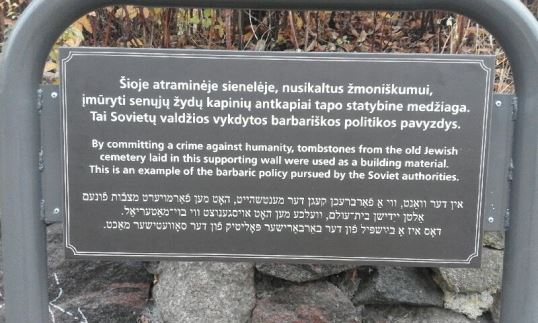
Photo: Vilnius Municipality / Mayor’s Office.
Posted in "Jewish" Events as Cover?, Christian-Jewish Issues, Collaborators Glorified, CPJCE (London), Defense of Old Jewish Cemeteries and Mass Grave Sites, Double Genocide: The New Form of Holocaust Revisionism & Denial, Foreign Ministries: Holocaust Politics Abuse?, Human Rights, Legacy of 23 June 1941, Lithuania, Litvak Affairs, News & Views, Old Vilna Jewish Cemetery at Piramónt (in Šnipiškės / Shnípishok), Opinion, Politics of Memory, Reformed Evangelical Church (Vilnius), Vilnius Mayor Remigijus Šimašius, Yiddish Affairs
Tagged Jewish cemeteries in Vilnius, Lithuanian-Jewish affairs, mayor of Vilnius, Piramont (Snipiskes), Remigius Simasius
Comments Off on Vilnius Mayor Plays with Fire: Yiddish, Pilfered Jewish Gravestones, and an Olympics of “Barbarism”
A Latvian-American Journalist in Riga Reflects on a Jewish Cemetery Saga in Vilnius
O P I N I O N / C E M E T E R I E S / P I R A M Ó N T / P A P E R T R A I L
by Juris Kaža
◊
Riga based journalist Juris Kaža made the following observations in recent Facebook threads. They are collected here with the author’s permission.
◊
This is incredible. So the Jewish cemeteries in Lithuania became Home Depot for the Soviet-era construction industry? We need some granite blocks? Yo, take the Goldbergas family plot, there are five headstones! By the way, the big stone for Rabbi Whatshisname would make a great plinth, have it dragged here, please. Can’t somebody undo this bizarre mess, gather the stones and make an appropriate memorial?
◊
This is crazy. The Soviets ravage your cemetery after the Nazis kill your co-religionists and you get this for asking independent Lithuania to stop desecrating graves? They should do their best to restore the burial and memorial place and build their conference center elsewhere, not on the site already desecrated by the Soviets. WTF??
Posted in Defense of Old Jewish Cemeteries and Mass Grave Sites, Human Rights, Humor (Of Sorts), Juris Kaža, Lithuania, Litvak Affairs, News & Views, Old Vilna Jewish Cemetery at Piramónt (in Šnipiškės / Shnípishok), Opinion
Comments Off on A Latvian-American Journalist in Riga Reflects on a Jewish Cemetery Saga in Vilnius
Lithuania’s State-Sponsored “Genocide Center” Whitewashes Yet Another Nazi Collaborator
[from the day’s front page]
◊
But many in Vilnius shocked as official Jewish Community website posts the statement with no comment (in English translation with “God’s honest truth” headline (PDF) following the initial Lithuanian report; But mishap could be editor’s error or work of local “mischief maker”. Simon Wiesenthal Center responds. Report in the Jerusalem Post. Jewish Community leadership then replied to critics.
Posted in Collaborators Glorified, Debates on the Postwar "Forest Brothers", Double Genocide: The New Form of Holocaust Revisionism & Denial, History, Lithuania, Litvak Affairs, News & Views, Politics of Memory, State Glorification of Holocaust Collaborator J. Noreika, Vilnius's Genocide Center and the Genocide Museum it Manages
Comments Off on Lithuania’s State-Sponsored “Genocide Center” Whitewashes Yet Another Nazi Collaborator
Dr. Tomasz Wiśniewski, Polish Documentary Film Maker and Judaica Specialist at Vilnius Rothschild Conference, Speaks Out on Fate of the Old Vilna Jewish Cemetery
CEMETERIES OPPOSITION PAPER TRAIL ROTHSCHILD DH SECTION EU ASPECTS
◊
VILNIUS—Polish scholar, author, film maker and Jewish heritage specialist Dr. Tomasz (Tomek) Wiśniewski is renowned as a world specialist on the culture and remnants of numerous erstwhile centers of East European Jewish life, most famously Białystok (in Poland, but in Jewish culture within the Litvak north of Jewish Eastern Europe). He was a delegate at last month’s Rothschild Foundation London (Hanadiv) conference on Jewish cemeteries, held here in Vilnius. Following the event, he issued a statement on his Facebook page concerning the fate of the old Vilna Jewish cemetery, known as Piramónt, in today’s Šnipiškės district. A slightly revised version was translated from Polish by Julius Norwilla and the translation approved by the author. It reads as follows:
Posted in Defense of Old Jewish Cemeteries and Mass Grave Sites, Film, News & Views, Old Vilna Jewish Cemetery at Piramónt (in Šnipiškės / Shnípishok), Opinion, Poland, Politics of Memory, Rothschild Foundation Europe (Hanadiv): Lithuanian Issues
Tagged Piramont, Rothschild Conference Jewish cemeteries, Snipiskes Jewish cemetery, Tomasz Wiszniewski, Tomek Wisniewski
Comments Off on Dr. Tomasz Wiśniewski, Polish Documentary Film Maker and Judaica Specialist at Vilnius Rothschild Conference, Speaks Out on Fate of the Old Vilna Jewish Cemetery
Faina Kukliansky, Chair of Lithuanian Jewish Community, Issues Sharp Response to Latest Genocide Center Whitewash of a Local Holocaust Perpetrator
VILNIUS—The website of the Jewish Community of Lithuania today posted a powerful response by chairperson Faina Kukliansky to the statement released earlier in the week by the national state-funded “Genocide Center.” That statement attempted to whitewash the infamous Holocaust perpetrator and Nazi collaborator Jonas Noreika, and itself came as a response to a petition and series of articles last summer calling for removal of one of the public shrines to Noreika in the center of this city, the nation’s capital.
Posted in Collaborators Glorified, Double Genocide: The New Form of Holocaust Revisionism & Denial, Faina Kukliansky, History, Human Rights, Lithuania, Litvak Affairs, News & Views, Opinion, Politics of Memory, State Glorification of Holocaust Collaborator J. Noreika
Comments Off on Faina Kukliansky, Chair of Lithuanian Jewish Community, Issues Sharp Response to Latest Genocide Center Whitewash of a Local Holocaust Perpetrator
No Surprise: Lithuania’s State-Sponsored “Genocide Center” Whitewashes Yet Another Nazi Collaborator
But many in Vilnius shocked as official Jewish Community website posts the statement with no response or comment (in English translation as well as the original Lithuanian); But mishap could be editor’s error. Simon Wiesenthal Center responds. Report in the Jerusalem Post. Community’s leadership replies.
Posted in Collaborators Glorified, Human Rights, Lithuania, Litvak Affairs, Media Watch, News & Views, Politics of Memory, State Glorification of Holocaust Collaborator J. Noreika
Comments Off on No Surprise: Lithuania’s State-Sponsored “Genocide Center” Whitewashes Yet Another Nazi Collaborator
Wiesenthal Center “Shocked at Whitewash of Lithuanian Holocaust Perpetrator”
JERUSALEM—The Simon Wiesenthal Center today harshly criticized the website of the Lithuanian Jewish Community for what it termed a “brazen whitewash of the Holocaust crimes of one of the perpetrators of the annihilation of Lithuanian Jewry.”
REPORT IN THE JERUSALEM POST
Posted in Collaborators Glorified, Double Genocide: The New Form of Holocaust Revisionism & Denial, Efraim Zuroff, Lithuania, Litvak Affairs, Media Watch, News & Views, Opinion, Politics of Memory, State Glorification of Holocaust Collaborator J. Noreika
Comments Off on Wiesenthal Center “Shocked at Whitewash of Lithuanian Holocaust Perpetrator”
Dr. Beata Nemcová, Slovakian Scholar at Vilnius Rothschild Conference, Speaks Out on Fate of the Old Vilna Jewish Cemetery
CEMETERIES OPPOSITION PAPER TRAIL ROTHSCHILD DH SECTION EU ASPECTS
◊
VILNIUS—Slovakian scholar, author and Jewish heritage specialist Dr. Beata Nemcová, a delegate at last week’s Rothschild Foundation London (Hanadiv) conference on Jewish cemeteries, has issued a statement calling on authorities here to move the state’s $25,000,000 convention center project away from the old Vilna Jewish cemetery, known as Piramónt, in today’s Šnipiškės district, to another location. The statement reads as follows (followed by a facsimile).
Posted in Defense of Old Jewish Cemeteries and Mass Grave Sites, Human Rights, Lithuania, Litvak Affairs, News & Views, Old Vilna Jewish Cemetery at Piramónt (in Šnipiškės / Shnípishok), Opinion, Politics of Memory, Rothschild Foundation Europe (Hanadiv): Lithuanian Issues
Tagged Beata Nemcova, Piramont, Rothschild Foundation conference on Jewish cemeteries, Snipiskes Jewish cemetery, Vilnius Jewish cemetery
Comments Off on Dr. Beata Nemcová, Slovakian Scholar at Vilnius Rothschild Conference, Speaks Out on Fate of the Old Vilna Jewish Cemetery