Vilnius Jewish Public Library, recently host to Genocide Center and R & B Commission
ANNOUNCES CANCELLATION


ANNOUNCES CANCELLATION
The following, for readers’ reference, is a translation of Professor Pinchos Fridberg’s article that appeared in Russian in Zman.com (on 9 April 2013). It was reprinted in Obzor and Shofar7.
This opinion piece and eyewitness report by Geoff Vasil relates to the July 10th event in honor of the Red-Brown Commission held at the Vilnius Jewish Public Library. See related reports on the library’s instrumentalization as a PR platform for the Commission and the more or less contemporaneous announcement of the Commission’s resumed activities, in the absence of apologies to Yitzhak Arad, Pinchos Fridberg, and the other accused Holocaust survivors.
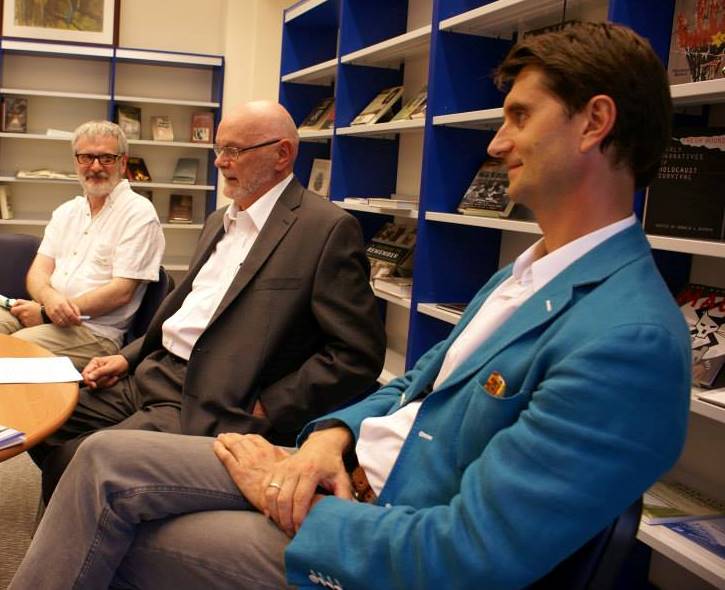
Attendees at the July 10, 2013 event to honor the “International Commission for the Evaluation of the Crimes of the Nazi and Soviet Occupational Regimes in Lithuania” were treated to speeches and plentiful Katz-bashing by (from right) Ronaldas Račinskas, Saulius Sužiedėlis and Ilya Lempertas.
Increasing numbers of summer tourists, in the spirit of “dark tourism” (and, in an EU/NATO country, a spirit of incredulity) are seeking out street names, public plaques, university lecture halls and other monuments to both collaborators and actual perpetrators of the Lithuanian Holocaust.
Some find the following sections helpful to locating specific sites:
(1) Anthology of street names and honors for killers and collaborators in Lithuania.
(2) Section on events and memorials for collaborators and perpetrators in various parts of Eastern Europe.
SAMPLE IMAGES
Background:
Original 2 May 2013 report; Person identified by the media submits 13 May 2013 complaint to the Press Commission [draft English translation], citing Anarchija.lt, Balsas.lt, KaunoŽinios.lt, Lrytas.lt as well as DefendingHistory.com. He does not deny the identification but disputes the characterization of his work as in harmony with neo-Nazism.
23 July update: Zeppelinus greets Baltic Pride with a new hate image.
Dear Mr. Gustas,
Congratulations on your recent appointment as Economy Minister. May your tenure be blessed with success, wisdom and good fortune for all of Lithuania’s citizens.
We address you on the advent of your tenure on a human rights matter rather than an economic question. We feel certain you would agree that there is a demonstrable correlation between the long-term successful economies of the world and free and open democratic societies that reject all forms of state-supported fascism, racism, antisemitism, homophobia and other forms of hate and exclusionism directed at segments of the population.
NOTE: This was written in response to “Foreign countries use far-right operations to undermine Lithuania’s image” published on June 7, 2013, on the Lithuania Tribune website.
Initially the editor-in-chief of the Lithuania Tribune agreed to publish the following reply in the Lithuania Tribune, but then changed his mind and finally refused, only informing the author a month later…
Colleagues at the prestigious European Humanities University in Vilnius (EHU, also known as the Belarusian Humanities University, in exile here in Vilnius) have passed on the public poster for this year’s series of seminars under the title Colloquium vilnense 2013, running from May to November 2013. The A3 size poster is reproduced (much reduced) at the bottom of this page in two halves.
On the 15 July 2013 centenary of the birth of the illustrious Yiddish poet of Vilna, Abraham Sutzkever (1913–2010), the last active association of Holocaust survivors from Lithuania released the statement below (also available as PDF). It urges organizers, participants, judges and prize winners to avoid being instrumentalized as cover-up props for Holocaust obfuscation. It proposes that they simply issue public statements calling for written public apologies from the Lithuanian government to the defamed Jewish partisans who knew Sutzkever well from the forests of Lithuania and dozens of years of contact in survivor circles. See the related debate on this year’s Sutzkever Prize.
See also:
Page on the commission
Critiques of the commission and its associated Prague Declaration
DH section on the commission.
Resignations to date from Commission-related bodies include Dr. Yitzhak Arad, Sir Martin Gilbert (London), Prof. Gershon Greenberg (Washington DC), Prof. Konrad Kwiet (Sydney) and Prof. Dov Levin (Jerusalem).
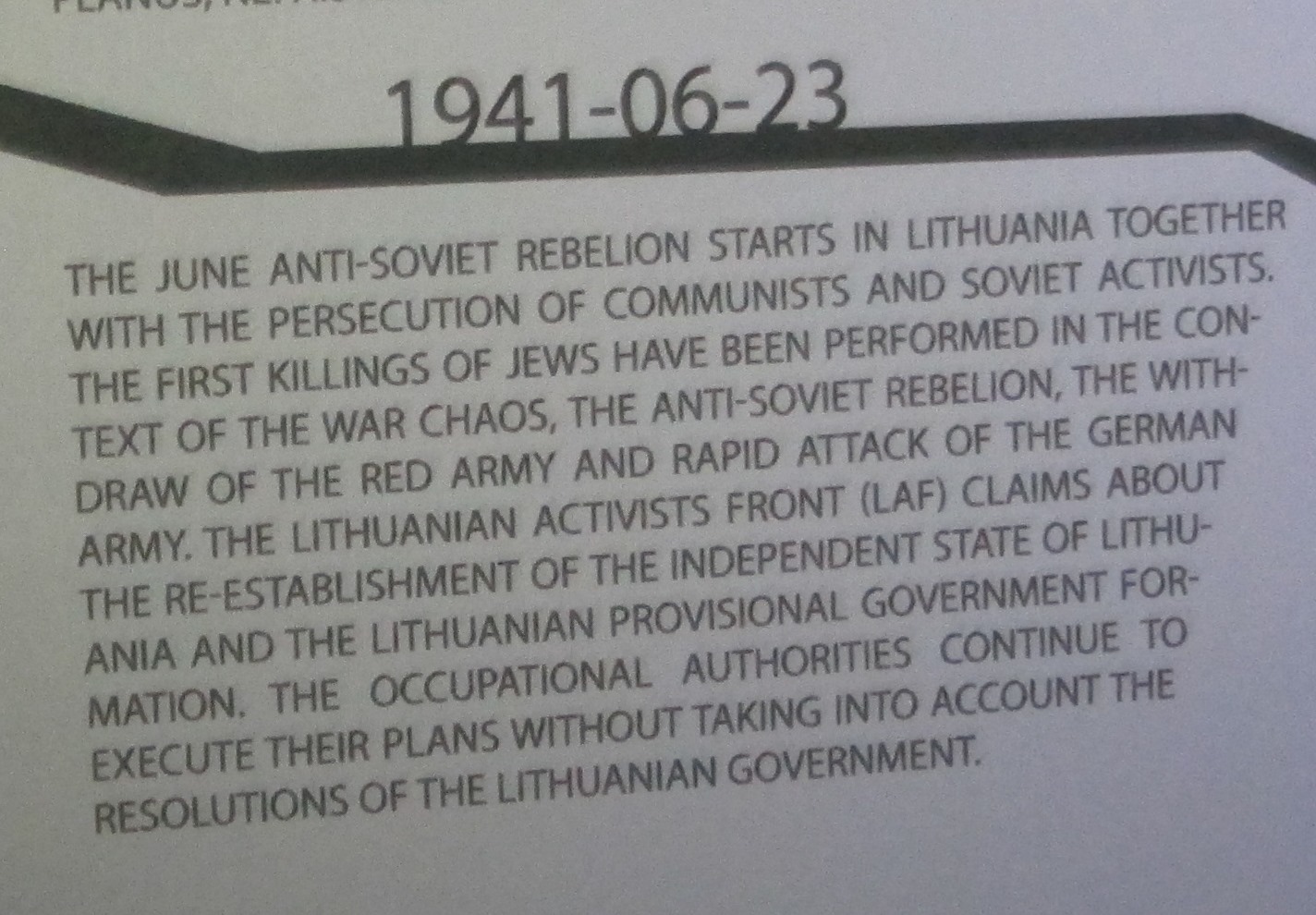
A recent visit to Vilnius’s “Jewish Museum — Tolerance Center” has revealed a shocking panel purporting to convey the “facts” of June 23rd 1941, the darkest date in Lithuanian Jewish history. It is the date on which the Holocaust in Lithuania began. No need, incidentally, to take our word for it. Ask any Lithuanian Jew, of any generation, current abode or political persuasion: When did the Holocaust in your country start?
In an interview posted on the Delfi website on June 21, 2013, Lithuanian government historian Arūnas Bubnys, head of department for the Orwellian- or even Kafkaesque-sounding Center for the Study of the Genocide and Resistance of the Residents of Lithuania, once again lent support to the pro-Nazi Lithuanian Quisling government that seized power on June 23, 1941.
The interview, titled “Lithuanian Historian: June Uprising was Rehabilitation for Shameful Surrender to Soviets,” is available here. An English translation is provided here.
What follows is my commentary on that interview.
Authorized translation from the Russian by Ludmila Makedonskaya (New York)
In accordance with the law of the Republic of Lithuania for days of commemoration, June 23rd has been declared a national memorial day. It is the day of the 1941 June Uprising. As known, the extermination of the Lithuanian Jewish minority began on the same day as this “uprising.”
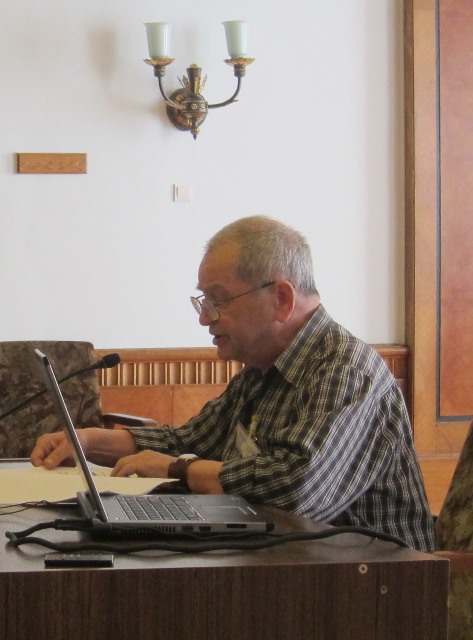
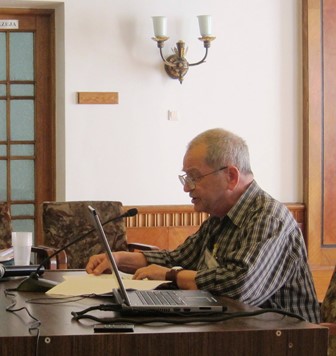
Milan Chersonski reads his paper at the Riga conference, 27 May 2013
The following is the authorized English version of the paper read by Milan Chersonski in Riga on 27 May 2013 at the Second International Conference on Holocaust Museums and Memorial Places in Post-Communist Countries.
Milan Chersonski (Chersonskij), longtime editor (1999-2011) of Jerusalem of Lithuania, quadrilingual (English-Lithuanian-Russian-Yiddish) newspaper of the Jewish Community of Lithuania, was previously (1979-1999) director of the Yiddish Folk Theater of Lithuania, which in Soviet times was the USSR’s only Yiddish amateur theater company.
See also the Milan Chersonski section of Defending History.
In Eastern European countries occupied by Nazi Germany during World War II there was a phenomenon called “collaborationism”: the cooperation of individuals and organizations with the Nazi occupation regime. In the modern historiography of these countries, events of that fateful time are often presented not by historians, but primarily by right-wing or extreme right-wing politicians, who continue today to convince the public that the collaboration was in fact nothing but a form of struggle for independence, and a kind of resistance to the Nazi regime.
Sometimes this approach to the evaluation of historical events is called whitewashing. The purpose of this manipulative activity is clear: to absolve the erstwhile Nazi collaborators and pro-Nazi national organizations from the responsibility for the crimes against humanity committed during the Nazi occupation, and their countries from responsibility for Nazi crimes.
— Summary of news to date:
 International Petition Tops 750 Mark; Progress Seen, as Organizers of Kaunas “Religious Heritage” Conference Reported to Seek Alternatve Venue; Vytautas Magnus University Continues to Honor City’s 1941 Nazi Puppet Prime Minister who Presided over Initiation of the Lithuanian Holocaust
UPDATES:
Edward Jacobs in the Huffington Post (31 May 2013)
More materials (including videos of the entire conference) posted by conference organizers; videos also on YouTube (12 June 2013)
 SEE ALSO: Milan Chersonski’s Riga conference paper (27 May) “Rehabilitation of the Past as a Tool of Modern Politics” (authorized English translation). Milan Chersonski (Chersonskij) edited the Lithuanian Jewish Community’s quadrilingual (English-Lithuanian-Russian-Yiddish) newspaper Jerusalem of Lithuania from 1999 to the paper’s demise in 2010-2011. See our Milan Chersonski section. His publications in Defending History represent his own views.
RELATED:
Critiques of the commission
DH section on the commission
RIGA—The following is the authorized text, in the original Russian, of Milan Chersonski’s paper delivered today at the international conference on Holocaust Commemoration and Memorials in Post-Communist Countries. See also: Milan Chersonski section.
UPDATES:
1. The Secret “Big-Bucks Vilna Ghetto Disneyland Theme Park” Project (minus the Jewish community, minus apologies to the Partisans of Vilna, minus removals of memorials to local Holocaust perpetrators).
2. Renewed International Petition.
3. Ghetto survivors who joined the anti-Nazi resistance have been criminalized.
4. Government delegation in South Africa trying to pry Disneyland “investment” from unsuspecting South African Jews.
SEVEN SIMPLE SOLUTIONS
[date of last update]
www.Rewriting-History.org
FACEBOOK PAGE
US SCREENING TOUR 2013
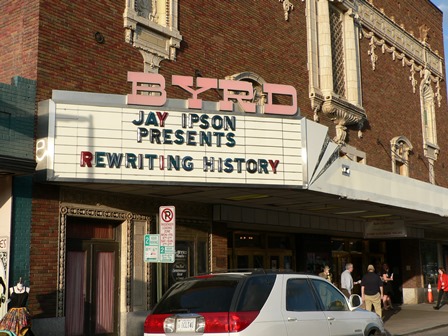
REVIEWS OF REWRITING HISTORY
Film’s website ◊ Sign the Seventy Years Declaration ◊ Donate HERE