The Hungarian government, like others in Eastern Europe, is enlisting well-intentioned Western naifs in its plans to mobilize Holocaust commemoration itself as part of the East European revisionist Double Genocide movement. The effort seeks to downgrade the Holocaust, downplay local collaboration and participation, and to cover tracks with sophisticated revisionism. Along the way, memberships in august bodies, prizes, awards and junkets are generously offered to select foreigners. The efforts by the Lithuanian government have been in the forefront of the tendency.
News & Views
Is Tom Lantos’s Widow on Hungarian Government’s List of “Useful Foreigners”?
New Joseph Levinson Website Has Page on Old Jewish Cemeteries in Lithuania
The recently launched website JosephLevinson.com provides renewed opportunities for acquiring his two major books that are available in English. One, The Shoah in Lithuania, includes documents of the Lithuanian Activist Front detailing their intentions for Jewish citizens, issued before the outbreak of war on 22 June 1941. It is also rich in resources on understanding how, where and why the far right’s “Double Genocide” revisionism arose in the first place. These are just two of the many areas covered by the book.
Swedish Film Director Speaks Out on the Lithuanian Holocaust, Sort of, a Little Bit
O P I N I O N
by Geoff Vasil
Jonas Öhman is a Swede who has been coming to Lithuania and living here on and off from almost the beginning of modern independence in the 1990-1991 period. During that time he has produced a number of films, only one of which appears to his credit on the internet film database imdb.com, but all of which deal more or less with a mythologized version of the history of Lithuanian anti-Soviet partisans.
Aleksandrs Feigmanis Documents Mysterious Eight-Pointed Star in Riga Synagogue
Following publication last year of an article on the mysterious eight-pointed star known from some old Jewish cemeteries in western Lithuania (the area known as Zámet in Yiddish, corresponding in part to Žemaitija), DH contributor Dr. Aleksandrs Feigmanis, director of Riga-based BalticGen Tours, has reported that a similar eight-pointed star adorns the (recently renovated) synagogue in Riga, Latvia. Hopefully, images will emerge of the prewar design corresponding to the reconstructed section in question.
The Jewish Tragedy in the Baltic States
M U S I C
by Roland Binet (Braine-l’Alleud, Belgium)
THE AUTHOR’S MUSICAL COMPOSITIONS:
I War
II Ghetto
III The Killing Pits
IV Liberation
V Remembrance
Israeli Association of 2nd and 3rd Generation Survivors Calls for Action from Israel and Other Democracies
JERUSALEM—On International Holocaust Remembrance Day, observed today internationally, Dorot Hahemshech, Israel’s largest association of children and grandchildren of Holocaust survivors, issued a call to both the Israeli government and other democracies to renew and intensify the efforts to bring to justice Nazi war criminals and collaborators while it is still possible. The leaders of the NGO also commented on the growing phenomenon of distorting the history of the Holocaust in a number of countries, particularly in the context of the Double Genocide movement rampant in Eastern Europe.
The following is a translation from the original Hebrew text.
Kaunas, Vilnius, Riga: Planned 2014 Neo-Nazi Marches (Summary Coverage to 26 Jan. 2014)
Kaunas, February 16th; Vilnius, March 11th; Riga, March 16th:
Will Lithuania’s President and Prime Minister Speak Out to Stop City-Centers on Independence Days Being Gifted to Neo-Nazis Again to Glorify the Holocaust’s Local Collaborators?
Last year, the president, prime minister and mayor failed to rise to the occasion of the neo-Nazi marches
Zabludoff’s Petition Nears the 3,000 Mark
First Stop — Kaunas on February 16th
Summary Coverage on Upcoming “Baltic March Season”
2014 Winter Nazi Marching Season in the Baltics?
Kaunas, February 16th; Vilnius, March 11th; Riga, March 16th:
Will Lithuania’s President and Prime Minister Speak Out to Stop City-Centers on Independence Days Being Gifted to Neo-Nazis Again to Glorify the Holocaust’s Local Collaborators?
Last year, the president, prime minister and mayor failed to rise to the occasion of the neo-Nazi marches
Double Genocide Movement’s “Prague Process” is Foundering — In Prague
The 2008 Prague Declaration was followed by the EU’s controversial establishment of the 2011 “Prague Platform” which has been a major disseminator of Double Genocide political and academic products intended to appear neutral rather than of the East European far right (see Double Genocide section for examples over the years). Internally, the movement has been torn by strife between the “witch hunters” who want to exclude from the Double Genocide movement (known by any number of Eurisms, e.g. “equal evaluation of totalitarian regimes”) persons who held communist related posts before the USSR’s collapse, and those who take a more moderate stance toward their own followers’ pasts.
Followers of our Media page have noticed the rapidly moving events in recent days:
Respublika’s 18 January 2014 Front Page Article “Kaunas Jewish Community Chairman Gercas Žakas: One Point for Discord between Lithuanians and Jews”
The following translation, by Geoff Vasil, is of a front page article in the Vilnius daily Respublika (18 January 2014), featuring an interview with Kaunas Jewish community leader Gercas Žakas (the words superimposed on the photo roughly translate: “Perhaps someone really is provoking us and sowing discord intentionally”). The Lithuanian original is available online.
See also the the front page spread featuring interviews with Faina Kukliansky and Moshe Beirakas which appeared two days earlier, on 16 January 2014.
Kaunas Jewish Community Chairman Gercas Žakas: One Point for Discord between Lithuanians and Jews
January 18, 2014
by Olava STRIKULIENĖ
Kaunas Jewish Community chairman Gercas Žakas was initially surprised when the daily newspaper Respublika, where his son Arijus worked as a reporter, was deemed an antisemitic newspaper. And now Žakas is surprised our politicians sported a Wehrmacht symbol during Defenders of Freedom Day.
Žakas: “What symbol are you talking about?” Žakas asked. “I know nothing, I was away. Apparently someone wasn’t paying enough attention.”
Respublika: “During the commemoration of January 13 at parliament forget-me-not pins were passed out, which are really a symbol of the Nazi German Wehrmacht military.”
Wiesenthal Center Blasts Hungarian Government’s Latest Holocaust Distortion
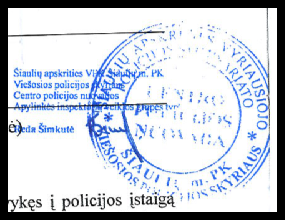
JERUSALEM—The Simon Wiesenthal Center today issued a statement of support for the strong protest by the leadership of the Hungarian non-Orthodox Jewish communities (Mazsihisz) against efforts by the Hungarian government’s “Veritas Institute” to falsify the narrative of the Holocaust in Hungary and attempt to hide the important role played by locals in the mass murder of Hungarian Jewry.
In a statement issued here today by its Israel director, Holocaust historian Dr. Efraim Zuroff, the Center expressed its strong opposition to the recent statement by Veritas Institute director Sandor Szakaly, who referred to the summer 1941 deportation of about 16,000-18,000 Jews from Hungary to Kamenets-Podolsk (now Kamianets-Podilskyi) in German-occupied Ukraine, where the overwhelming majority were murdered, as a “police action against aliens,” when in reality it was clearly a crime against humanity and the initial massacre of the Holocaust of Hungarian Jewry.
Respublika’s Editorial on Nazi Symbols in Use
The following is a translation, by Geoff Vasil for Defending History, of the editorial that appeared on 17 January 2014 in the Vilnius daily Respublika (p. 4), a day after the front page story (16 Jan.) featuring photographs of Faina Kukliansky and Moishe Beirakas, and a day before the front story (17. Jan) featuring Gercas Žakas.
Heritage Articles from Lithuanian Jewish Community’s “Jerusalem of Lithuania” Going Online
A new page has been launched to provide selected articles from the English edition of the Lithuanian Jewish Community’s Jerusalem of Lithuania. The newspaper was regularly published in four separate editions (English, Lithuanian, Russian and Yiddish) from 1989 to early 2011. These selections are from the years 1999-2011, when the quadrilingual publication was edited by Milan Chersonski, now a senior staff writer at Defending History. The page is being developed in close consultation with Mr. Chersonski.
Respublika’s 16 January 2014 Front Page Article “Jews Don’t Want to Wear Nazi Symbols a Second Time”
The following translation, by Geoff Vasil, is of a front page article in the Vilnius daily Respublika (16 January 2014). The Lithuanian original is available online. See also: Geoff Vasil’s comment on the article which may serve as an introduction to some of the local issues and nuances.
Jews Don’t Want to Wear Nazi Symbols a Second Time
January 16, 2014 by Asta MARTIŠIŪTĖ and Olava STRIKULIENĖ, Respublika reporters MEP Vytautas Landsbergis, chairman of the Supreme Soviet/Restored Parliament of Lithuania, speaking at a solemn event to commemorate January 13 [1991], spoke in his speech about the Holocaust as well. Was it necessary to mention this at a ceremony dedicated to the 14 defenders of Lithuanian freedom who died and who hadn’t even been alive during Holocaust times? Beyond this, January 13 [commemorations] didn’t come off without yet another curiosity. A Wehrmacht symbol was used in the “Forget-me-not” campaign and MP Rasa Juknevičienė said next January it will be possible to acquire these symbols [lapel pins] throughout Lithuania, and not exclusively in the capital. Continue reading
Forget Me Knot
O P I N I O N
by Geoff Vasil
In an attempt to maintain their reputation as the most anti-Semitic major newspaper in Lithuania, the editors at Respublika have fired a new salvo in their information war against the international forces of Communist Zionism with a straw-man argument designed to rehabilitate the swastika as a Lithuanian cultural heritage symbol.
The “Double Genocide” Backdrop to Current Disarray of the Red-Brown “Platform”
This week has seen a further public and, in most assessments, vitriolic attack, from the president of the (Prague-based) “Platform of European Memory and Conscience,” the European Union financed body responsible for “enacting” the 2008 Prague Declaration, against one of its own founding constituent members, the (Prague-based) “Institute for the Study of Totalitarian Regimes.”
Estonia’s Last “Knight’s Cross” Waffen SS Man Gets Full-Honors Military Funeral
by Leena Hietanen and Petri Krohn
The last Estonian SS veteran to have been awarded the Nazis’ Knight’s Cross, Harald Nugiseks, was buried in Estonia with full military honors on Friday 10 January 2014.
Giedrius Grabauskas on Freedom of Speech
O P I N I O N
Note: For our readers’ interest, we provide an English translation (by Geoff Vasil) of Giedrius Grabauskas’s article, “Kodel paminama žodžio laisvė?” that appeared on 6 January 2014 in Akcentai.info at: http://www.akcentai.info/271-kodel-paminama-zodzio-laisve.html.
As in all signed articles, the opinions are those of the author.
The final part of the opinion piece, starting here, deals with issues that Defending History focuses in on, including the glorification of Holocaust collaborators, campaigns from high places against those who dissent, and the related implications for human rights and democracy in NATO and the EU.
Artists Knew, Allied Leaders Kept Silent
O P I N I O N
by Roland Binet (Braine-l’Alleud, Belgium)
When I was in New York last year, I saw an extraordinary exhibition of paintings by Marc Chagall, “War, Exile and Love” at the Jewish Museum. The focus was on the works he produced during his years of exile in the United States. This exhibition, well attended, shed an interesting light on what the artist knew about the horrific events unfolding in Europe at the time of his sojourn in the United States.
Žilvinas Butkus (Vilnius) and the Association of Lithuanian Jews (Tel Aviv) Release August 2009 Document
D O C U M E N T S
Editor’s note: By agreement of Žilvinas Butkus, author of the following 12 August 2009 email, and its recipient, the Association of Lithuanian Jews in Israel, the document is now published. Note that the draft law appended at the end of the document was adapted by the parliament and signed by the parliament in revised form in June 2010. The bill’s framers had made it clear that promoting Double Genocide in Europe lay close to the heart of this legislative initiative.
August 12, 2009
Hello!