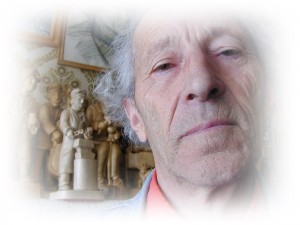
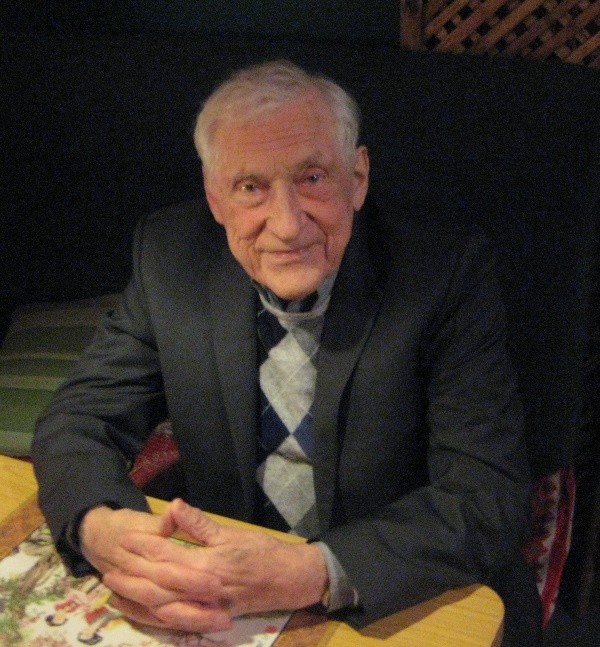
INTERVIEW WITH RIGA HISTORIAN MEYER MELLER (MELERS)
The great Russian author Lev Tolstoy wrote in his story “From the Notebook of Prince D. Nekhlyudov. Luzern.”
“Seventh July 1857 in Luzern in front of the Schweizerhof Hotel, where most rich people would stay the itinerant beggar-singer sings songs for half an hour and plays his guitar. About a hundred people heard him. Three times the singer asked the crowd to give him some money or food. Nobody gave him anything and many laughed at him.” […] This is the event which the historian of our times should write about with fiery irascible letters. This event is much more important and serious and has much more sense than the facts written in newspapers and history books. […] This is not a fact for the history of human acts, but for the history of progress and civilization.”
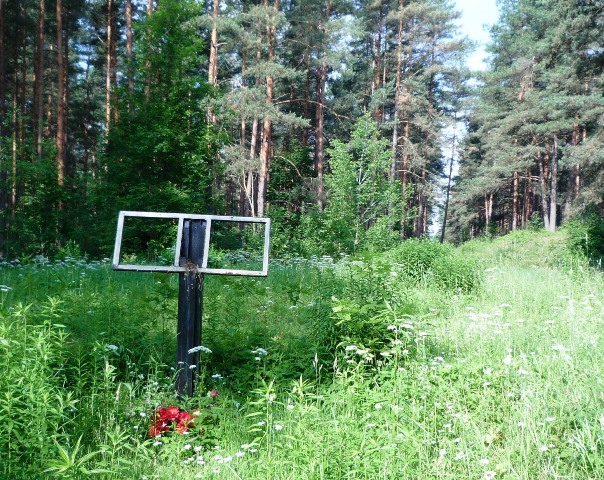
All that marks this major Holocaust mass grave in Riga, the Latvian capital, is a plastic bucket of flowers near the empty frame of a long-destroyed Soviet-era tin sign.
If you wish to see the mass grave take number 13 bus from the central station headed for Plavnieki and get off at the stop called Darzenu baze (roughly a half-hour ride). When you get off, turn from Lubanas street to the right until you come to Darzenu baze (“warehouse for vegetables”). In the pine woods some 300 meters from the warehouse you will see a little hill, without any mark, inscription or tombstone. Just a few primitive buckets of plastic flowers mark the site. They are placed near a wood frame stand that once, in Soviet times, held within it a bilingual tin sign about the site, that has long been destroyed and removed. The site is about 600 meters from the nine-floor apartment houses in Riga’s Plavnieki district.
Continue reading