


Unsettling Echoes
German Bullets, ‘Local Admin’, and Jewish Ghosts in the Lithuanian Forest

After 80 years of free access, in a patch of forest suited for silent contemplation, visitors are now blocked — by Germany’s Panzerbrigade 45—from visiting the remnants of Lithuania’s last remnant of the Jewish anti-Nazi partisan resistance. Left: Soldier practicing (photo: Panzerbrigade 45). Right: One of the Jewish bunkers (photo: DefendingHistory.com).
◊
UPDATE FOR EARLY NOVEMBER 2026: Access to Jewish partisan fort forbidden for 14 of the first 16 days of November 2026 because of German Army shooting practice
UPDATE FOR LATE NOVEMBER 2026: Ascess to Jewish partisan fort forbidden all the remaining days of the month.
The macabre message? Lithuania’s most unique Holocaust history site, in addition to being left to rot in the elements with no respectful signage, fencing or commemoration, is open to visitors only on days when the Germany Army’s Panzerbrigade 45 in Lithuania is not having its shooting practice. Panzerbrigade 45’s lavish PR, also on its ‘Jewish activities’, fails to even mention the fort’s existence. See 2026 coverage in JTA, Der Spiegel, Berliner Zeitung. Defending History has covered the saga since 2010. Recent news.
◊
WHAT IT’S ALL ABOUT:
25 miles from Vilnius:
A Tale of Two Neighbors in a Forest in Lithuania
The Crumbling Jewish Partisan Fort and the Sparkling New German Military Megabase
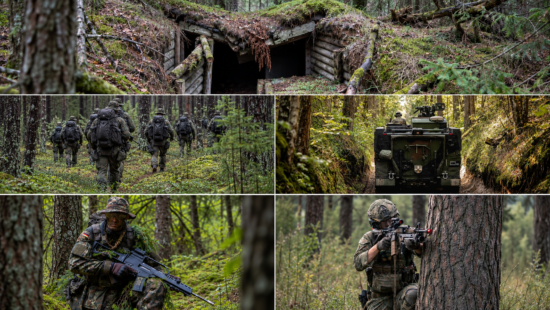
Top: One of the collapsing bunkers at the Vilna Jewish Partisans’ fort in the Rūdninkai (Rudnitsker) forest just outside the massive new German Panzerbrigade 45 training grounds (photo: DefendingHistory.com). Two lower rows: Panzerbrigade forces practice in the forest next door (photos: Panzerbrigade 45).
◊
Do the German Panzerbrigade 45 soldiers arriving in Lithuania know about the 403 escapees from Nazi ghettos who survived by finding refuge in the forest enclave abutting their own new military base? Do they know about the postwar contributions of these forest survivors who included Dina Abramowicz (YIVO, N.Y.), Fania Yocheles Brantsovsky (Vilnius Yiddish Institute), Prof. Sara Ginaite (York University, Toronto), Joseph Harmatz (World ORT), Abba Kovner (Israel Prize for Literature), Prof. Dov Levin (Hebrew University), Dr. Rachel Margolis (Vilnius University), Abraham Zeleznikow (Medal of the Order of Australia) and the hundreds of others? Do they respect those of the race-slated-for-extinction who survived and resisted in what is now called the “German part” of the Lithuanian forest? Are they inspired to feel joy that these folks survived the Nazi genocide? Do they feel the awesome sense of personal connection to the forest patch where — by some extraordinary stroke of fate — they now serve to defend NATO’s democratic values?
◊
Updates
History from 2010
20 years of defamation
Names of 403 Jewish partisans of the Forest of Rudnitsk (Rūdninkai)
Come visit
No. 2 on Michael Luongo’s list of 10 top Jewish ‘forgotten history’ sites
Samuel D. Gruber’s 2009 call for preservation; Fania Brantsovsky’s 2010 plea; her 2007 video
2026: JTA, Der Spiegel, Berliner Zeitung
Will Panzerbrigade 45 find the courage to mention its Holocaust history site?
אייביק ט′מען געדענקען די גבורה פון די ווילנער פּאַרטיזאַנער אין רודניצקער וואַלד, זכרונם לברכה
Lithuania has hundreds of Jewish mass graves and remnants of old cemeteries (all legally protected).
It has just one remnant of Jewish partisan resistance against the Nazis (unprotected and rapidly deteriorating). Come and experience its unique forest ambience before it’s too late.
The majestic hand of history has placed the massive new German military presence in Lithuania right next door to the forest remnant of the Jewish partisan fort in Rūdninkai (Rudnitsker) forest. When will Germany’s new Panzerbrigazde 45 acknowledge, cherish, and restore this precious historical treasure? It is a unique and authentic Holocaust history site of the Jewish anti-Nazi resistance. It could and should be providing vital education to the thousands of arriving German soldiers. At present, the German army’s works are directly causing rapid deterioration (access, building works, forest clearing, road building, area closures, workers’ partying, danger signs). The site remains unmentioned in the Panzerbrigade’s vast PR. A veteran German ethicist wrote an eloquent appeal, but withdrew it from publication under pressure.
Panzerbrigade 45 came to Lithuania to defend Western values. Not to degrade and undermine the county’s last relic of Jewish anti-Nazi resistance.
Please contact nearest German and Lithuanian embassies politely asking for rapid steps to preserve and make open to visitors one of Lithuania’s most important Holocaust history sites.
___
Coverage to date in JTA, Der Spiegel, Berliner Zeitung. Video of the late Jewish partisan veteran Fania Yocheles Brantsovsky showing visitors the fort in 2007.
וואו איז דער בונד? דער אַרבעטער⸗רינג? דער ייוואָ? „נוסח ווילנע“? דער נאַציאָנאַלער ביכער⸗צענטער אין אַמהערסט (וואָס פירט אָן מיט אַ שיינעם אינטערנעט⸗זײַטל וועגן פאַניע יאָכעלעס בראַנצאָווסקי זכרונה לברכה)? „יידישקײַט ל.א.“? פּאַריזער יידיש⸗צענטער (מעדעם)? אַלע אַנדערע גרופּעס וואָס זינגען מיט אַזאַ פּיעטעט הירש גליקס הימען? מיר בעטן נאָר אַרײַנשיקן העפלעכע פּראָטעסטן אין דײַטשישע און ליטווישע אַמבאַסאַדעס און פאָדערן, אַז די פאַרהייליקטע וואַלד⸗מחנה פון די ווילנער פּאַרטיזאַנער זאָל אויפגעהיט ווערן מיט כבוד און דרך⸗ארץ. זי גייט גיך אונטער צוליב דער מאַסיווער „פּאַנצערבריגאַדע 45“ וואָס די דײַטשישע אַרמיי בויט זיך אויסעט פּונקט דערלעבן אין רודניצקער וואַלד.
◊
Dramatic Video of ‘Depraved’ Violent Attack on Rabbi Sholom Ber Krinsky at the Gate of Vilnius’s One Synagogue
◊
Autumn-Winter 2026
Great Synagogue Petition
◊
◊
LITHUANIA’S LIVELIEST CEMETERY….
Exhibition on Old Vilna Cemetery at Lithuania’s Seimas (Parliament)
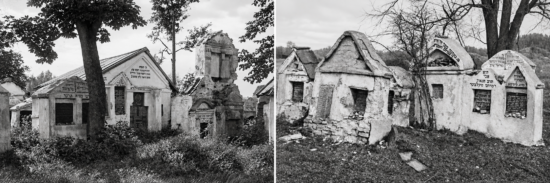
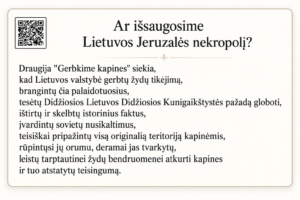
Gerbkime kapines (‘Respect Cemeteries’) releases 18 exhibition panels on website
Andrius Kulikauskas explains the state of play. His speech at the Seimas opening and his writings on the cemetery over the last decade
Creators of the exhibit ask the hard question: What is Lithuania choosing today?
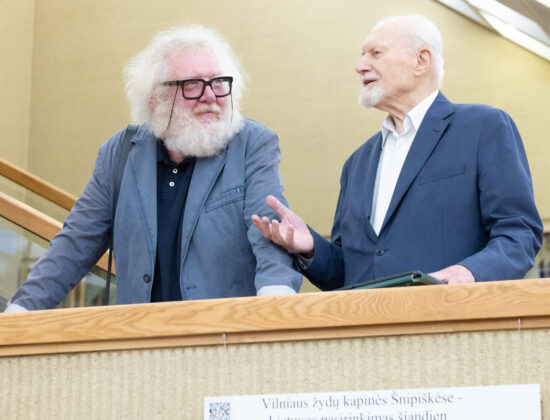
From left: Arturas Imbrasas and Edmundas Kulikauskas, two of the creators of the historic exhibition at Seimas. Photo: Seimas courtesy E. Zingeris.
MP Emanuelis Zingeris’s historic statement
Video of 17 Sept. opening event at the Seimas (Rabbi Elchonon Baron at 1:02:37). Rabbi Sholom Ber Krinsky’s Independence Day statement
Defending History documents the saga from 2015 onward
Letter from U.S. State Department’s Ambassador Yehuda Kaploun
◊ ◊
14 Sept. 2026
Shocking Assault on Vilnius’s Rabbi Sholom Ber Krinsky at Synagogue Gate on 14. Sept
Assailant (“man in short sleeves”) said to be security guard on payroll of “Good Will Foundation” (GWF)
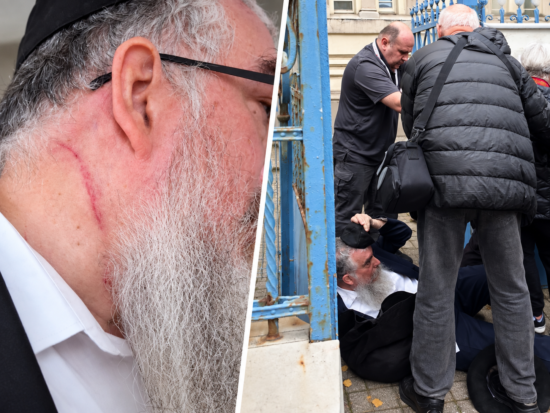
Left: Rabbi Sholom Ber Krinsky before treatment at nearby hospital. Right: Alleged assailant (man in short sleeved shirt), a security guard at Vilnius’s one functioning synagogue, is said to be on GWF payroll. Photos: Moshe Diamant.
_____
DH Opinion
Continued silence to date from AJC, AZM, B’nai B’rith International, Claims Conference, Mazel Company, World ORT, WJRO whose names on the board continue to prop up GWF locally. Their leaders enjoy VIP Vilnius jaunts, banquets and photo-ops.
Meanwhile, petition in progress to stop GWF’s latest lark in the cause of squandering restitution funds deriving from the prewar religious properties of the annihilated Jewish population: luxury office premises for themselves right on top of the Great Synagogue remnants. Defending History reports.
See also: “GOOD WILL FOUNDATION” | GWF’s CAMPAIGN AGAINST VILNIUS’S ONE RESIDENT RABBI | US & ISRAELI MEMBERS OF THE BOARD PROVIDING LEGITIMIZATION [ARCHIVED] | TEXTBOOK CASE OF FAILURE OF RESTITUTION FOR VALUE OF PREWAR JEWISH RELIGIOUS PROPERTIES | STOLEN ELECTION SAGA | AJC MISADVENTURES IN LITHUANIA.| GREAT SYNAGOGUE SAGA.
◊
Autumn-Winter 2026
New Petition on Vilnius’s Old Town:
A Tale of Two Visions for Vilna’s Great Synagogue

Which vision is suited to Vilnius Old Town?
Please consider signing Ruta Bloshtein’s new petition on Change.org to preserve in situ the archaeological remnants of the Great Vilna Synagogue and its Square. Please move plans for a modernist office building elsewhere. . .
Compare two sets of images: William Adan Pahl’s photos of current archaeology and — what is being planned by a quango intent on having its own modernist offices there. Read up on the saga. Note: Preserving remnants leaves open the possibility of rebuilding!

TO OUR READERS WHO CELEBRATE THE JEWISH NEW YEAR & HIGH HOLIDAYS:
A Happy, Healthy, Peaceful, and Creative Year
אַ גוטן געבענטשטן יאָר! לשנה טובה תכתבו!
◊4 Sept. 2026
US Ambassador Yehuda Kaploun sends historic letter to Lithuania’s culture minister on fate of Old Vilna Jewish Cemetery
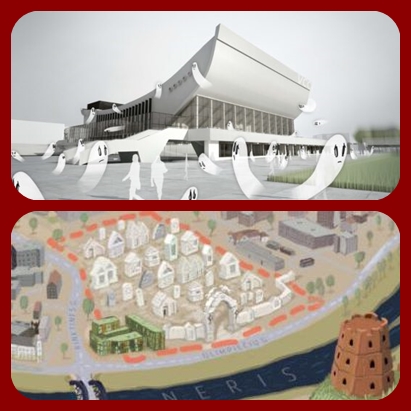
In DH: Last 11 years in the lively history of Lithuania’s major Jewish cemetery
Autumn-Winter 2026
Fate of the EU’s Last Remnant of Jewish Partisan Resistance during the Holocaust
The Bundestag and the German government have publicly called for the preservation of the Jewish partisan fort in the Lithuanian forest right next to the massive new German army base for its “Panzerbrigade 45.” Yet the construction works, forest clearing, road building, checkpoints, danger signs and builders’ late-night partying and rubbish dumping are all progressively degrading the fort and curtailing public access by the day. At the same time, the massive PR campaign of “Panzerbrigade 45” fails to even mention the fort! What flies?
Why has the Panzerbrigade PR machine in Lithuania still not once mentioned the major historical site “next door” — one that could and should serve as a unique source of Holocaust education for the thousands of German soldiers now “heading back east.” Why does Germany let its new military installations and building works degrade the fort’s remnants and the accessibility of visitors ever more? Fear of the antisemitic far right’s reactions in Lithuania? DH has been covering the pernicious campaign in Lithuania to prosecute and defame the Jewish partisans for 18 years; the fort itself — for 16 years.
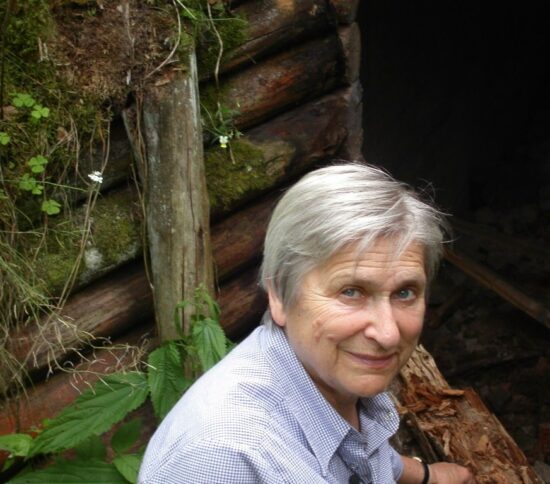
Vilna Ghetto survivor and Jewish partisan hero Fania Yocheles Brantsovsky (1922-2024) shows visitors the Vilna Partisans’ fort in Rudnítsker (Rūdninkai) Forest. The site, sacred to Holocaust survivors, is now rapidly deteriorating because of the arrival of Germany’s massive Panzerbrigade 45 right nearby (forest clearing, blocking of access to the fort because of shooting practice, party litter, and more), and because of the efforts of a local Holocaust-revisionist project to wipe the Jewish resistance off the face of history (the culmination of a 20-year campaign against Jewish partisans that included attempts to prosecute the last survivors and has now morphed into ongoing defamation and history rewriting aimed at portraying the Jewish partisans as “war criminals” even as street names, statues and monuments continue to glorify Holocaust perpetrators). Photo: 2007 (©DefendingHistory.com; video).
20-Year Saga Reignited
New denigration of the Jewish anti-Nazi partisans in Lithuania. Germany now critically involved. DH’s media & Bundestag tracker for 2025 and 2026. 2026 coverage in Jewish Telegraphic Agency (JTA), Der Spiegel, Berliner Zeitung, and Defending History. Video. Fania’s story from 2008.
THE LATEST
Disturbingly, Panzerbrigade 45 (part of NATO’s deployment) has repeatedly engaged in scrubbing old Jewish cemeteries (itself most laudable, but in the present context a thinly disguised PR diversion), while not even mentioning the fort in its extensive PR. Has a certain government-manipulated Lithuanian NGO been asked to help “fix” Germany’s PR problem with much-photographed grave-scrubbing? Has its head been rewarded with a handsome new position after doing that?
WHEN WILL PANZERBRIGADE’S FACEBOOK PAGE EVEN MENTION THE VILNA PARTISAN FORT?
◊
◊
Sept.–Oct. 2026
Come and visit Lithuania’s last remnant of the Jewish partisans’ anti-Nazi resistance
While it’s still there. A 35-minute drive from Vilnius.
Note to visitors this season: Lithuania is a delightful, safe country — enjoy every minute! Naturally, international visitors are enthralled by the striking (and now embattled) forest remnants of the Jewish partisan fort in Rūdninkai Forest (known as Rudnítsker váld in memoirs of the Jewish resistance to the Nazis). If your tour agency or guide won’t take you to this essential site because they prefer to sacrifice historical integrity on the altar of local political correctness, do the right thing and drop them! Find a real guide for the real sights to see. Here’s a list of professional guides. Visit the remnants of the forest compound where the Vilna Partisans lived and fought (even if now marred by the German Panzerbrigade’s military training and shooting practice nearby). It will be a highlight of your visit. And your life. The last authentic remnant of Jewish resistance in the Baltics.
◊27 July 2026
Bravo!
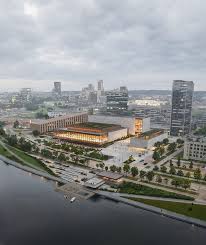 The Defending History community congratulates the winners of Vilnius’s architectural competition for a sparkling new international congress center near the Seimas where all people from everywhere, including all the peoples proud of their Lithuanian Grand Duchy heritage, can celebrate together in harmony! Bravo to Mayor Valdas Benkunskas and to all of beautiful, modern, democratic Vilnius.
There is now more incentive than ever to abandon the damaging (and now needlessly duplicative) plan for a congress center surrounded by thousands of Jewish graves at the Old Vilna Jewish Cemetery in the Šnipiškės district…
◊
When history must be defended
What is wrong with the mix-and-match monument planned in Brussels?
Finally, a major Western Holocaust scholar confronts the facile manipulation of some Jewish, Yiddish, and Holocaust commemoration institutions by the Baltic Holocaust revisionism project
The history behind the efforts to make the last Jewish partisan resistance fort disappear in the forests of Lithuania (right next to the new German 45th battalion). Last wish of Fania Yocheles Brantsovsky.
Summer 2026
Welcome to Vilnius!
≡≡ ברוכים הבאים אין ווילנע ≡≡
Standard Yiddish: Brùkhəm-habóəm! Deep Litvish: Brùkhəm-habóyəm! Polish and southern dialects: Brì:khəm-(h)abú:əm! Israeli Hebrew: Brukhím habaím!
◊
The Defending History community joins in welcoming people from around the world to beautiful, modern, democratic Vilnius, and in the first instance to this summer’s inspirational excavations at the Great Synagogue site in Vilnius (Yiddish Vílne, Ashkenazic Hebrew Vílno, Israeli Hebrew Vílna). Congratulations to the archaeologists, led by Jon Seligman and Justinas Račas, whose latest discovery is the very size of the 900 square meter site. Safety, success and a wonderful summer. A list of Jewish interest guides.
At the same time, we urge you to ask the hard questions of the day, as you would anywhere else. What exactly is going to be built on this site the moment the archaeology of the building area per se is complete? Have you seen the final architectural drawings and specific allocations of building space on this sacred site? Is archaeology being instrumentalized for political, ideological, financial or personal machinations? Have the plans, images and purposes of the imminent new structure slated to go up on top of the ruins been made publicly transparent for discussion and debate, or are they supposed to be secret?
Please consider signing the international petition. Please have a look at Defending History’s section on the subject. An old synagogue is a religious site and the main synagogue of the one-time Jerusalem of Lithuania and the topic of its future should not be obfuscated by the excitement at this or that find.
It can therefore be illuminating to seek out also the views of the city’s current rabbis (in alphabetical order): Rabbi Elchonon Baron (JHIL), and Rabbi Sholom Ber Krinsky (in his 33rd year of continuous full-time residence in Vilnius; his Chabad House is always open and offers an array of activities, including of course kosher food, mikve, and info on prayer service times at the main Choral Synagogue at Pylimo 39). Question: If this were an old church, would the city’s priests and religious citizens not be consulted about what/whether to build on the church’s recovered ruins?
❊
Secular communities include the often-overlooked Vilnius Jewish Community (VJC) that democratically represents most of the capital’s Jewish residents and can provide introductions to a variety of fascinating personalities and places. Young people also need to know about Lithuania’s one Jewish youth group, Sababa, located in classy headquarters on Karmelitu Street in the Old Town.

❊
Another major issue is the Old Vilna Jewish Cemetery (where thousands of graves still lie intact — the Soviets pilfered the stones), and which is slated to soon house a national convention center where thousands would cheer, clap, sing, drink and flush surrounded by these graves. Would this be happening to a 500 year old cemetery of the majority nationality and religion? Indeed, a courageous Lithuanian intellectual, Dr. Andrius Kulikauskas, has initiated a letter writing campaign to the Seimas (the nation’s parliament). An earlier Change.org petition launched by a key member of Vilnius’s Orthodox community, Ruta Bloshtein, achieved close to 54,000 signatures.
❊
If your interests are confined to enjoying museums and memorials, that is of course fine. On the museum front, be sure not to miss the most authentic of them, the Green House (Pamenkalnio 12). Though a branch of the state museum, its exhibits (where the Yiddish text is always included as an equal alongside Lithuanian and English) were created by the hands and minds of the last Lithuanian Jews who came to maturity before the Holocaust, all now gone. They were Holocaust survivors, World War II army veterans, and veterans of the anti-Nazi partisan resistance. In addition to the unadorned narrative of the Lithuanian Holocaust, there is a room dedicated to prewar Jewish life and culture as they saw it. Taken together with the low-tech modesty, the symbol of a little green wooden house atop a hillside driveway (invisible from the street, and for many years barely signposted), is itself a treasure of modern Lithuanian Jewish history.

From day one, government agencies allowed those last survivors to have their own little corner where they were free to do things their way, separate from the museum’s official big “state narrative” addresses in town. For decades, the Green House’s integrity was zealously guarded by director Rachel Kostanian, now in retirement in Berlin in her high 90s. For visitors from every part of the world, the spirits of Jenny Biber, Fania Yocheles Brantsovsky, Rachel Kostanian, Joseph Levinson, Rachel Margolis and others continue to welcome visitors to the modest little rooms of the Green House. Indeed, it has become a concept in Vilnology, even if rather younger than the Green Bridge…
❊
Last but not least, we invite all to visit our online resources (all free and without log-in): The Lithuanian Yiddish Video Archive (LYVA). The Yiddish Cultural Dictionary (YCD), an English-Yiddish dictionary; older wordpress edition). Names of the shtétlakh (shtetls) of Lithuania in Latin-letter Yivo transcription. Litvak culture resources page. Books online include Seven Kingdoms of the Litvaks, Vilna Jewish Book Stamps, chapters of Lithuanian Jewish Culture, Mikháleshik Yizkor Book, pilot for an Atlas of Lithuanian Yiddish; map of Jewish Lithuania (©2004/2026; smaller version), and books of the Bible translated into the Yiddish dialect and style of the lost Lithuanian Yiddish shtetl. DH editor Dovid Katz invites you to more materials on his website, www.dovidkatz.net, but regrets that the private ‘Litvak Yiddish Mini-Museum‘ will be able to welcome visitors again to the actual collection only in the autumn.
July 2026
Averting an imminent grave error on the ruins of the Great Vilna Synagogue. Finding a happy, ethical solution.
23 June 2026
85th Anniversary of June 23rd 1941 Outbreak of the Lithuanian Holocaust
Barbarossa Plus One: Did Seimas conference seek (again) to turn local collaborators and perpetrators into ‘national heroes’?
Then:
On 23 June 2026, the Seimas voted by 68 to 16, with 25 abstentions, to remove Draft Resolution No. XVP-1629, “On the June 1941 Uprising,” from its agenda. The draft resolution was therefore neither debated nor adopted. PDF record.
B O O K S
Prof. Karen L. Sutton’s new review of Prof. S. Sužiedėlis’s major 2025 book on the Holocaust in Lithuania (as PDF).
Earlier comment: Roland Binet and Clemens Heni.
See Defending History’s Books in the Debate page.
Spring-Summer 2026
20 Year Mark
of the campaign of defamation, delegitimization (and as long as they were alive) attempted prosecution
against the Holocaust-era anti-Nazi Jewish partisans in Lithuania
Spring 2026 developments in the saga include:
16 June 2026: Maritta Tkalec of Berliner Zeitung breaks the German media taboo on the sinking Jewish anti-Nazi partisan fort in the Lithuanian forest right next door to the German army’s brand new 45th Brigade training base. Mechanical English translation.
18 June 2026: Solveig Grothe brings the saga to Der Spiegel in a detailed report recounting her recent on-site research that included hearing from all sides of the debate (alternative link). Mechanical English translation. PDF of print edition.
More in DH’s chronicle of the two-decade old campaign against the Jewish partisans, and the section on the Jewish partisan fort. . .
❊
A June 2026 plea to honor the memory of the anti-Nazi Vilna Jewish Partisans of World War II:
Preserve the rapidly disappearing fort of the Vilna Jewish Partisans!
Ask elected officials to contact the German embassy in your country
Fania Yocheles Brantsovsky showing us around the Jewish partisan fort, in her Vilna Yiddish, in 2007 (video). Her last request to future generations. DH’s section on the Jewish partisan fort (also in ascending chronological order).
◊
Challenging the new Brussels monument project (‘An Echo in Time’)
Latest ‘Double Genocide’ bag of tricks from the ‘Prague Platform’ and East European Holocaust revisionists
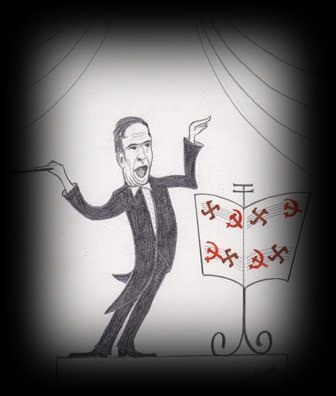 1. Brussels needs a major new monument to the victims of Communism and its brutality, including mass murder and vast crimes against humanity. 2. Brussels does not need a mix-and-match monument for victims of “Nazism and Communism together” which is a ruse of the red-equals-brown (Double Genocide) revisionism movement, emanating from the East European far right, and seeking to downgrade (and relativize) the Holocaust, criminalize those who joined the anti-Nazi resistance, and glorify local killers in the east as freedom fighters (they were all after all “anti-Communist”).
Please contact elected officials asking them to write to the European Parliament to object to this latest outburst of Holocaust history revisionism which encompasses, in the specific context of Eastern Europe, well understood far-right, ultranationalist and antisemitic overtones.
BACKGROUND: Defending History section on ‘Double Genocide’; on the ‘Prague Platform’ (emanating from the ‘Prague Declaration’ — DH was proud to contribute to the European parliamentary response, the Seventy Years Declaration, which eight very courageous Lithuanian parliamentarians signed); DH editor’s papers, see esp. paper on Double Genocide revisionism imposed on museums and monuments and paper on (ab)use of law to redefine the concept of genocide in Eastern Europe for the express purpose of ‘equalizing’ Nazi and Soviet crimes. In the view of the Defending History community, the Brussels monument project represents Eastern Holocaust obfuscation being exported to the West in well-disguised palatable packaging. MP John Mann (now Lord Mann) of the UK, founder of the Inter-Parliamentary Coalition for Combating Antisemitism (ICCA) was the first to see it all coming back in early 2008. He was soon followed by Lithuanian philosopher Leonidas Donskis.

New paper by Poland’s Dr. hab. Anna Zawadzka on the antisemitism embedded in the Double Genocide movement
June 2026
Letters to the Seimas:
Respect Cemeteries, a Christian-Jewish (and Lithuanian-Jewish) partnership posts a selection of letters to the Seimas resulting from RC’s new campaign to save the Old Vilna Jewish Cemetery. More on the project. Recent developments.
Latest: Seimas postpones decision to the autumn. Scholars discover the 1940 Soviet document ordering state confiscation of the Old Jewish Cemetery from the Vilnius Jewish Community.
◊
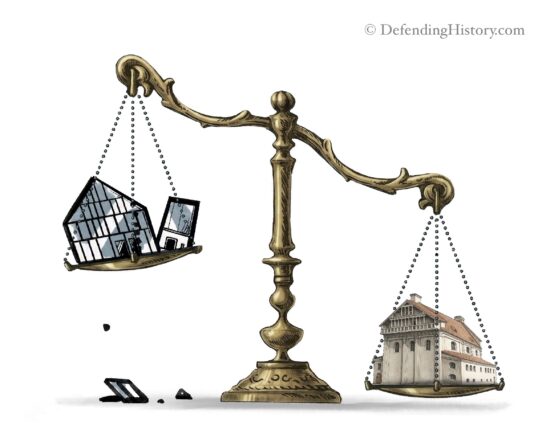
A TALE OF TWO VISIONS
FOR THE FUTURE OF VILNIUS
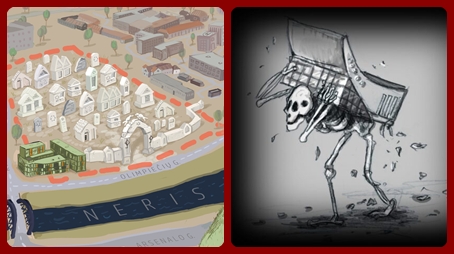
Which vision for Piramónt (Shnípishok, today’s Šnipiškės in modern, beautiful Vilnius) reflects true love of modern Lithuania? The historic cemetery restored or a Soviet-imposed convention center that would haunt the capital for centuries? DH images by Vulovakas of Kaunas (not to scale).
Respect Cemeteries launches campaign on Old Vilna Jewish Cemetery. RC’s website. RC reaches out to all: “Please address your letters to the members of the Committee on Culture of the Seimas (Lithuania’s parliament). Please email them to: priim@lrs.lt. We also invite you (if you wish) to send us a copy of your letter (via: ruta@kapines.com) so that we can share it publicly.”
Words of a true patriot of Lithuania:
“From the top of Gediminas Castle, do we want to see and cherish, for hundreds of years to come, what the Communist Party Chief saw (the Sports Palace) or what the Grand Duke of Lithuania saw (the Jewish cemetery)?” — Dr. Andrius Kulikauskas
◊
May 2026
Updates
in the saga of the Old Vilna Jewish Cemetery, where thousands lie buried
Major rally and concert to promote restoration of Soviet ruin into national conference center surrounded by thousands of Jewish graves announced for 18 May 2026. Official poster in Lithuanian, and an English version circulating

DH SAYS: ‘A CEMETERY IS A CEMETERY IS A CEMETERY’ — JUST AS A 500 YEAR OLD SACRED CEMETERY OF THE COUNTRY’S ETHNIC/RELIGIOUS MAJORITY WOULD BE CHERISHED. . .

Passover & Easter / April 2026
◊

Happy Passover and Happy Easter to our Readers who pbserve these holidays
Traditional trilingual (Hebrew-Aramaic-Yiddish) versions of some beloved Passover seder (Péysakh séyder) songs from the Vilna area
The Litvak words for afikomen
Defending History focusing on these issues in spring 2026. Seeking Christian-Jewish partnership on these matters . . .
◊
11 March 2026
 Vilnius Chabad Rabbi, Sholom Ber Krinsky, issues powerful statement on fate of Old Vilna Jewish Cemetery on Lithuania’s Independence Day
Professor Sid Leiman reacts to the ‘Krinsky Declaration’
Defending History chronicles the saga from 2015 onward
25 February 2026
Australian scientist, for many years a part-year resident in Lithuania and contributor to its higher education in the sciences, recounts his family history and reveals his own opinions on some of today’s burning issues

Harry Gorfine: Paupys, Paupers, and Depauperates
6 February 2026
HAPPY 85th BIRTHDAY TO VILNIUS’S BELOVED
Professor Joseph Parason
(Josifas Parasonis)

◊
16 January 2026
Meir Bulka and Bar Ilan University’s Institute of Holocaust Research Call on Lithuania’s Culture Minister to Allow Impartial, Unimpeded Ground-Radar Survey of Old Vilna Jewish Cemetery
LATEST REPORTS
14 January 2026
In One-Minute Speech, Rabbi Elchonon Baron Shakes Up Vilnius Rally for Turning Old Jewish Cemetery into National Conference Center
From timecode 1:58:50. But did the elite audience at Vilnius’ prestigious National Academy of Sciences headquarters show the rabbi respect during his one-minute plea for the Old Vilna Jewish cemetery to be spared? Video. Was he allowed to continue speaking? Video.
◊
LATEST NEWS FROM “LITHUANIA’S LIVELIEST CEMETERY”
◊
8 January 2026
Run-up to the January 14th rally at the National Academy of Sciences in central Vilnius:

LITHUANIA’S ACADEMY OF SCIENCES GRANTS PREMISES FOR JANUARY 14th RALLY DEDICATED TO DESECRATION & HUMILIATION OF OLD VILNA JEWISH CEMETERY
◊
COME JOIN US FOR MAY 2026 HISTORY HERITAGE VOYAGE TO LITHUANIA & POLAND
◊
◊
News & Views
titles | topics | authors | countries
New: Pilot of Yiddish dictionary mobile edition. All editions free online.
◊
8 Dec. 2025
Vilna’s beloved Jewish partisan Fania Yocheles Brantsovsky (1922-2024) defamed yet again in death in daily mass media
Background: Blaming the Victims. Fania Yocheles Brantsovsky section. Fania resource page.
◊
11 Nov. 2025
Yivo centennial Vilnius conference issues — and a modest new exhibition in Old Town

29 Oct. 2025
Disquiet in Vilnius after large stone hurled at Jewish restaurant, breaking front window: a sad ‘first’ in the city
◊
25 Oct. 2025
Defending History’s community congratulates Lithuania’s foreign minister Kęstutis Budrys on bold conceptual advance

Lithuanian Foreign Minister Kęstutis Budrys
◊
Autumn 2025
Major newly-available online archive of videotaped Holocaust Survivor testimonies:
Corpus of Spoken Yiddish in Europe
See also the Lithuanian Yiddish Video Archive (LYVA), and a selection of testimonies of survivors of the First Week (23-30 June 1941)
◊
15 Sept. 2025
Roland Binet reviews Sužiedėlis’s major new book on the Lithuanian Holocaust. See also: Books in the debate.

2 Sept. 2025
Lithuanian gov. reneges on commitment, now again pledging to build new national convention center in Soviet ruin in the heart of the Old Vilna Jewish Cemetery where many thousands still lie buried

22 Aug. 2025
State-sponsored “official” Jewish community pursuing plans for new “palace for its leaders” on site of Vilna Great Synagogue? The background.

Summer 2025
Lithuania’s prime minister announces:
National conference center will rise in center of the Old Vilna Jewish Cemetery

First responses on 23 July 2025: Defending History’s statement, and Rabbi Elchonon Baron’s public letter to the prime minister. Reversing years of alleged collusion with the political and commercial forces opposing restoration of the cemetery, both the AJC’s Andrew Baker and the LJC’S Faina Kukliansky issue clear statements of protest.
Other protests from recent years, including: Rabbi S.J. Feffer; proclamation by Litvak heads of yeshiva rabbis Moshe Hillel Hirsch of Slobodka, Reuven Feinstein of New York, Osher Eliyahu Kalmanowitz of Mirrer Yeshiva, New York; Elya Baer Wachtfogel, Zichron Moshe, South Fallsburg, New York.
From earlier, including: Christian Bonneville, Alan Dershowitz, Rabbi Pini Dunner, Bernard Fryshman, Rabbi David Lau, Rabbi Chaim Kanievsky, Serge Klarsfeld, Sid Leiman, Pastor Michael Maass, Rabbi Yekusiel Teitelbaum, Rabbi Warren Goldstein.
RUTA BLOSHTEIN’S PETITION REVIVED
APPROACHING 54,000 SIGNATURES
Voices of current and recent Vilnius residents, including: Ruta Bloshtein, Milan Chersonski (1937-2021), Rabbi S.J. Feffer, Pinchos Fridberg, Dovid Katz, Andrius Kulikauskas, Arkady Kurliandchik, Julius Norvila (Norwilla), Josif Parasonis.
Vilnius mayor complains he wasn’t informed, notes he is studying alternative site near the Seimas.
Having previously supported building projects on site, the state-sponsored “official” Jewish community head now threatens harm to Lithuania’s reputation for not having consulted her first. By contrast, the democratically run Vilnius Jewish Community, representing the capital’s living Jewish people, has consistently protested any & all plans other than loving restoration of the Old Vilna Jewish Cemetery as the cemetery that it is (with thousands still buried there). LRT’s 25 July report. Even the AJC, piqued at not being informed, speaks out forcefully for the first time. Similar first from MP E. Zingeris, who now says “former cemetery” is wrong place for conference center (but ignoring that there is nothing “former” about territory where thousands now lie buried). MP Vytautas Sinica applauds rise of conference center (27 July), citing his own participation in last summer’s anti-Jewish-cemetery demonstration (at which Arkady Kurliandchik was the sole counter-demonstrator).
All other Soviet monstrosities rightly targeted for demolition. But the Sports Palace — in the middle of the old Jewish cemetery — ruin is wrongly called architecturally unique. They are all over the former USSR. Sounds more like East European antisemitism. Far-right ultranationalists do not want a Big Jewish Thing in the capital of the city once known for centuries as Jerusalem of Lithuania. The saga (2015-2025)
◊
Summer 2025
Very unfortunate proposals for Seimas to legally recognize 1941 LAF killers of Jewish neighbors (and Hitler’s puppet “provisional government”) as “national heroes”
◊
◊
Recent News and Views
◊
NEW SECTIONS:
New German ’45th Panzerbrigade’ is just next door to remnants of Europe’s last Jewish partisan fort
Lithuania: a textbook case of state restitution for lost Jewish assets being abused to dismantle the community it was meant to preserve
Legacy of Fania Yocheles Brantsovsky (1922-2024)
In the Era of Yivo’s 100th
◊
Summer 2025
A magnificent opportunity for future Holocaust education in Europe…
Will Germany’s new “45th Armoured Brigade (‘Panzerbrigade 45’) also known as the Lithuania Brigade” set for territory at/near site of Europe’s last Jewish partisan fort, lead to restoration — or obliteration — of one of Lithuania’s most important World War II sites?
A breathtaking icon of the human will to survive, this is where 100 Jewish escapees from the Vilna Ghetto set up their partisan fort in the battle against Nazi forces and their local collaborators.
See Defending History’s 2010 report on the ‘Jewish Partisan Fort’, which the late Jewish veteran of the anti-Nazi partisans, Fania Yocheles Brantsovsky (Brancovskaja, 1922-2024) showed to substantial numbers of of visitors over some three decades, including diplomats from the American, British, Canadian, French, German, Irish, Norwegian and other embassies in Vilnius. Her last wish was that it be preserved for future generations.

Ireland’s Ambassador Dónal Denham (left) and UK Ambassador Simon Butt visit the Jewish partisan fort in the forests of Lithuania, learning of its remarkable history in the annals of anti-Nazi resistance from survivor and veteran of the Jewish partisans Fania Yocheles Brantsovsky (c. 2009). Photo: DefendingHistory.com

Fania passed away in 2024 at age 102, but her videos showing every corner of the Jewish partisan fort in the forest are still there. Now, with thousands of German soldiers arriving next door in a NATO deployment to defend Lithuania, it would surely be of the highest benefit to soldiers’ continuing education and respect for the victims of the Holocaust for the fort to be lovingly restored. This is an opportunity for Germany and for NATO.
June 2025
Remembering on Monday June 23rd 2025 — Monday June 23rd of 1941
An appeal to Lithuania’s democratic parliament (the Seimas) not to allow its premises to become the home for yet another attempt to glorify the first Holocaust-era murderers of Lithuanian Jewry in the genocide that left some 96% of Lithuanian Jews annihilated?
“Beautiful, modern, democratic Lithuania needs this kind of far-right Holocaust revisionism, glorifying the perpetrators, like a hole in the head.”
In the opinion of virtually all Lithuanian Holocaust survivors interviewed over three decades, June 23rd 1941 was — for the victims and survivors, in the eyes of the targeted population — the onset of the Lithuanian Holocaust. Mass murder by men who put on white armbands (the LAF — ‘Lithuanian Activist Front’) killed thousands of Jewish neighbors before the Germans even came or set up their authority (see samples of survivor testimonies). They were, of course, not all violent thugs. There were the LAF’s intellectuals in Berlin preparing the texts and leaflets calling for the ethnic cleansing of Lithuanian Jewry (see LAF leaflets; history).
Now, as 23 June 2025 approaches, a group of parliamentarians, academics and far-right activists are setting up a ‘collegium’ to try to turn these murderers into ‘national patriots’. Confident of their ability to sell far-right revisionist history to naive Westerners, they have even announced an English edition of their wisdom for the benefit of Western embassies. This is the last thing beautiful, modern, democratic Vilnius needs. The latest in Defending History:
A Vilnius professor, a former foreign minister, and group of Conservative (Homeland Union) parliamentarians announce ‘collegium’ to glorify 1941 LAF (Lithuanian Activist Front / ‘White-Armbander’ ) Hitlerists who murdered their neighbors — effectively ‘initiating on the ground’ the Lithuanian Holocaust
The professor. The official press release on the website of the Seimas. Article citing former foreign minister.
OUR TAKE
Leonidas Donskis answers Prof. Girnius from the grave:
‘When will the truth finally set us free?’
____
NOW IN ENGLISH TRANSLATION:
Testimonies of 121 survivors on the 1941 LAF / white-armbander rampage of mass murder of Lithuanian Jewry
UPDATES
Former foreign minister, cofounder of the “collegium” announces June launch date for the drive to glorify the LAF murderers of thousands of Lithuanian Jewish citizens. Plans include lavish English-language publications intended to persuade major Western embassies in Vilnius and assorted foreign entities. Back in 2012, he was the author of the infamous Hitler-Stalin “moustache remark” when he attacked six inspirational Lithuanian parliamentarians who signed the Seventy Years Declaration. In 2010, the Lithuanian Jewish Community protested his antisemitic tirade. In 2012, the Social Democrats, inspirationally led by Vytenis Andriukaitis, fought valiantly for the truth of history. See reports from the period, and especially Dr. Andriukaitis’s reply to the then foreign minister, and a historic parliamentary intervention by Andriukaitis and Algirdas Sysas. For Defending History’s take on the issues per se, please see our reply to the recent article that launched the latest attempt to kosherize and glorify one of Adolf Hitler’s most “successful local mass-murder machines” of 1941. The victims were all civilian Jewish citizens of Lithuania. Thousands were murdered before the Germans even came or took control. We call on genuine friends of beautiful, modern, democratic Lithuania to speak up loud and clear against the impending travesty. See also dozens of survivor testimonies of the white-armbanders / LAF’s “accomplishments” for Lithuanian history, and English excerpts from their pre-Nazi invasion leaflets.
◊
Mid June 2025 in Vilnius:
On Yivo’s 100th:
Dr. Jonathan Brent, director of Yivo, speaking at National Picture Gallery Tuesday 17 June at 3 PM.
Professor David E. Fishman (JTS), speaking at National Library’s Judaic Studies Center Tuesday 17 June at 5 PM. Registration.
[Also, now online: Dovid Katz’s April 2025 lecture on Yivo’s 100th at the Vilnius Jewish Public Library (video).]
Book launch:
Prof. Saulius Sužiedėlis’s
[Links to purchase the book, and to reviews & comments: on DH’s Books in the Debate page.]
Documentary film launch:
Boris Maftsir’s new documentary film on the Lithuanian Holocaust (subtitles in English) at the Forum Cinema on Savanorių, Wednesday 18 June at 7 PM. Registration.
While in town:
New Museum of Litvak Identity. The Green House (Pamėnkalnio 12). Litvak folk art exhibition at the National Picture Gallery.
Best place to get information on all that is going on in town: Visit the Jewish Cultural and Information Center at Mėsinių St. 3 in the Old Town.
Guides & genealogists.
◊
5 June 2025
Vilnius Jewish Community, representing vast majority of Jewish citizens of Lithuania, protests ‘kangaroo elections’ staged by state-sponsored ersatz community fueled by restitution. Return to democracy is demanded.
SEE: VJC’s statement on website; on facebook. DH’s take. JHL’s statement. Report in Alfa.lt.
ALSO: DH’s new section: Lithuania: Textbook case of East European restitution for lost Jewish assets abused to dismantle and diminish a vibrant Jewish community.
◊
30 May 2025
Rašella Galinienė, head of the Jewish Community of Shavl (Šiauliai, Lithuania) protests an inappropriate memorial plonked on a Holocaust mass grave

Rašella Galinienė, elected head of the Jewish community of Shavl (Šiauliai, northern Lithuania) just says No! to 25 (!) bronze-on-concrete sculptures plonked right on top of the hundreds of Yánishok Jews buried in this mass grave — without consulting the nearby living Jewish communities, or bothering to think whether they would be doing this unilaterally if it were a mass grave site of the nation’s ethno-religious majority…

Is a mass grave the right place for these?
◊
Spring 2025 News
Is Department of Cultural Heritage compromising its integrity by new ‘deal’ with the far-right Holocaust-revisionist ‘Genocide Center’?
❊
Chelm or Vilna? Restitution-fueled ‘Lithuanian Jewish Community’ (so-called ‘fake election quango’) closes Vilnius’s only synagogue on main Passover event with no warning, issues statement effectively yanking the title ‘rabbi’ from Vilnius’s one resident rabbi (of the last 30+ years). Report. Background.
❊
All invited to Dovid Katz’s lecture: ‘Yivo’s 100th: Origins, Dreams, Successes, Failures, Conflicts
❊
Passover invitation: Rabbi S. J. Feffer invites all who wish to come to his Passover seyder on Saturday night 12 April at 9:30 PM at the Narutis Hotel on Pilies St. in Vilnius’s Old Town (ground floor, hall at rear). Everyone welcome, free, no reservations needed…
Traditional Vilna-area Yiddish texts for three beloved Passover songs
❊
Dalia Epstein (Dalija Epšteinaitė) on Jewish Museum’s removal of Yiddish signs from Vilnius premises
❊
To our Jewish readers: Happy Purim!
Book of Esther in Lithuanian Yiddish
❊
Should Germany-funded ‘Claims Conference’ think again before inadvertently legitimizing East European far-right Holocaust Revisionism?
❊
Third anniversary of barbaric Putinist invasion of Ukraine: Vilma Fiokla Kiurė on Lithuania’s women volunteers. DH renews statement of three years ago
❊
Andrius Kulikauskas on Holocaust distortions of major political figure
❊
Defending History on Lithuanian PM’s new ‘working group on antisemitism’
❊
Has Lithuania’s state Jewish museum just eliminated Yiddish signage from all three of its Vilnius addresses?
❊
Roland Binet reviews Saulius Beržinis’s documentary film ‘Petrified Time’
❊
Vilnius ‘Genocide Center’ & far right Holocaust revisionists launch new campaign of defamation against the late Fania Yocheles Brantsovsky (Brancovskaja) [media tracker]
❊
UK’s Jewish Telegraph interviews DH editor Dovid Katz
◊
◊
Jan. 2025
Will Vilnius State Jewish Museum Reconsider Featuring Head of Holocaust-“Fixing” Genocide Center for International Holocaust Remembrance Day?
IS THIS REALLY HAPPENING?
The Defending History community, which has expressed profound admiration for recent major progress of Lithuania’s state Jewish museum (“Vilna Gaon Museum of Jewish History”), is saddened that the museum has chosen to commemorate this year’s International Holocaust Commemoration Day by a 30 Jan. event featuring revisionist historian Dr. A. Bubnys, director of the Holocaust “fixing” Genocide Center (who proudly poses with placards of leading Holocaust collaborators J. Noreika and K. Skirpa). Without including a single independent historian or Lithuanian champion of truthtelling. Let alone a single Jewish member of the panel, let alone families of survivors and victims. We call on the museum to cancel this ill-conceived event. An insult to the victims and survivors and their families. The Gaon of Vilna is turning in his grave. EDITORIAL

Top: Invite to Vilnius museum’s Holocaust Remembrance Day event. Bottom: The featured speaker back in 2020 addressing a far-right / neo-Nazi rally flanked with placard glorifying two brutal Holocaust collaborators (one “on the ground” and the second in his published program in 1941 for the ethnic cleansing of the country’s Jewish citizens).
◊
◊
☰ NEWS & VIEWS ☰
LATEST | COUNTRIES | ORGANIZATIONS
AUTHORS | SECTIONS | SUCCESSES
Saga of Žemaitaitis: Avowed antisemite’s party is now in the governing coalition of a democratic, EU/NATO member state
Come visit Lithuania & neighboring EU countries!
DH editor in neo-nazi & far-right imagination
Can eminent Western folks (& Jewish organization heads) be seduced by state medals, junkets & photo-ops to unwittingly compromise historic truth of the Holocaust & interests of remnant Jewish communities of Eastern Europe?
◊
Jan. 2025
From the Saga of Žemaitaitis
A publicly antisemitic party is in the governing coalition of one of the Eastern EU member states for the first time, raising deep concerns both near and far
Some of the ins-and-outs from Nov. 2024 to Jan. 2025
His party is in the governing coalition of an EU state
◊
Andrew Higgins in the New York Times on inclusion of party of avowed antisemitic MP Remigijus Žemaitaitis in Lithuania’s new governing coalition; Defending History is cited. As PDF.
READ MORE
◊
Nov. 2024

Two takes on Vilnius’s new Museum of Culture and Identity of Lithuanian Jews:
Adam J. Sacks in Fathom; Dovid Katz in DH
discussion on Dr. Barbara Kirshenblatt-Gimblett’s Facebook page
◊
◊
In the second half of 2024…
FROM NEAR:
- ❐ Fania Yocheles Branstovsky dies in Vilnius at 102
- ❐ Missionary conference came to town in November
- ❐ Adam J. Sacks: Kaunesia — the dark memory lanes of Kaunas
- ❐ Arkady Kurliandchik’s one-man counter-demo at Old Vilna Jewish Cemetery
- ❐ New ‘Museum of Culture & Identity of Lithuanian Jews’
- ❐ Vilnius Jewish Community protests cemetery desecration
- ❐ Public-space shrines to Holocaust collaborators
- ❐ Škirpa plaque saga. Far right at work to put it back up
◊
AND FAR:
- ❐ Silvia Foti honored by City of Beverly Hills
- ❐ Roland Binet: Flanders & flawed remembrance of two world wars
- ❐ AJC needs to reexamine its role in one country
- ❐ Estonian group in Canada: glorifying collaborators?
- ❐ Ukraine doesn’t need ‘help’ from ‘Red-Brown Commission’
- ❐ Neither does Rwanda
◊
22 September 2024
We mourn the loss, at age 102, of
Fania Yocheles Brantsovsky (Brancovskaja)
אַ ליכטיקן גן⸗עדן, טײַערע פאַניטשקע
22 May 1922 — 22 September 2024

Fania Yocheles Brantsovsky took thousands of students and visitors from around the world to see the Jewish Partisan Fort where she and another hundred Vilna Ghetto escapees valiantly fought the Nazis. Her last wish: that the fort be preserved and restored.
Beloved icon of Vilna Yiddish culture, educator, librarian, mentor to thousands from around the world who came to immerse themselves in Yiddish in one of its historic capitals.
Hero of the Jewish partisan resistance in the forests of Lithuania, Fania’s last wish was that the Jewish Partisan Fort, where she and another hundred Jewish escapees from the Vilna Ghetto fought valiantly against the Nazis, be preserved and restored. It is now up to major Jewish and world heritage organizations to make that happen.
Fania’s family, heirs and students deserve a formal state apology for the shameful campaign of prosecution and defamation (chronology) against her and the other Jewish partisan veterans, all in the spirit of “Double Genocide” Holocaust revisionism (video sample). Follow the history to see also the inspirational leading role in Vilnius of then Irish ambassador to Lithuania Dónal Denham; also Austria’s Andrea Wicke, Norway’s Steinar Gil, UK’s Simon Butt, USA’s John A. Cloud. All in support of Fania Yocheles Brantsovsky and Dr. Rachel Margolis (1921-2015), the two women Holocaust-survivor heroes of the anti-Nazi resistance defamed by media, prosecutors, major local academics, the “Genocide Center” and the “Red-Brown Commission”…
For close to two decades, Fania was librarian of the Vilnius Yiddish Institute at Vilnius University. When the institute was closed, the thousands of books she had meticulously catalogued became suddenly unavailable to students and readers. Brokenhearted as she was at the institute’s closure (she had been librarian from day 1, in 2001), her first thought was that all its Yiddish books must rapidly be incorporated into a living, functioning Vilnius library.
See articles, videos and photos with Fania Yocheles Brantsovsky


