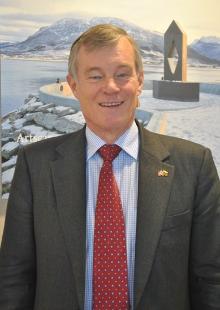
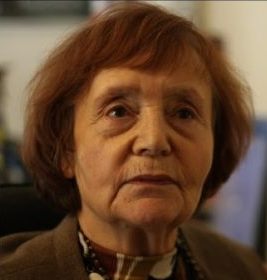
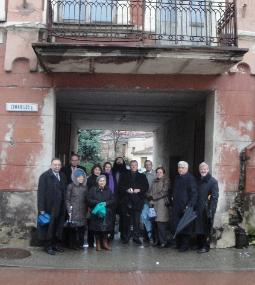
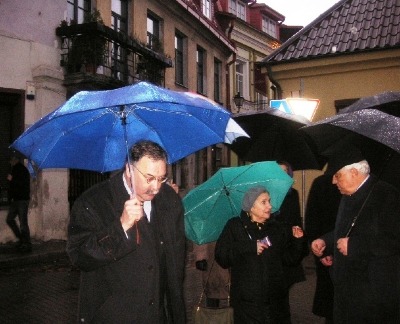
 At the initiative of Norway’s ambassador to Lithuania HE Steinar Gil, a group of ambassadors and chiefs of mission defied persistent rain to go on a historical walking tour of the Vilna Ghetto, where Fania Yocheles Brantsovsky, 87, librarian of the Vilnius Yiddish Institute, recounted the history of the city’s anti-Nazi resistance. They represented the embassies of Finland, France, Germany, Ireland, Japan, Norway, Poland, Portugal and Russia. Britain, Canada and the United States had participated on a previous date.
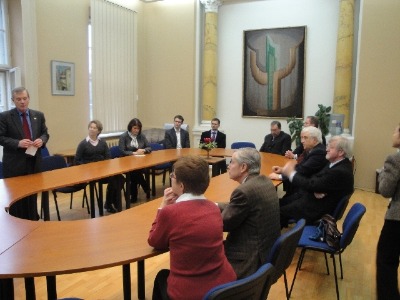
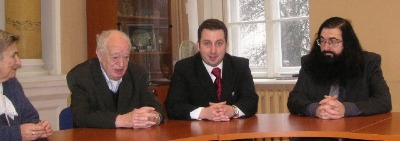
 The walk was preceded by a meeting at the Jewish Community of Lithuania addressed by Norwegian ambassador HE Steinar Gil, JCL chairman Dr Shimon Alperovich, executive director Mr Simon Gurevich, and Professor Dovid Katz of the Vilnius Yiddish Institute. The event is perceived as a meaningful response to the campaign of defamation targeting Jewish veterans of the anti-Nazi resistance (see below at 28 October 2009). Report at: Responses (→ 26 Nov 2009).
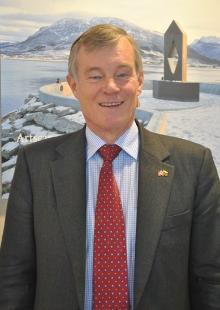 Norway’s ambassador to Lithuania HE Steinar Gil has emerged as a Baltic region champion of human rights, at a time when the Lithuanian government continues its gestures of support for the March 11th neo-Nazi marchers (parallel to Latvian leaders’ stout defense of the March 16th Waffen SS march in Riga). Speaking at a March 19th forum on ‘European and Lithuanian Values’ at the Lithuanian parliament, Ambassador Gil remarked for the record: ‘Every foreigner in Lithuania noticed this march, where the participants were shouting “Lithuania for Lithuanians”. We were shocked.’ The ambassador also pointed out politely that fifty parliamentarians had signed a petition to ban the Baltic Pride gay-rights parade. He asked: How many had spoken up against the nationalist march? He added that every person with respect for herself or himself and for her or his country should condemn this kind of manifestation. Others who have spoken up include Irish ambassador HE Dónal Denham; UK ambassador HE Simon Butt; and Lithuania’s sole Liberal member of the European Parliament, Prof. Leonidas Donskis.
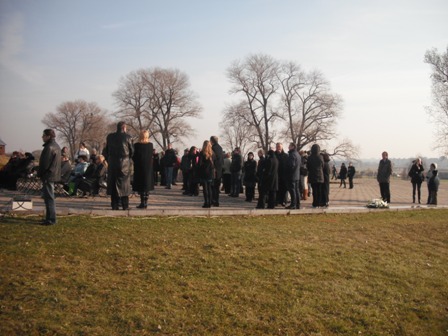 Organized by the Jewish Community of Kaunas, and addressed by its leader, Gercas (Hershl) Žakas, this year’s event drew just over a hundred people, filling less than half the paved plaza near the memorial dais. Survivors present expressed concern for the future status of Ninth Fort remembrance here, and Holocaust commemoration more generally. The concern echoes various factors, including the gradual disappearance of survivors and witnesses, the shrinking of the vestigial Jewish community, and the shifting political trends.