Politics of Memory
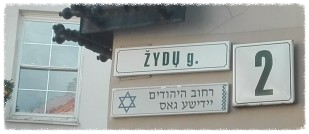
Att. Mr. Mayor of Vilnius: Streets Named for Hitler’s Local Partners, and Plans for Congress Center on Top of Old Jewish Cemetery
Vanagaitė and Zuroff’s “Mūsiškiai”
[last update]
For the first time, a Lithuanian author teamed up with an Israeli Holocaust scholar in search for the truth about widespread local enthusiasm, seventy-five years ago, for mass murder of civilian neighbors, and today’s failures in coming to grips with that history, in a land of hundreds of Jedwabnes. A genuine historic advance in Lithuanian-Jewish relations is seen in the startling partnership of Rūta Vanagaitė and Dr. Efraim Zuroff in Vanagaitė’s Mūsiškiai: Kelionė su priešu (“Our People: Journey with an Enemy”), published in Vilnius in January 2016. See also the media tracking page on the Simon Wiesenthal Center’s Operation Last Chance website.
English Lithuanian German Polish Russian
The following listing of coverage by language (English, Lithuanian, Russian, Polish) is far from exhaustive. The humongous reaction needs to be studied in its own right.
Nov. 2017 Update: Renewed media conflagration launched by the author’s 26 October 2017 PR rollout of multiple initiatives, two of which were directly relevant to the legacy of Mūsiškiai.
12 Holocaust Massacre Sites in Vilnius Region; Taking a Closer Look at 2
CEMETERIES AND MASS GRAVES | COMMEMORATIONS | LITHUANIA
◊
by Julius Norwilla
◊
There are at least twelve Holocaust mass murder sites in the immediate Vilnius region that are marked by some kind of memorial. They are noted in the online Holocaust Atlas of Lithuania, founded by Milda Jakulytė. In Lithuania, there are over 227 such sites that are described in the atlas, which is historically a continuation of the painstaking 1990s work of the late Joseph Levinson, published in his The Book of Sorrow (Vilnius 1997) that documented close to 200 such sites.
The best known is the Paneriai Memorial as the largest mass grave in the country, known as Ponár in Yiddish and Ponary in Polish. It is the site where 100,000 people were humiliated and murdered, around 70,000 of them Jews. This is where official commemorations take place, particularly each year on September 23rd, the day (controversially) designated by the Lithuanian government as the Holocaust Remembrance Day, rather than the international day, on January 27th, or days specific to the Lithuania-wide Holocaust such as June 23rd when violence against and humiliation of Jewish neighbors broke out across Lithuania.
Other mass murder sites in the Vilnius region are visited much less frequently and very often — not at all. But visiting these places is important for the respect for those murdered there and for a deeper understanding of the Holocaust which has so distorted our nation’s qualities.
My Take On Malát
OPINION | SHTETL COMMEMORATIONS | EVENTS | POLITICS OF MEMORY | COLLABORATOR GLORIFICATION
◊
by Julius Norwilla
◊
The year 2016 marks the 75th anniversary of the genocide of the Jews of the Lithuanian shtetls, the smaller towns, villages and countryside, in fact, a solid majority of Lithuanian Jewry (with a smaller component being kept alive in four cities for slave labor and rolling annihilation over the remaining years of the Holocaust). Marking the anniversary, at the end of August and beginning of September this year (a period in 1941 when a number of the local massacres were concentrated), there have been commemorative events in (Yiddish names first) Birzh (now: Biržai), Dusát (Dusetos), Malát (Molėtai), Shádov (Šeduva), Vílkomir (Ukmergė) and more. By far the largest event took place at Malát on the 29th of August. The project, leading to establishment of a new foundation, was initiated by Tzvi Kritzer. The speakers included high representatives from the Lithuanian government, its official Jewish community, and various public and cultural representatives.
Grigory Tzvi Kritzer’s Speech on the 75th Anniversary of the Malát Massacre
Grigory Tzvi Kritzer, a native of Vilnius, Lithuania, who settled many years ago in Israel, is a well-known Israeli soccer (football) agent. He was the primary organizer of the series of events that culminated in a march by thousands, unveiling of a multilingual monument, and launch of an exhibition, book, and film, in the small town (former shtetl) Malát (Molėtai, northeastern Lithuania) on 29 August 2016. The book and exhibition were the products of the initiative and creative work of regional museum director, Viktorija Kazlienė, in close cooperation with Leon Kaplan who edited and translated the book.
The day marked the 75th anniversary of the 1941 massacre of the town’s 2,000 Jews, then a majority of its population. This year’s day of memorial events there has drawn wide and varied media comment and coverage.
The following is the English text of Tzvi Kritzer’s speech, provided by his office at the request of Defending History. The translation is by Aleksandras Federas.
◊
We decided to walk that road one and a half years ago, and then I imagined that there would be only a few people here… Now, look around, my heart is beating with joy that our relatives and loved ones, who perished here in Molėtai, have not been forgotten.
Thanks to all of you, to those who have come from faraway countries and to those who live here, in Lithuania. I am particularly moved to see here people from all corners of Lithuania. I would like to thank the mayor of Molėtai, Mr. Stasys Žvinis, and all his team for their help and support.
Will the EU, the OSCE and the Council of Europe Ask Latvia to Revoke the 1998 Declaration?
OPINION | POLITICS OF MEMORY | GLORIFYING COLLABORATORS | LATVIA | ANNUAL WAFFEN SS MARCHES IN RIGA
◊
by Aleksandr Kuzmin (Riga)
◊
On 29 October 1998, a few weeks after the parliamentary elections, the outgoing Parliament of Latvia had adopted the Declaration on Latvian Legionnaires in the World War II. The vote was as follows: 50 ayes, 8 nays, 3 abstentions.
The text contains several questionable statements. Those include claiming that “The aim of soldiers who were drafted into the Legion or who joined it voluntary was to protect Latvia from the restoration of Stalin’s regime” and asking the government to “prevent insults against the honour and dignity of Latvian soldiers.” To make it clear — the ones whose reputation was intended to be defended were Nazi collaborators, voluntarily or not. And the intention was pretty obvious — as the rapporteur MP, Mr. Mauliņš, said before the vote, “this decision will be our position towards our soldiers who truly fought for the independence of Latvia”.
August and September 2016 Memorials for Destroyed Jewish Communities
Summer and Fall 2016: 75th Anniversary
of the Nazis’ annihilation, with vast local collaboration, of Lithuania’s Jews in the towns, villages, provinces; implementation of ghettoization and mass murder in the cities.
Perhaps among the simplest, most minimalist measures of a municipality’s sincerity (beyond PR bonanzas, photo-ops and legitimizations via useful foreigners): (a) Modest town-center information board on the origins, history, culture, contributions and (true) fate of the town’s Jewish citizens; (b) Rapid removal of any local shrines, street names, museum tributes etc. to the local collaborators and murderers. “You just can’t make heroes out of the killers and expect to cover it up with some annual PR event for the foreigners.”
Language and respect for the victims: In addition to Lithuanian and English, will new memorial texts (including those at forest mass graves and old cemeteries) continue to include Yiddish, the language of 100% of the murdered Jews in all these towns? For many years, Lithuania has had a uniquely admirable record in this regard.
Some High Latvian Politicians Think the Waffen SS Fought for Freedom
OPINION | POLITICS OF MEMORY | GLORIFYING COLLABORATORS | LATVIA | ANNUAL WAFFEN SS MARCHES IN RIGA
◊
by Aleksandrs Feigmanis (Riga)
◊
There are here in Latvia some high-ranking Latvian politicians who actually believe that the country’s Waffen SS fighters fought for freedom of their country. Every year on the 16th of March Latvian nationalists gather at the Freedom Monument in the heart of Riga, the nation’s capital, and in the cemetery at Lestene, a village some seventy-two kilometers from Riga, to remember and honor (honor!) the living and dead veterans of the Latvian Legion of the Waffen SS.
Established by order of Adolf Hitler on the 10th of February 1943, they fought for Nazi Germany against the Red Army on the Volkhov front near Leningrad, and later in Great River region, Kurzeme (Kurland), in Poland, Germany and elsewhere.
Although the alarming series of annual events commemorating and glorifying the Latvian SS Volunteer Legion events are now officially non-governmental, some MPs and even ministers do not hesitate to not only participate publicly, setting an example for the nation’s youth, but also to publicly refer to Waffen SS legionnaires as heroes and national freedom fighters. Had Hitler won the war, there would have been no Latvia left to become free in 1991. By swearing and oath to Adolf Hitler’s genocidal regime, and then in fact delaying the liberation of the concentration camps by the Allies, they were pawns of the Nazis who do not deserve to be glorified by a modern, democratic member of the European Union and NATO.
2016 Deterioration of Holocaust History and of Freedom of Speech in Poland
[UPDATED]
2 Sept 2016: Forward Exposes Rapid Deterioration of Free Speech and Academic Research on the Holocaust in Poland
1 August 2016: Dozens of Scholars of Polish Jewish History Publish a Bold and Historic Open Letter on Polish Government’s Distortions of History on Jedwabne and Kielce
Suspense rising on ultimate decision of master Brandeis scholar Antony Polonsky, who some think may have been manipulated by Lithuanian state honors in that country’s Holocaust politics
Baltic Red-Brown “Nazi-Soviet Hunter” Featured at Brazil’s Olympics in Rio
OPINION | RED-BROWN COMMISSION (PAGE) | RB COMMISSION (SECTION) | DOUBLE GENOCIDE | VILNIUS YIDDISH INSTITUTE
◊
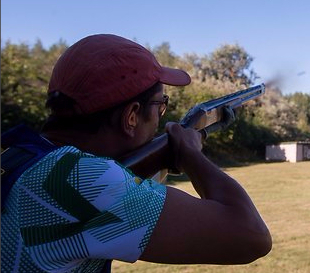
VILNIUS—The news portal Delfi.lt reported yesterday on Lithuanian sharpshooting star Ronaldas Račinskas making a hit at the Rio de Janeiro Olympics not only for his talents with a rifle, but on his work back home for which the headline calls him the “Nazi-Soviet hunter,” in the latest of a long series of Holocaust terms appropriated and ably recast by the Red-Brown movement’s PR wizzards. Besides heading a commission that now includes the gentleman who launched the campaign, a decade ago, to “hunt” Holocaust survivors who joined the Jewish partisans, his “Nazi and Soviet hunting” refers to his role as Director of the Secretariat of that comission, popularly known as the Red-Brown Commission, a state-financed entity that is one of the main European engines for spreading the revisionist far right’s “Double Genocide” model of World War II history. In that history, as an example, those who liberated Auschwitz are declared to be equal in principle to those who committed the genocide there. Moreover the movement’s primary document, the 2008 Prague Declaration (PD), insists that all European “minds” accept the revised history and regard Nazi and Soviet crimes as equal, a stance widely considered to be a camouflage for obfuscating and diminishing the Holocaust. The response in the European arena came in the form of the 2012 Seventy Years Declaration (SYD).

Director of the Secretariat of the state-sponsored International Commission on the Evaluation of the Crimes of the Nazi and Soviet Occupational Regimes in Lithuania (known for short as the “Red-Brown Commission”) is a sharpshooting star at the Rio Olympics. He has rapidly brought red-brown politics into the apolitical environment of the Olympic Games. His views on the Holocaust feature in a new German documentary.
Lithuanian State Bank and Major UK Firm Seem Deeply Involved in Vilnius Jewish Cemetery Scandal
PAPER TRAIL | REGISTRY OF OPPOSITION TO CONVENTION CENTER | DH SECTION
◊
VILNIUS—Turto Bankas, the state bank here whose main mission is to “organize and coordinate renewal of state-owned real estate,” has again revealed itself to be deeply involved in the international scandal of constructing a new National Congress Center in the heart of the old Vilna Jewish cemetery, whose graves date back to the fifteenth century and include some of the leading European Jewish scholars of the last millennium. The project continues to attract opposition from various parts of the world, including major Lithuania-descended rabbis internationally and some members of Lithuania’s small Jewish community. Moreover, Protestant and Catholic authors have pointed out that this would not likely be the fate of an analogous medieval vintage Christian cemetery.
Vilnius City Council “Defers” Decision on Street Honoring Hitler Collaborator
[LAST UPDATE]
◊
I24’s 14 July 2016 report. Background in DH on British-born city council member, Mark Harold Splinter, who proposed the change (his statement in English). Samples from elsewhere in Lithuania. Wider issue in Eastern Europe. Within “Double Genocide” theory. Related 24 July 2016 report by JTA.
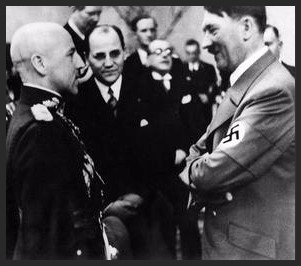
FOR MORE BACKGROUND ON KAZYS ŠKIRPA (CENTER) SEE DH ARTICLES BY ANDRIUS KULIKAUSKAS, EVALDAS BALČIŪNAS, AND MILAN CHERSONSKI; PROF. T. SNYDER’S BLOODLANDS: “Škirpa used this suffering in his radio broadcasts to spur mobs to murder. Some 2,500 Jews […]” … (p. 192)
When Yiddish is a Prop for Holocaust Revisionism
NEWS, VIEWS, QUIPS AND SHMIPS FROM SUMMER 2016
◊
Yiddish summer course again features American author Ellen Cassedy as lecturer on Holocaust topics; her 2012 book, part-funded by the Tides Foundation (a Soros beneficiary), was launched by the Lithuanian Embassy in Washington DC.
But will students be informed of critical reviews of the book (e.g. by Allan Nadler, Olga Zabludoff, Efraim Zuroff, Dovid Katz) or about the peaceful protest that awaited her at London University?
Will organizers invite, for balance, Ruta Vanagaite and Efraim Zuroff to discuss their 2016 book (recently featured in Newsweek)?
Defending History Writer Evaldas Balčiūnas Is Found ‘Not Guilty’
22 July 2016 Defending History Eyewitness Report
VERDICT IN: EVALDAS BALČIŪNAS NOT GUILTY (AFTER 4 YEARS OF HARASSMENT AND A DOZEN 450 KM ROUND TRIPS FROM HOME — BUT COURT ALLOWS FAR RIGHT “PLAINTIFF” 20 DAYS TO APPEAL)
Is There Still A Breeding Ground for Ustaša in Croatia?
OPINION | CROATIA | COLLABORATORS GLORIFIED
◊
by Roland Binet (Braine-l’Alleud/Belgium)
◊
Croatia is a nation that has been bathed in blood during numerous conflicts, as the victim of the odious Serbian aggression during the recent civil war, and for its football team proudly wearing the red and white checkered reproduction of the national flag. Happily, it is nowadays chiefly known as a tourist destination.
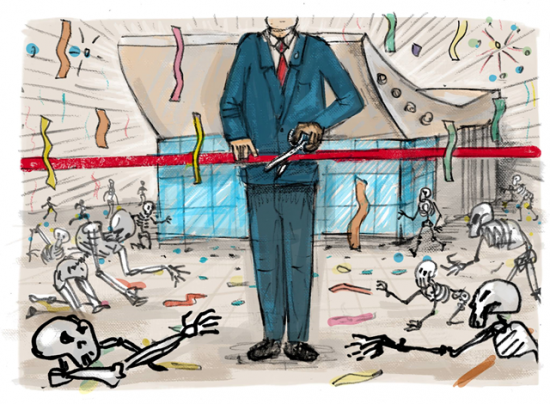
Defending History Responds to Vilnius Architects’ Three “Visualizations” for “Convention Center in the Jewish Cemetery”
Architects Publish Three Visualizations for National Convention Center Planned for Old Vilna Jewish Cemetery, Where Thousands Still Lie Buried
But critics warn that property magnates, politicians, and their foreign Jewish shmendriks will be haunted for generations by a rather different visualization…
Vulovak / DefendingHistory.com
Latest Judicial Abuse of An East European Country’s Redefinition of “Genocide” to Obfuscate the Holocaust
◊
DEFINITION OF GENOCIDE | DOUBLE GENOCIDE | DOUBLE GENOCIDE SECTION | THE GENOCIDE CENTER IN VILNIUS | GLORIFICATION OF COLLABORATORS
Kaunas Court Affirms Sentence of Two Years “Restricted Freedom” for “Facilitation of Genocide” by Former KGB Officer for Arresting Adolfas Ramanauskas-Vanagas in 1956
SEE OBZOR REPORT THAT CITES BNS; REPORTS CONFIRMED BY LITHUANIAN COURT OF APPEAL AND TIESOS.LT; HOLOCAUST ASPECTS REPORTED BY ISRAELI RUSSIAN LANGUAGE NEWS PORTAL IZRUS
Ramanauskas-Vanagas was an Alleged Nazi Collaborator Implicated in Holocaust Crimes
In Reponse to the Media: 9 July 2016
Western Mainstream Media Fails to Mention that East European Allies of the West are Investing in Glorification of Hitler’s Local Collaborators
Huffington Post Piece on Stepan Bandera Worship in Ukraine Omits his Organization’s Responsibility for Hundreds of Thousands of Murders of Poles and Jews; Landmark Historical Book on Bandera Still Goes Unmentioned by Most Mass Media
Now We [Who Lie Buried in the Old Vilna Jewish Cemetery], Know…
PAPER TRAIL | REGISTRY OF OPPOSITION TO CONVENTION CENTER | DH SECTION
◊
VILNIUS—The following is a reprint of the article published on 2 July 2016 in Yated Ne’eman, authored by the eminent scholar, Professor Bernard Fryshman. The title refers to the accompanying illustration which considers the views of the many thousands of Jews buried at Piramónt, Vilna’s old Jewish cemetery in the Šnipiškės (Shnípishok) district, in active use from the fifteenth to the nineteenth centuries. See also background to the article, PDF of the original article, the catalogue of international opposition, the paper trail, the DH section, and our editor’s summary of the issue published in December 2015 in The Times of Israel.
Defending History Brings Results
VILNIUS—Five years ago in 2011, on the 70th anniversary of the outbreak of the Lithuanian Holocaust on 23 June 1941 and the following days — nationalist murderers killed thousands of Jewish neighbors before the first German forces arrived or assumed control — the state sponsored an array of activities honoring the “rebels” (an historic nonsense, the Soviet occupying forces were fleeing Hitler’s invasion, the largest in human history, not the local Jew-killers).