COLLABORATORS GLORIFIED | BOLD LITHUANIAN CITIZENS SPEAK OUT | CHRISTIAN-JEWISH RELATIONS
◊


◊
Lithuanian citizen Grant Gochin, a Litvak born in South Africa and living in California, has relentlessly challenged Lithuania’s Genocide Center to tell the truth about Jonas Noreika, whom the Center maintains can be considered an anti-Soviet and anti-Nazi hero despite his role as a Holocaust perpetrator. Gochin’s 40 page Query Regarding Jonas Noreika’s criminal gang, submitted on June 15, 2018, is available in a PDF file which includes the Lithuanian original (pages 49-89), the English translation (pages 1-45), and an extensive list of source materials (pages 90-100). Jonas Noreika’s granddaughter Silvia Foti also contributed a letter in support of Grant’s query (pages 47-48). The Genocide Center has posted its 18 page response in Lithuanian. On its website it warns that “G.A.G Gochin’s ‘investigation’ of J. Noreika, without providing substantial proof, possibly violating the Republic of Lithuania’s Constitution and the Republic of Lithuania’s Criminal Code, accuses many individuals […]”.
◊
VILNIUS—In March of 2017, Vilnius native and resident Ruta Bloshtein, author of the international petition on the Old Vilna Jewish Cemetery that has achieved 44,000 signatures to date, presented a copy of the petition with a full list of signatures to the office of the prime minister. In June of 2017, she received a reply from the government restating the supposed justification for desecrating the five hundred year old Jewish cemetery on the basis of “permissions” obtained from the (allegedly corrupt) “grave-trading CPJCE rabbis” of London, who are currently under investigation in London.
◊
I have been involved in Jewish community, heritage and Holocaust-restitution issues in Lithuania for almost two decades, through various professional and personal capacities. While I have worked on these matters in other European countries, I have a special interest in and bond with these subjects as almost all my family came to America from Litvak areas. In the past few years I have spent a lot of time on the issue of the Old Vilna Jewish Cemetery in Šnipiškės (Piramónt) and the future plans for the Sports Palace building which has been on that site for decades. I met with many rabbis and community leaders with vastly different views and no meeting or photo should be interpreted as an endorsement of any position.
◊
WASHINGTON DC—Three United States senators, Benjamin L. Cardin (Maryland, D.), Pat Roberts (Kansas, R.), and James E. Risch (Idaho, R.) today wrote to Lithuania’s president, Dalia Grybauskaitė, appealing to her to move the planned national convention center away from the old Vilna Jewish Cemetery to another venue. It follows a similar appeal by twelve members of the American Congress last summer, a wide range of religious, community and religious figures and institutions internationally, and a recent statement to The New York Times by the elected head of the Vilnius Jewish Community, representing the vast majority of Lithuania’s surviving Jewish citizens. Vilnius native and resident Ruta Bloshtein, a prominent figure in Lithuania’s small Orthodox Jewish community, initiated a petition signed by close to 44,000 people internationally.
◊
◊
We develop a concept of “spiritual capital” which has suggested itself in the public debate regarding the future of the Vilnius Sports Palace, a large forum which the Soviets built in the 1960s on a Jewish cemetery which is the oldest in Vilnius and perhaps all of the Baltic states. This concept of spiritual capital is relevant for analyzing cultural surroundings but could also perhaps ground a healthy human relationship with natural surroundings.
◊
◊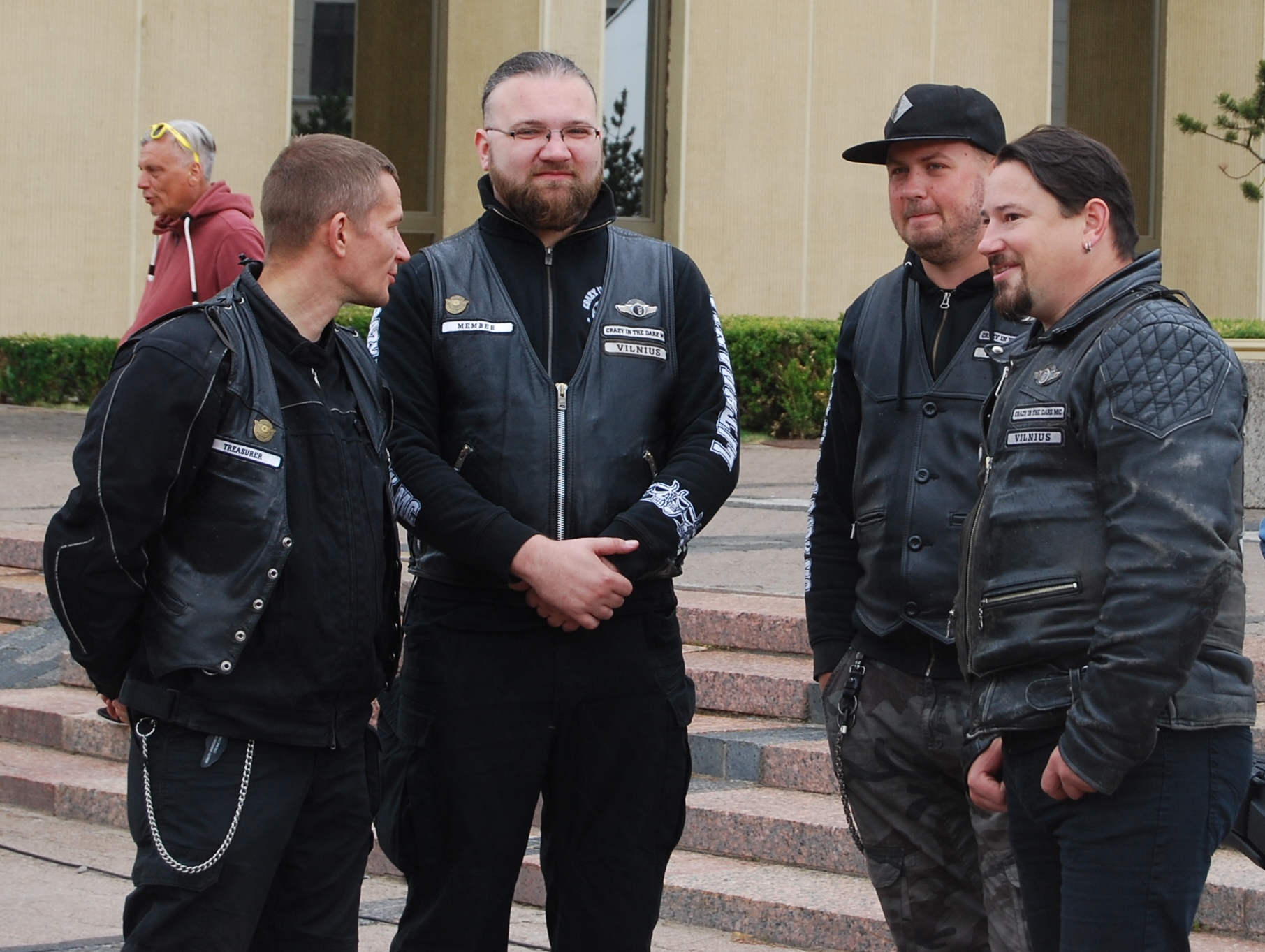
Today’s central Vilnius event celebrated the 77th anniversary of the 23 June 1941 “uprising.” Between fifty and sixty people took part. Half of them are members of the motorbike club. The event was organized by the Lithuanian Seimas (parliament). The Seimas was represented by three MPs – Žygimantas Pavilionis, former ambassador to USA; Audronius Ažubalis, former foreign minister; and Laurynas Kasčiūnas. One of the speakers was the Roman Catholic priest and motorbiker Egidijus Kazlauskas who spoke about the suffering and the perseverance of Lithuanians when persecuted by deportations to the eastern Soviet Union. Vilnius city Mayor Remigijus Šimašius was not present, but he has sent his greetings via advisor Mindaugas Kubilius.
A guest of honor was Vytautas Landsbergis, the elder statesman who was modern democratic Lithuania’s founding head of state. In the new century he became a European parliamentarian dedicated to revision of World War II history, most famously via the Prague Declaration which he signed. The event was co-organized by the Lithuanian Freedom Fighters Union (Lietuvos laisvės kovotojų sąjunga).
◊
◊
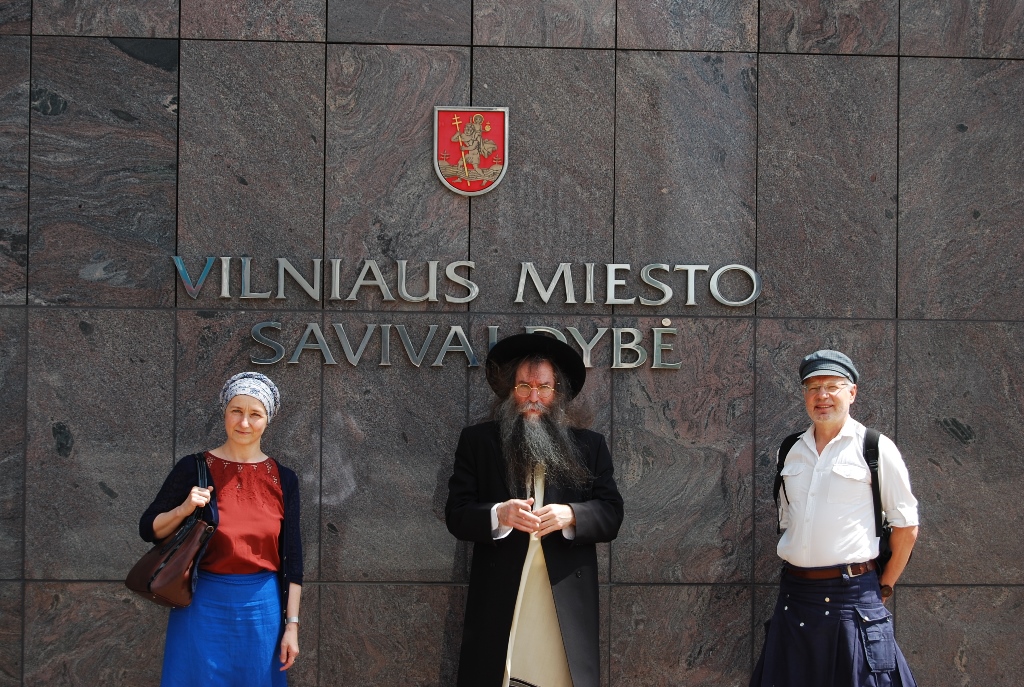
Earlier today, I had the honor to be one of three individuals from very different backgrounds who partnered to visit with the highest city authorities we could reach to plead for the Old Vilna Jewish Cemetery. In the current situation, that means, pleading with authorities to move the national convention center projects away from the thousands of Jewish graves going back to the fifteenth century, so as to enable this amazing site in modern Vilnius to be restored to the city’s great benefit and reputation.
The meeting was initiated by Ruta Bloshtein, author of the international petition asking the Lithuanian government to move the convention center project (it has achieved around 44,000 signatures to date). The third participant was Rabbi Samuel Jacob Feffer, a major scholar of the Gaon of Vilna, who has been based in Vilnius for over a quarter of a century. He is co-editor of dozens of books of the works of the Gaon of Vilna.
◊
◊
VILNIUS—This week, Wednesday the 23rd of May, as for a number of years, Vilnius and its Jewish community will be welcoming a group of truly inspiring Israelis who have made the bold decision to visit the land of their forefathers, to honor the memory of the victims of the Holocaust and to work to increase awareness about the historic truth of history’s worst genocide while establishing relations with the delightful citizens —of all backgrounds — of modern democratic Lithuania. The blossoming of Lithuanian-Jewish and Lithuanian-Israeli relations is a blessing to be nurtured. But not to be abused.
◊
VILNIUS—Various officials of the Lithuanian government’s Genocide Research Center, its Genocide Museum, and its “International Commission for the Evaluation of the Crimes of the Nazi and Soviet Occupational Regimes in Lithuania” (known for short as the “Red-Brown Commission”) are rather gleeful this week at the latest master PR coup for the long hard road to “soft core” Western legitimization of East European Holocaust revisionism. One of the world’s leading Holocaust scholars, and the activist who did more than any other to bring to an end the era of classical 20th Century Holocaust Denial, Professor Deborah Lipstadt of Emory University, has been attracted to headline a “one-sided Holocaust conference in a Baltic capital” where the naive foreign star’s eminence may help provide cover for ongoing policies. The conference program has just been released in PDF format with, as usual, the star’s appearance artfully sandwiched between much else.
The “ham sandwich” model for political conferences made to look like pure, open, intellectually balanced academic conclaves?
◊
KIEV—As the Ukrainian Government continues its increasingly unrestrained state-sponsored Holocaust revisionism campaign led by Volodymyr Viatrovych’s Institute of National Memory (UINP), questions surrounding the Holocaust in Ukrainian education in post-Maidan Ukraine are increasingly coming up. Thanks to new research by the head of the Ukrainian Jewish Committee, Eduard Dolinsky, some clear answers are taking shape. And the signs are, in some critics’ views, a cause for concern.
According to a new book released by Viatrovych’s institute, it appears that the government is determined to present what can only charitably called an alternative view of “history”. Entitled A Compilation of Methodological Recommendations for Commemorative Observances in General Educational Etablishments, UINP’s 220 page book reduces the history of the Holocaust to a mere footnote.
Dolinsky has revealed to the West the contours of the “history” to be provided to millions of Ukraine’s young people in the coming years. Its salient points become evident from a number of sample features:
SEE DEFENDING HISTORY’S NEW SECTION ON NEW BRITAIN, CONN. ISSUES
◊
VILNIUS—Ruta Bloshtein, a native of this city and stalwart of its small Orthodox Jewish community, this week published an update to her international petition calling on the Lithuanian government to move its national convention center project away from the Old Vilna Jewish Cemetery at Piramónt in today’s Snipiskes district of Vilnius. Over 43,000 people from several dozen countries have signed her petition to date.
In the update, Ms. Bloshtein calls on people of good will to contact the United Kingdom’s Charities Commission to file complaints against a rogue group of allegedly “cemetery selling rabbis” who allegedly issue permissions for building projects on old Jewish cemeteries on ground zero of the Holocaust in Eastern Europe in return for secret cash payments. They have been exposed by Wikileaks, and in reports in the Jerusalem Post, JTA, and Times of Israel. They are known as the “CPJCE” which stands for “Committee for the Preservation of Jewish Cemeteries in Europe.” See Defending History’s section on the group, and DH’s 2015 open letter (to which a reply was never received). Ms. Bloshtein asks in her update, that when reporting the “CPJCE” to the Charities Commission, its official charity-status number, 1073225, be mentioned.
◊
NEW BRITAIN—The City Council, known here as the Common Council, of this central Connecticut city, to the south of Hartford, today passed the following resolution, introduced by Alderman Professor Aram Ayalon, by a vote of 9 to 5. The vote split along party lines, with the Republicans in the minority. A spokesperson was quick to point out, however that “None of them supported this awful monument idea either. They were, however, supporting the mayor’s position that the monument was in fact never agreed to by the mayor’s office or town council, obviating the need for any resolution.” Mayor Erin E. Stewart is currently one of the candidates for the Republican nomination for governor, with the decision due at the party’s convention this weekend.
The text of the resolution follows:
It sounds like something straight out of the wackiest conspiracy sites on the internet — but it may be true. The US Government — through its main foreign aid agency the US Agency for International Development (USAID) — may indeed be inadvertently funding the Ukrainian Government’s far-reaching project to whitewash and glorify the Hitlerist World War II era nationalist OUN and UPA organizations, whose hordes were responsible for the murder of hundreds of thousands of Jewish and Polish civilians.
Updates on Twitter: @DefendingHistor
◊
◊
So what happened on January 31st? The new law, adopted by both houses of the Polish parliament and then enacted on March 1st, warns that, “Whoever claims, publicly and contrary to the facts, that the Polish Nation or the Republic of Poland is responsible or co-responsible for Nazi crimes committed by the Third Reich […] or for other felonies that constitute crimes against peace, crimes against humanity or war crimes, or whoever otherwise grossly diminishes the responsibility of the true perpetrators of said crimes […] shall be liable to a fine or imprisonment for up to three years. The sentence shall be made public.”
The law is in some sense an overreaction to some common mischaracterizations of Poland’s role in the Holocaust, starting with the myth that Hitler chose to build concentration camps there because Poland was so antisemitic. He built them there because that is where the Jews were, more than three million of them. Nor did the Nazis generally recruit Poles to do the actual killing of Jews, as was the case in Estonia, Latvia, Lithuania, and (western) Ukraine, among others. There were, to be sure, atrocities committed by Poles, such as the 1941 massacre of the Jews of Jedwabne—powerfully researched and immortalized by Jan Gross in his masterly 2001 book, Neighbors—and the unthinkable pogrom at Kielce, in 1946, just months after the end of the Holocaust.
◊
This past winter here in Vilnius, the charming capital of Lithuania, was much like any other. During long solid weeks of subzero temperatures, as the flow of tourists and roots-seekers slowed to a trickle, I adjusted the route of my daily walk to pass by up to a dozen top tourist sights. Day after day, there was one constant: The most popular, winter-defying “must-visit” for foreigners is “The Museum of Genocide Victims.” Perhaps there is something grotesquely sexy about “genocide.” Maybe the promise of (real) former KGB interrogation rooms and isolation chambers in the basement is less run-of-the-mill and more strikingly authentic than much usual museum fare. Estimates obtained from the museum’s administrators suggest about a million visitors total to date.
◊
Today’s edition of The Architects’ Journal (AJ) gracefully announces that Tszwai So, director of Spheron Architects, has been declared the winner of the “international competition to design a pan-European Memorial for the Victims of Totalitarianism.” Mr. So, named a rising star in British Architecture in 2016, is widely acclaimed as one of the most illustrious younger talents of European architecture in our time. Our team feels certain that he would be the first to wish to be apprised of an ulterior political program behind a seemingly neutral architectural project which will now be exploiting his reputation, and his firm’s, as well as his actual design, in promoting a political project that is vastly more controversial than meets the eye at first acquaintance.
Mr. So and Spheron Architects, like the other contestants, were most likely unaware that the sponsor of the competition, the Prague-based Platform of European Memory and Conscience, known for short in Eurocircles as the Prague Platform, is the prime European engine for the far-right movement of World War II history revisionism that is increasingly becoming known as Double Genocide. That phenomenon was recently among the main points of a New York Times article by Pulitzer Prize winning correspondent Rod Nordland concerning the “Genocide Museum” here in Vilnius, which has close ties with the “Prague Platform” in the pursuit of Double Genocide politics in the European Union.
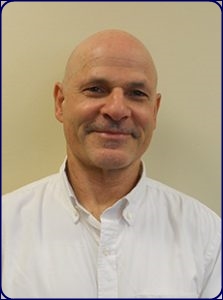
Professor Aram Ayalon, alderman on the city council of New Britain, Connecticut