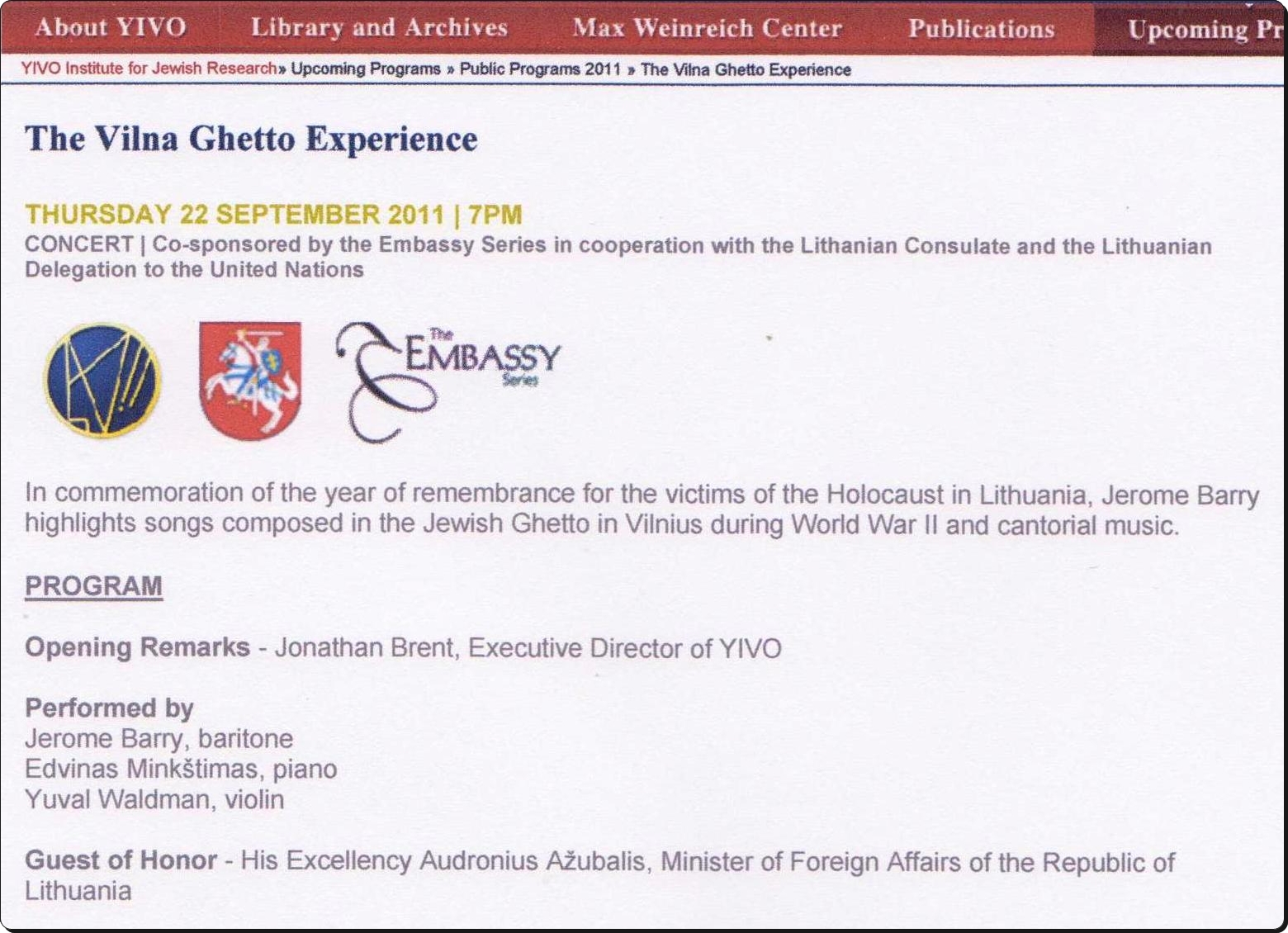
Readers recall that the Lithuanian parliament’s 21 September proclamation of 2011 as the ‘Year of Remembrance for the Victims of the Holocaust in Lithuania’ (text here) was mysteriously reincarnated one week later, on 28 September, as the ‘Year of Commemoration of the Defense of Freedom and of Great Losses’ (text here) with accompanying press explanations restricting the 1941 aspect to Soviet deportations to Siberia and no mention of the Holocaust among the ‘great losses’ (text here).
The text and press releases gave rise to fears that plans were still underway to sanitize, revise and glorify the memory of the 1941 LAF and Provisional Government collaborators of the Nazis. This painful subject was dealt with in a recent statement from the Jewish Community of Lithuania.
The ensuing History Apartheid, as this journal called it (2011 dedicated to one thing for foreigners and Jews and another for the country itself, in effect) led to a letter to the chair of the Seimas from the head of Lithuania’s tiny but proud Jewish community (text here).
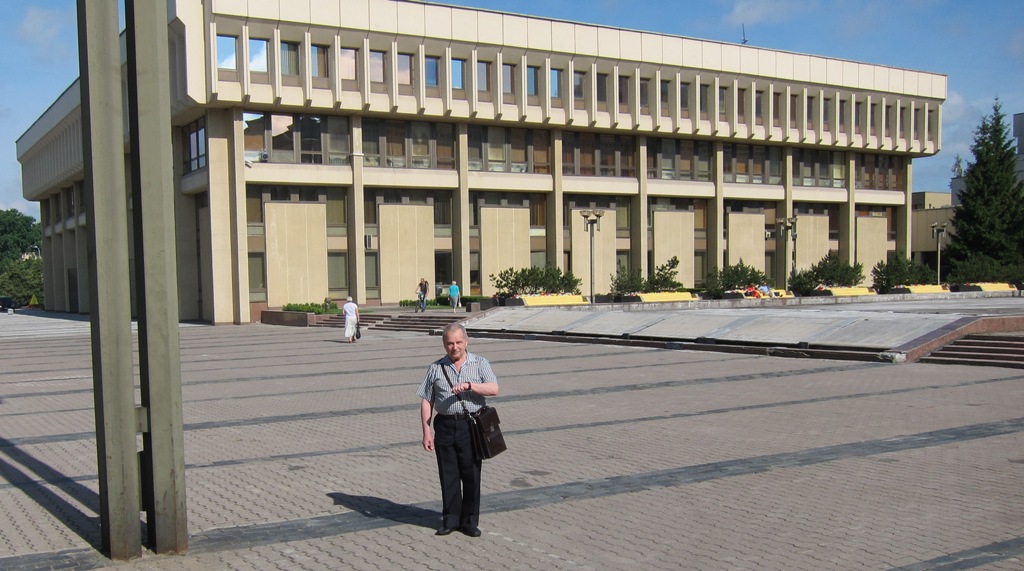
A check today of the official website of Lithuanian parliament (the Seimas) added a further curious aspect to the parliamentarians’ thinking. The English version of the website explains that 2011 has been proclaimed as the ‘Year of Remembrance for the Victims of the Holocaust in Lithuania’.

The corresponding sentence on the home page of the Lithuanian version of the official Seimas website indicates however that 2011 is the designated ‘Year of Commemoration of the Defense of Freedom and of Great Losses’.

One Western diplomat who requested anonymity commented to this journal: ‘You see, if you live long enough, you live to see everything’.

Švenčioneliai, interwar Poland’s Nowo-Święciany). Such is the custom every year on the first Sunday in October, to remember the eight thousand Jewish civilians murdered there after a gruesome ten days of imprisonment, deprivation of basic human needs, and torture, in makeshift barracks here at the site, in October 1941. The eight thousand Jews were marched (with the lame and the old transported on wagons) from their hometowns in the area to the site on September 27th. They were all shot over a two-day period on the 7th and 8th of October 1941.
Frankly, there is unease in the Jewish community as to whether this title and text leave open the possibility that the LAF (Lithuanian Activist Front) and PG (Provisional Government), both massively complicit in the early stages of the Lithuanian Holocaust, are going to be celebrated as ‘defenders of freedom’ (or anti-Soviet patriots) during the 2011 seventieth anniversary of events unleashed by Hitler’s invasion of 22 June 1941.
A leading news portal attacks
Rachel Kostanian, the courageous director, valiantly keeps alive one of the rare local bastions of public integrity on the Holocaust in Lithuania, having constantly to fend off obstacles. Read Esther Goldberg’s portrait in the special Jewish New Year’s supplement on great Jewish women of the ages in the 
But in modern Litvak collective memory, there is perhaps one incident, that took place one day before, that will be remembered even more. The Lithuanian delegation was met by a picket line of Holocaust survivors near Yad Vashem. One elderly survivor, Y. Brosh, whose entire family was murdered at Ponar, made his feelings known robustly. Like the other survivors who protested, he was wearing a yellow star on his jacket. President Brazauskas went over to to the man, hugged him and kissed him.