B O O K S
by Geoff Vasil
Vytautas Landsbergis, Rezistencijos pradžia [“The Beginning of the Resistance: June 1941: Documents on the Six-Week Provisional Government of Lithuania”], Vilnius 2012.
 MEP Vytautas Landsbergis, former speaker of the Lithuanian parliament and leader of the Lithuanian independence movement in the late ‘80s and early ‘90s, unveiled his latest polemic at a ceremony cum press conference held on the first floor of the Signatarų Namai building in Vilnius’s Old Town on September 11, 2012, the historic site where Lithuanian independence was proclaimed from the balcony to the street below sometime around February 16, 1918.
This small book—there’s only 22 pages written by Landsbergis, the rest is a motley collection of supposedly historic documents—is an attempt to answer criticism of the Lithuanian Government and Catholic Church’s ceremonial reburial of Lithuanian Nazi puppet prime minister Ambrazevičius-Brazaitis and other concurrent celebrations in the spring of 2012.
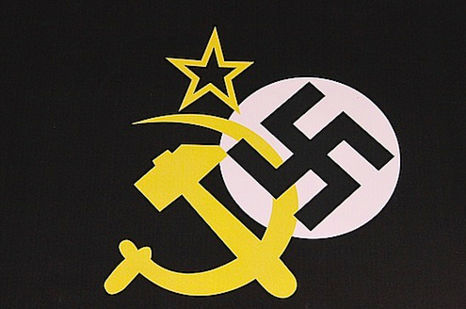 With the recent Lithuanian elections barely out of the way, and the ruling right-wing Homeland Union Conservatives the undisputed losers, the ultranationalist right is losing no time in pressing ahead aggressively with the Double Genocide “red-equals-brown” agenda, reverting to one of the movement’s original slogans: “United Europe — United History.” For pro-tolerance and liberal forces, the profoundly undemocratic message implied is that a united Europe has to also be united (i.e. have one opinion) on questions of history, and that Double Genocide and its central document, the