The following article by David Lazarus appeared today in the Canadian Jewish News.
MONTREAL — Concordia University professor Mikhail Iossel was cautiously optimistic as he was about to leave for Vilnius, Lithuania, to take the first steps in launching a historically unprecedented undertaking, the Litvak Studies Institute (LSI).
The institute will operate as a permanent, non-profit studies program in Vilnius – known as Vilna to generations of Jews – seeking to preserve and transmit the rich religious, literary, linguistic and cultural legacy that defined Jewish Lithuania and was all but obliterated in the Holocaust, the creative writing professor said in an interview.
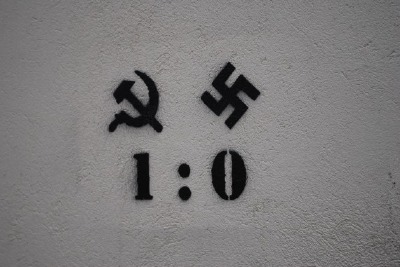
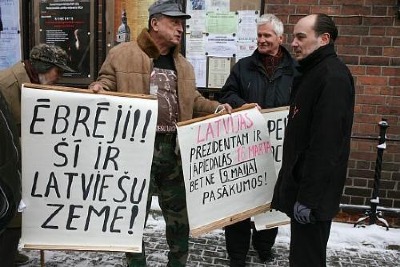
But the endeavour, Iossel acknowledged, is being undertaken in a country that – like most of eastern Europe – is experiencing rising nationalistic undercurrents and rumblings that depict Nazism and Stalinism as equal historic evils. Lithuania itself is being presented as a victim of genocide as the government attempts to sanitize its own involvement in the Holocaust.
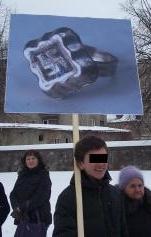 A Lithuanian court in Klaipeda approved the public display of swastikas on the grounds that they are ‘Lithuania’s historical heritage rather than symbols of Nazi Germany’. An ultranationalist ‘expert’ transported from Vilnius was easily able to persuade the court, which did not bother to ask a contrasting view of the Holocaust Survivor community, or the Jewish Community of Lithuania, in a European country with one of the highest proportions of Holocaust genocide on the continent. This sad distinction resulted from
 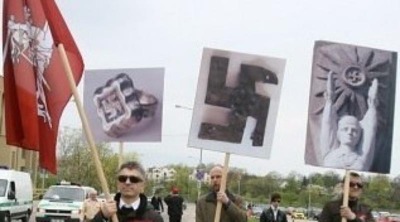 A Lithuanian court in Klaipeda approved the public display of swastikas on the grounds that they are ‘Lithuania’s historical heritage rather than symbols of Nazi Germany’. An ‘expert’ transported from Vilnius was easily able to persuade the court, which did not bother to ask a contrasting view of the Holocaust Survivor community, or the Jewish Community of Lithuania, in a European country with the highest proportion of Holocaust genocide on the continent. This sad distinction resulted from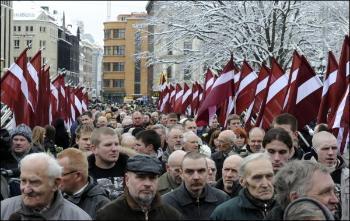
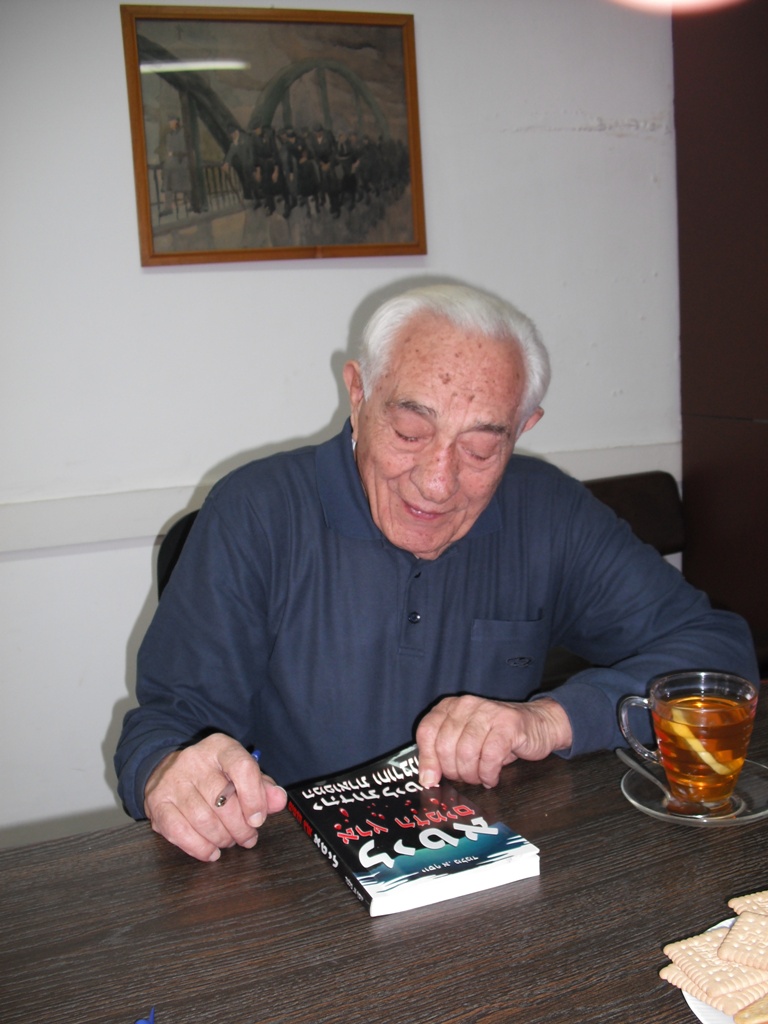
 Dr Efraim Zuroff, founding director of the Israel Office of the Simon Wiesenthal Center, has been awarded the Order of Prince Trpimir with Ribbon and Star, by Croatian president Stjepan Mesić. The president’s signed certificate cites Dr Zuroff’s ‘outstanding contribution to the fight against historical revisionism and reassertion of the anti-fascist foundation of the modern-day Republic of Croatia and to establishment of good relations between the Republic of Croatia and the State of Israel’. The award was presented at midday on Monday 1 February 2010 in the palace of the president of Croatia in Zagreb. Sonja Biserko, president of the Helsinki Committee for Human Rights, was also honored by the Croatian president. Associated Press report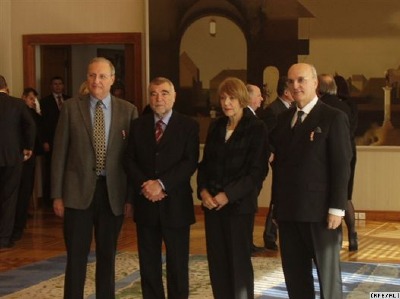
![In June 1941, members of the Lithuanian Militia lead Jews to locations outside the city of Kovno. In all, some 10,000 Jews were murdered within the first six weeks following the German invasion. [photo: Yad Vashem]](https://www.worldjewishcongress.org/userfiles/image/091204_focusl.jpg) Lithuanian Justice Minister Remigijus Šimašius has said his country should answer questions regarding its behavior during World War II with its head held high. Writing in his
Lithuanian Justice Minister Remigijus Šimašius has said his country should answer questions regarding its behavior during World War II with its head held high. Writing in his