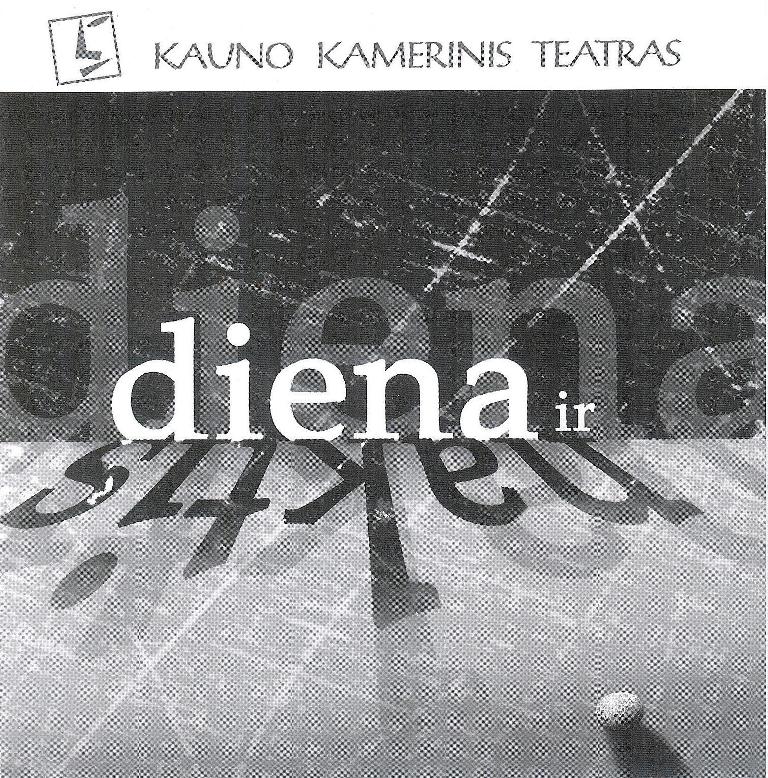
The Yivo concert mounted in memory of the Vilna Ghetto was held on 22 September, a date near the September 23rd anniversary of its liquidation (in 1943). Survivors questioned find it unconscionable that the Yivo evening could not also be utilized as a forum for polite, constructive and appropriate protest at the Lithuanian government’s targeting precisely of Vilna Ghetto survivors (among other Holocaust survivors) for kangaroo ‘war crimes investigations’ that have drawn international protest.
Opinion
Was Rachel Margolis Honored (or Mentioned) at the “Vilna Ghetto Experience” Yivo Event Sponsored by the Lithuanian Government?
What Happened when Holocaust Survivor Joseph Melamed Did Exactly what Historian A. Liekis Suggested?
O P I N I O N
by Geoff Vasil
The following is a reprint, with the author’s permission, of his article in London’s Jewish Chronicle this week.
Wreaths Laid, but Doubt Hangs in the Air
Today is Lithuanian Holocaust Day. This is the day the Vilna Ghetto was “liquidated” in 1943, but is not generally known among Lithuanians. It does not even appear on the Wikipedia list of Lithuanian holidays, although Molotov-Ribbentrop Day, August 23, does. September 23 usually receives a few minutes on the evening news — after it’s over.
Full Statement of the Leyzer Ran Family on Yivo’s Positions on the Lithuanian Holocaust and Current Machinations
NEW YORK—The Leyzer Ran family released this statement, dated 16 September 2011, which appears here in the original PDF format received. To turn pages please use the arrows in the upper left hand corner. Alternatively, the document may be accessed as PDF.
Leyzer Ran Family Writes Collective Open Letter on Yivo Debacle
The surviving family members of the late Leyzer Ran, led by his wife Basheva Ran, today released a statement concerning Yivo’s decision to honor the Lithuanian foreign minister in New York in the absence of apologies for the accusations against Jewish partisan heroes, and in the absence of progress on widespread antisemitism including legalized swatikas and Holocaust distortionism. Details and a PDF of the letter are available here.
Ukrainian Writer Iurii Andrukhovych Asks the EU to Approve Celebration of Local Holocaust Perpetrators and War Criminals as ‘Freedom Fighters’
O P I N I O N
by Grzegorz Rossoliński-Liebe
Iurii Andrukhovych complains in an article published in Gazeta Wyborcza about the sorry state of Polish-Ukrainian relations. He correctly informs readers that in the last ten years Polish-Ukrainian relations, in particular concerning contentious World War II questions, have not improved at all and “if something has changed then perhaps only for the worse”. Yet Andrukhovych’s solution to the problem would be to republish Paweł Smoleński’s collections of essays Pochówek dla rezuna (“Burial of a Butcher”) which, like Andrukhovych in his article, looks for solutions in the revision of stereotypes while ignoring the actual historical causes of current problems.
Vilnius: Milan Chersonski Releases Original Russian Text of his 12 September 2011 Open Letter to the Director of Yivo in New York City
М Н Е Н И Е
Милан Херсонский
Милан Херсонский, долголетний редактор газеты «Литовский Иерусалим» прислал Открытое письмо директору ИВО в Нью-Йорке

Милан Херсонский
Милан Херсонский, долголетний редактор (1999-2011гг.) газеты «Литовский Иерусалим», выходившей на английском, литовском, русском и идиш языках, обратился в СМИ с Открытым письмом к директору ИВО в Нью-Йорке. М.Херсонский подчеркнул, что выражает собственное мнение, не имеющее отношения к официальному.
С 1979г. до 1999г. он руководил Еврейским народным театром в Литве, который в советское время был единственным любительским театром в СССР. Издание газеты «Литовский Иерусалим» прекратилось в 2011г.
Milan Chersonski, Longtime Editor of ‘Jerusalem of Lithuania’, Releases a Public Letter to the Director of Yivo in New York
O P I N I O N
by Milan Chersonski

Milan Chersonski
Milan Chersonski (Chersonskij), longtime editor (1999-2011) of Jerusalem of Lithuania, the quadrilingual (English-Lithuanian-Russian-Yiddish) newspaper of the Jewish Community of Lithuania, released to the media today a public letter to the director of Yivo in New York. Mr. Chersonski stressed that the views are his own, and do not reflect any official opinion. From 1979 to 1999, he was director of the Yiddish Folk Theater of Lithuania, which was one of the USSR’s very few Yiddish amateur theater companies. Jerusalem of Lithuania ceased publication in 2011.
The text of Milan Chersonski’s letter follows in English. Translated from Russian by Asya Fruman and approved by Milan Chersonski.
Vilnius, Lithuania, 12 September 2011
Dear Mr. Brent,
I, a World War II refugee, a citizen of the independent Republic of Lithuania, address you as a resident of the city where Yivo, the first and most important academic institute of Yiddish language, literature, culture and history, was founded.
For more than eighty years Yivo was run by the most prominent Yiddish scholars, renowned for their research works as well as for their outstanding organizational skills. They and their successors maintained Yivo’s honor and dignity.
Et tu, Yivo? Holocaust Survivors Jolted by Plan for Lithuanian Foreign Minister to be ‘Guest of Honor’ at Vilna Ghetto Commemoration, Defamed Holocaust Survivor Partisan Veterans Excluded
O P I N I O N
by Dovid Katz
When you have loved an institution all your life — and written over decades about its impact on the history of ideas — it becomes a responsibility, even when painful, to try to dissuade it from making a serious error that would put in jeopardy its integrity.
The Lithuanian foreign minister, who has to date not apologized publicly for his widely reported antisemitic outburst in October 2010, has been named by the Yivo Institute for Jewish Research as its ‘guest of honor’ at a concert on 22 September 2011. The remnant Jewish community of Lithuania is small and fragile. Nevertheless it responded robustly, less than a year ago, to the foreign minister’s comments and proceeded to publish its response in English, Lithuanian, Russian and Yiddish.
Yivo’s website enumerates the joint sponsorship for the 22 September 2011 event by ‘the Embassy Series in cooperation with the Lithuanian Consulate and the Lithuanian Delegation to the United Nations’. The event is being held to commemorate the anniversary of the liquidation of the Vilna Ghetto on 23 September 1943.
Perpetrators glorified
In 2011 — to mark the 70th anniversary of Hitler’s invasion, and to the chagrin of Holocaust survivors internationally — the Lithuanian government has invested in a series of events honoring the local perpetrators who began to kill Jewish neighbors in dozens of towns before the Germans even arrived (a reading list on the history is available here). The ‘logic’ has been that they were actually rebelling against Soviet rule, though it is not disputed by historians that the Soviets were obviously fleeing the Nazi invasion.
A Scholar’s Apt Warning on Ultranationalist Abuse of History and Historians
O P I N I O N
by Dovid Katz
There is actually a larger issue, and a constructive lesson, that emerges from Alexander Gogun’s reply to Grzegorz Rossoliński-Liebe’s critique of an earlier article co-authored by Gogun, that had appeared on a Ukrainian nationalist website that tends to glorify various Nazi-collaborationist nationalist groups and underplay or ignore their participation in genocide. Tellingly, that issue does not even relate to differences of opinion on any one point of fact, interpretation or analysis. Historians and academics will naturally disagree and from time to time and hasten to correct each other on this or that detail.
On Academic Integrity: In reply to Grzegorz Rossoliński-Liebe on the Presence of Jews in the UPA
O P I N I O N
by Alexander Gogun
An emotional review[1] written by the PhD candidate Grzegorz Rossoliński-Liebe and published in this journal, is devoted to a popular scientific article written by me in collaboration with Olexandr Vovk. Our text about the presence of Jews in the UPA (Ukrainian Insurgent Army) was written seven years ago and published more than six years ago by the Moscow Jewish magazine Korni (“Roots”)[2]. It was later reproduced on an amateur history website about Ukrainian nationalism.
People and Vandals
O P I N I O N by Milan Chersonski
ЛЮДИ И ВАНДАЛЫ
Вступление
Мне уже доводилось писать о парадоксальной ситуации: 21 сентября 2010 года Сейм Литовской Республики принял постановление объявить 2011 год Годом памяти жертв геноцида евреев Литвы. Ровно через неделю Сейм Литовской Республики объявил тот же 2011 год Годом памяти о сражениях за свободу и великих утрат. Объединение этих двух дат достойно войти в историю как попытка совместить два несовместимых явления – отмечать юбилей так называемого «восстания» Фронта литовцев-активистов и начало уничтожения евреев в Литве при их участии. «Восставшие» участники Фронта литовцев-активистов, не встретив серьезного сопротивления со стороны спешно покидавших Литву Красной армии и советской администрации, обратили свои взоры на главного их «врага» – веками живших в Литве евреев. Continue reading
‘Academic’ Article Co-Authored by Alexander Gogun (University of Potsdam), Posted on the Nationalist Website ‘OUN-UPA’, Obfuscates the Ukrainian Holocaust, Denying OUN and UPA Anti-Jewish Violence
O P I N I O N
by Grzegorz Rossoliński-Liebe
Aleksander Gogun, a historian at Potsdam University and at Humboldt University
of Berlin, and Aleksander Vovk, are the joint authors of an article, originally published in 2005, that obfuscates the Holocaust and denies the anti-Jewish violence of the Ukrainian nationalists. The article, in Russian, Evrei v bor’be za nezavisimuiu Ukrainu (Jews in the Struggle for an Independent Ukraine), presented in academic format, continues to appear on the nationalist website titled OUN-UPA at http://oun-upa.org.ua.
The article, posted at http://lib.oun-upa.org.ua/gogun/pub07.html, gives the impression that Jews served and fought willingly and enthusiastically in the UPA (Ukrainian Insurgent Army, Ukraїns’ka Povstans’ka Armiia) for an independent Ukrainian state. From the very outset of their article the authors claim that there were no pogroms in Ukraine in 1941, that Ukrainian nationalists never had a negative attitude toward the Jews and that Ukrainians who served in the German police during World War II did not participate in the Holocaust. The authors call all these things “stereotypes of Soviet propaganda” and imply that they never existed or happened.
Grzegorz Rossoliński-Liebe reviews Timothy Snyder’s ‘Bloodlands’
O P I N I O N
by Grzegorz Rossoliński-Liebe (Berlin)
Review of Timothy Snyder, Bloodlands. Europe Between Hitler and Stalin, Basic Books: New York 2010. This review first appeared in German in H-Soz-u-Kult (online version here; PDF here). This English version and publication in DefendingHistory.com are by authorization of the author and H-Soz-u-Kult, which has kindly supplied the following copyright notice: Copyright © 2011 by H-Net, Clio-online, and the author, all rights reserved. This work may be copied and redistributed for non-commercial, educational purposes, if permission is granted by the author and usage right holders. For permission please contact H-SOZ-U-KULT@H-NET.MSU.EDU.
Wyman Brent Voices Fear his Vilnius Library Could Become Vehicle to “Whitewash and Obfuscate History and Cover for Rampant Antisemitism”
O P I N I O N
by Wyman Brent
I have a concern which I am sure that the readers of DefendingHistory.com share. I am talking about the possibility of the Vilnius Jewish Library becoming a vehicle for certain elements of the Lithuanian government to continue to whitewash and obfuscate history and to cover up for the antisemitism currently rampant here.
A ‘Documentary Film’ Tries to Establish the Legend of the ‘Uprising of the Enslaved’
O P I N I O N
by Milan Chersonski

Milan Chersonski at the Lithuanian Parliament. From 1979 to 1999 Chersonski directed the Yiddish Amateur Theater in Vilnius, Lithuania. He worked in various capacities at the quadrilingual (English-Lithuanian-Russian-Yiddish) newspaper Jerusalem of Lithuania, publication of The Jewish Community of Lithuania, from its founding in 1989 until the paper was closed in 2011. He was its editor-in-chief from 1999 to 2011. He is now a senior analyst at DefendingHistory.com and contributes to various publications.
On September 28th 2010, the Parliament of Lithuania announced that 2011 would be the Year of Commemoration of Battles for Freedom and Great Losses. This mysterious name of some sort of anniversary appeared exactly a week after the same year, 2011, was declared the Year of Commemorating the Genocide of Lithuanian Jews. The Jewish Community of Lithuania reacted without delay to the ‘dual track’, apartheidized commemorations.
Now which “battles for freedom” are they talking about in the resolution? What sort of great losses? The resolution does not say specifically. Yes, Lithuanians valiantly rebelled for freedom in 1794, and in 1831, as well as in 1863, and then there were serious demonstrations on behalf of freedom in 1904-1905, and then there were the battles from 1918 to 1920 for the independence and borders of the newly founded state.
But it is impossible to understand exactly which events and which dates they now had in mind from the text of Lithuanian parliamentary resolution no. XI-1038 of September 28th 2010. And this is probably no accident, as shown by the subsequent actions of the Lithuanian government and leading organizations here.
A Speech Never Spoken at Plungyán (Plungė)
O P I N I O N
by Dovid Katz
An imaginary speech, not delivered by any of the high government officials who addressed the commemoration at the mass murder site of the Jews of Plungyán (Plungė) on 17 July 2011.
My dear friends, it is precisely because I am a proud official of the government of independent, democratic, Lithuania, and I love my country, that I am able to speak here today openly, on the seventieth anniversary of the murder of the Jews of Plungė — Plungyán, as they proudly called it in the Yiddish that rang through its streets for so many centuries.
70 Years On: Address by Abel Levitt at the Memorial for the Murdered Jews of Plungyán (Plungė)
by Abel Levitt
According to Jewish Law, and according to custom in other religions, a tombstone must be placed at a grave with the name of the deceased.
In the case of Mass Murder, like what happened in Lithuania during the period which we know as the Holocaust, this has not been done. The scale was too big, thousands of people killed in a single day as happened in Ponár, near Vilnius, or at the Ninth Fort near Kaunas. Only in Plungė (Plungyán), where 1800 people , men, women, and children were brutally killed in two frightening and bloody days, has this now, today, been done.
Pastor Michael Maass, Director of the Lithuanian Section of the International Christian Embassy Jerusalem (ICEJ), Speaks in Plungė
O P I N I O N
by Michael Maass
The text of Pastor Michael Maass’s talk at the Sabbath dinner in Plungyán (Plungė), Lithuania, on 15 July 2011, during preparations for the commemoration ceremony at the nearby mass murder site on 17 July 2011. See also Abel Levitt’s speech here, and the imaginary speech of a Lithuanian official here (with further links at end of page).
Text provided by Pastor Michael Maass.
Good evening. We are Michael and Fausta Maass, the directors of the Lithuanian branch of the International Christian Embassy, Jerusalem. You might say we are ambassadors from the Christian nation to the Jewish nation. We represent millions of Christians in over sixty countries who love Israel and the Jewish people. We are honored to be with you tonight.
We believe that friendship between Jews and Christians is vitally important, especially in light of recent developments in the world. The legitimacy of the nation of Israel is under attack from many sides. Antisemitism is rising to a level not seen since the Second World War.
Devising a Legend about an ‘Uprising of the Enslaved’ — A Documentary Film financed by Lithuania’s Parliament and its Genocide Research Center, on the 70th Anniversary of the Outbreak of the Lithuanian Holocaust
O P I N I O N
by Milan Chersonski

Milan Chersonski in front of the Lithuanian Parliament (Seimas)
СОЧИНЕНИЕ ЛЕГЕНДЫ О ВОССТАНИИ ПОРАБОЩЕННЫХ
28 сентября 2010 года Сейм Литвы объявил, что 2011 год будет называться Годом памяти о сражениях за свободу и великих утрат. Это загадочное название какого-то юбилея прозвучало ровно неделю спустя после объявления того же 2011 года Годом памяти жертв геноцида евреев Литвы.
The Denial that is Part of Holocaust Obfuscation: Second Day of the Lithuanian Parliament’s Conference
by Dovid Katz
The Lithuanian Holocaust broke out in the week of 22 June 1941, when the Nazis attacked the Soviet Union; it is the week when, in many locations, so-called ‘patriots’ and ‘rebels’ in large numbers began to humiliate, plunder, injure and slaughter Jewish neighbors before the first Germans ever arrived. At the conference held yesterday and today in the country’s parliament, this was the Elephant in the Room that reared its head now and again, no matter how hard the political and academic planners worked to ensure that it would disappear in a program dedicated to virtually every other conceivable aspect (translation of original program here; final printed English version of the program here).
SEE ALSO:
The plot thickens. These are the very ‘patriots’ and ‘rebels’ who are being honored this week by major state institutions, and to no small degree, at this very conference. As if their launch of the Holocaust, which went on under German rule, and with their continued massive voluntary participation, is either some kind of uncorroborated slander, or, as if this is some very tiny detail in an otherwise glorious campaign of rebellion against Soviet forces (with no mention that the USSR’s troops were actually fleeing the German invasion, not their ‘rebellion’).