


OPINION | OLD VILNA JEWISH CEMETERY AT PIRAMÓNT: SAGA OF 2015-2026 | EARLIER OPPOSITION | 2023-2024 “WORKING GROUP” ON VILNA CEMETERY | LIST OF MEMBERS | MOUNTING OPPOSITION TO NEW “MUSEUM PROJECT” | THE USCPAHA | THE CPJCE | THE AJC | THE CER | THE GWF | CEMETERIES & MASS GRAVES | CHRISTIAN-JEWISH RELATIONS | HUMAN RIGHTS
◊
◊
by Andrius Kulikauskas
◊
VILNIUS—On June 10, 2026, in Vilnius, Lithuania, the Seimas Committee on Culture voted unanimously to postpone until the autumn session further deliberation of the bill “On the Further Utilization of the Vilnius Concert and Sports Palace”. The Soviets built this palace in the middle of Vilnius’s oldest Jewish cemetery.
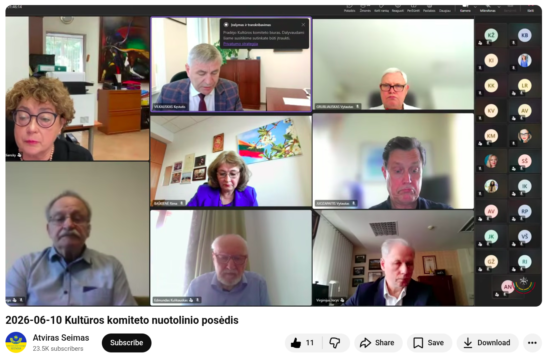
Screenshot from Seimas video. Upper left: LJC chair Faina Kukliansky, and then clockwise: committee Chair Kęstutis Vilkauskas; committee member Vytautas Grubliauskas; committee deputy chair Vytautas Juozapaitis; folk art curator Virginijus Jocys; Respect Cemeteries representative Edmundas Kulikauska; committee member Petras Dargis. Center: committee member Rima Baškienė
Committee Chairman Kęstutis Vilkauskas acknowledged the “truly many letters” (“tikrai … daug labai”) which they received from all around the world. “Gerbkime kapines” (Respect Cemeteries) received 37 copies of letters — impactful, rational, emotional, personal — from Lithuania, United States (New York, Idaho, Florida, New Jersey, Minnesota, California), Netherlands, Belgium, Israel, United Kingdom, Australia, from Jews and Christians, Litvaks and Lithuanians and friends.
The Chairman invited Edmundas Kulikauskas to speak on behalf of “Gerbkime kapines”. Edmundas distilled our message into two words: Restore justice (Atstatykime teisingumą).
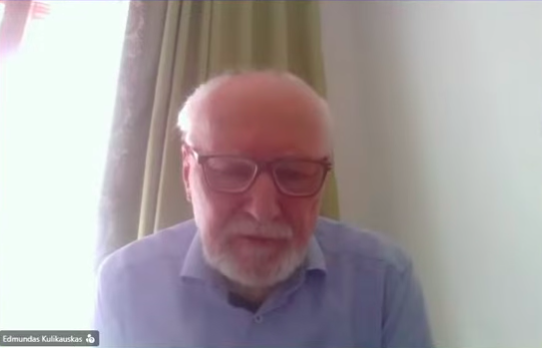
Edmundas Kulikauskas addresses the Seimas’s Committee on Culture
“I am a representative of the association ‘Respect Cemeteries’. We are simply striving for justice to be restored. We know that the issue of the sports hall is very sensitive, but I think justice takes precedence. The Soviet government severed relations with the Vilnius Jewish community, simply abolished it, took away its property, and the cemetery was also on the list. After a while, they transferred the cemetery to the Vilnius city municipality. And later, a few decades later, the [Concert and Sports] hall was built. These are two injustices. A building appeared in the cemetery that never existed, never belonged to it. I think it is very important that the state, our state these days, although it is a sensitive issue, that justice takes precedence. If we cannot be just, then I think this is a bad foundation for our state, our democratic state. So, we support the Litvaks, their ancestors who are laid to rest in that cemetery there. We ask that this be taken into account and justice be restored.”
“Gerbkime kapines” chair Rūta Bloshtein thanks, with great appreciation, all who wrote letters, and she thanks Edmundas Kulikauskas, my father, who represented us, and me as well. She observes that Edmundas’s phrase, “restore justice” was surely inspired by Arkadij Kurliandchik’s letter, regarding the legal rights of the Vilnius Jewish Community, which the Soviets violated. Arkadij worked with Edmundas on early drafts of his letter and it inspired our letter writing campaign. “Gerbkime kapines” deputy chair Arkadij asks the Committee:
-
To establish and officially confirm that the building of the Vilnius Concert and Sports Palace is built on the territory of the Šnipiškės Jewish Cemetery, which is inviolable by law and must be protected as a religious and historical site.
-
To establish that the decisions made during the Soviet period on the liquidation of the Vilnius Jewish Community and the transfer of its property, including the Šnipiškės Jewish Cemetery, to the executive authority of the city were illegal, contradicted the principles of law and cannot be considered valid or have legal consequences today.
-
To oblige the responsible institutions to ensure that any activity on the territory of the Šnipiškės Jewish Cemetery is permanently and without exception prohibited, that may violate the integrity of the cemetery, religious respect or the requirements for the protection of cultural heritage.
-
To ensure that the Šnipiškės Jewish Cemetery is recognized as an inviolable religious and historical site, which is subject to the highest level of protection, and that all decisions related to the territory are made with the participation of the Vilnius Jewish community as the legal administrators of the cemetery.
We’re appreciating ever more that our local Vilnius Jews are key to clarifying our concerns and making them understandable to Lithuanians. Ruta Bloshtein’s letter compares “spiritual authorities, teachers, pioneers of the Vilnius Talmud publishers, and scholars” buried at the Cemetery with Lithuanian enlighteners “Vytautas the Great, Donelaitis, Maironis, Vaižgantas, Basanavičius”. Pinchos Fridberg recalled how he visited the Cemetery and saw the monuments with his own eyes many times after the war.
Rabbi Elchonon Baron, Rabbi Pinchos Hecht, Rabbi Mordechai Kamenetzky and Rabbi Gedalia Mendlewicz all wrote to the Committee. We are grateful to Rabbi Baron for encouraging many of the first letters we received. Ruta Bloshtein alerted the 53,841 signatories of her petition and they responded with at least seven letters.
The Committee meeting included comments by several members of Seimas and advisors to the President and to the Prime Minister. It’s fair to say they don’t know what position to take. One concern is that the decrepit building is an eyesore.
Behind the scenes, there are two competing visions for the Soviet palace. Recently, Vilius Kavaliauskas has called for a return to the 2015 plan to convert the Soviet palace into a convention center, as envisaged in the bill being debated. This would benefit Arvydas Avulis, the main shareholder of the “Hanner” construction firm, who built the Marriott Hotel to serve the convention center. These plans were upended first, by allegations of impropriety, and then, by our 2020 letter campaign.
Our 2020 letter campaign prompted Prime Minister Ingrida Šimonytė to abandon those plans and, importantly, to mark the boundaries of the Cemetery with a stone wall. Unfortunately, she sought a compromise that would rethink the Soviet palace as a Jewish heritage museum and memorial. In doing so, she ignored our request to exclude from the Cemetery any unrelated activity. She violated basic sensitivity, that a Soviet cultural temple can’t function as a Jewish memorial any more than could a church or mosque. She organized a Committee which excluded those who had defended the Cemetery and included those, notably Faina Kukliansky, chairwoman of the Lithuanian Jewish Community, who had championed the Convention Center and viciously slandered Ruta Bloshtein and all who signed her petition. Now Faina Kukliansky is speaking against the Convention Center proposal and urging that the Jewish memorial proposal be speedily adopted.
“Gerbkime kapines” leaders will be meeting with members of Seimas to understand what we can do this summer to educate Seimas and the public before the autumn session. We thank all defenders of the Cemetery. We will ask for your help again!
Below is the (machine translated) transcript from the June 10, 2026 meeting of the Seimas Committee on Culture.
7:40
Chairman of the Committee on Culture, Kęstutis Vilkauskas: And we are moving on to a very important issue, the Seimas resolution on the further, further use of the Vilnius Concert and Sports Hall project. The main discussion and the drafters of the conclusions are Kęstutis Lukauskas and Rima Baškienė. And before that, I want to say that we have consulted with the esteemed Rima and can immediately announce that, well, now we will listen to the interested parties at the beginning and we will suggest that you take a break, but we will formulate this later and we can consult. But now we are moving on to the consideration of the issue and, due to the course of the proceedings, I would like the Chancellor of the Ministry of Finance Kęstutis Kvaracejus to speak first, and the General Director of Turto Bank, Gintaras Makšimas, is also joining. And, well, we could assess the current situation of the Sports Exhibition Hall as a building. So maybe then, if possible, we could give the floor to the esteemed representative of the Ministry of Finance. Please. I don’t see it.
He’s just connecting now, I saw.
Chairman: Oh, that’s good. So I’m still inviting the cartel. If if not, then until he connects. Karaciejus is there, it’s just visible. This is the esteemed Kęstutis Karaciejus, maybe we could say a few words about the current situation.
Kęstutis Karaciejus: Good afternoon. I just connected, so I apologize, I really didn’t hear the question.
Chairman: It seems so, we would like to hear now what state it is in, speaking of the building itself, what state the building is in. Well, and since the CEO of Turto Bankas is connected, since he currently administers the building, then at least briefly, as an introduction, what situation we are in with the building. Not because of the contents, but because of the building.
Kęstutis Karaciejus: It’s about the building, if the general director of the property bank is here, he could better comment on the technical condition of the building and how much it costs to maintain it now. That’s because the property bank is responsible for the maintenance of the building. I don’t know, I don’t see if he’s here, honorable Gintaras Makšimas. He might still join. In that case, if we get him to join, then I would like to give the floor to Edmundas Kulikauskas, a member of the “Gerbkime kapines” society, because we received a lot of letters from the members of the culture committee and both I and the members of the committee received a lot of letters addressed to the culture committee specifically regarding this object. We would like to briefly hear their opinion, as well as the opinion of Faina Kukliansky, the chairwoman of the Lithuanian Jewish Litvak community, and then we can discuss how we will continue to carry out the deliberation procedures in our committee. So please, while we wait for the head of the property bank, please give the floor to Edmundas Kulikauskas. Please. [clears throat]
Edmundas Kulikauskas: Good day. Can you hear me?
Chairman: We can hear. Just make yourself a little louder.
Edmundas Kulikauskas: Well, please. I am a representative of the association “Respect Cemeteries” and we are simply striving for justice to be restored. We know that the issue of the sports hall, the sports hall of culture is very sensitive, but I think justice prevails. The Soviet government, the Soviet government, means, severed relations with the Vilnius Jewish community, simply abolished it, took away its property, then the cemetery was also on the list. And after a while, means, they transferred the cemetery to the Vilnius city municipality. And later, a few decades later, the culture and sports hall was built. And these are two two injustices. It means, a building appeared in the cemetery that never existed, never belonged to it. And I think it is very important that the state, our state these days, although it is a sensitive issue, that justice takes precedence and if we cannot be just, then I think this is a bad foundation for our state, our democratic state. So, we support the Litvaks, their ancestors who are laid to rest in that cemetery there and we ask that this be taken into account and justice be restored.
Chairman: Thank you. Thank you, esteemed Edmund. That is why we are saying, as I mentioned, that we will take a break, in the deliberation, so that we can hear the cartel again, evaluate everything. Now comes the esteemed Faina Kukliansky, the chairwoman of the Lithuanian Jewish Litvak Community. Please, esteemed Faina.
Faina Kukliansky: Good day. Thank you, [clears throat] for inviting me. First of all, I want to say that I do not currently represent all Jews in the world here on the committee. Opinions about cemeteries, religious, traditional, can be different. And that is why a working group of the most prominent rabbis was formed so that they could reach an agreement among themselves. And not only the rabbis were there. We worked in that working group for two years to make some kind of decision. And the decision was made, in my opinion, not bad at all. I myself remember the victims of independence and the victims who were buried there. We went and we remember them very well and we should never make that distinction between them and us. Here are our people, our citizens and Jews, as well as Lithuanians, who went to honor the dead. The other part, which would belong to the Jews, would be a memorial reflecting the history of the former cemetery. I do not know what has changed during that time. Well, I know that governments have changed. I understand this, [gasps] but has everything changed in this country after the change of government and why did this issue start to interest not Jews but Lithuanians? It means that Mr. Vylius Kavaliauskas is very involved in this issue, as well as some individual persons who do not represent anyone, do not represent the Jewish community, do not represent world Jews. This is not the first thing I [clears throat] that I do not understand, what is the first of ours, not the first, and I don’t know, several options, the proposal was not accepted, it was met only as a protocol form of a resolution, it was not accepted by the government. And you know, maybe it is not nice to compare it like this, but imagine the Bernardine cemetery, imagine other Catholic cemeteries where congresses would be built, where congress halls would be built. That there are not enough congress halls in Lithuania? We need to raise such a scandal all over the world so that those congress halls would stand on cemeteries. So, some kind of modest sign of respect, what we proposed, it seems to me, is the best option. And I say again, this is not my competence. And I want to emphasize that at the moment decisions are being made by people who do not have sufficient competence, do not have religious education, do not know Jewish traditions. This is already science, you cannot come. You did not know yesterday, today you already know. I myself do not understand this and I do not know, it seems to me that no one has explained to me or to other people in Lithuania the reason why the resolution is not being implemented and is being reconsidered again. We all know that the parties in Lithuania have changed and who is the opposition and who is the position, but is this a reason to change resolutions every day? So here I really say once again, I represent the Lithuanian Jewish community here to the extent that it represented the group of people that was formed in the working group that was formed at the initiative of the government. I cannot speak for all rabbis and for the whole world. No, I have neither such a right, nor such education, nor such knowledge. I only know, I know for sure, that no Jew would allow the earth where people are buried to be moved. This is absolutely impossible. These are things that you know what is not allowed, and what is possible, you may not know at all, but there are specialists, that is what this group was for.
Chairman: Thank you, esteemed Faina. [clears his throat] This is actually now because the governments, as esteemed Faina mentioned, were different. The previous government had one opinion, now this government has another, er, the governments before that were even different again. This is why, er, this whole issue was transferred to the Seimas, because we are a parliamentary republic and I think that we in the culture committee evaluated everything that the working group that esteemed Faina Kukliansky mentioned did, it was really a very long job and all sorts of compromises were sought. So I think, we, well, in the culture committee, uh, and, well, we will adopt a corresponding resolution in the Seimas, uh, and, I think, we will resolve this issue at a higher level. And because of that, because of that, we want, so that, this issue would be postponed so that we could discuss the cartel again, highlight one or another position. Yes. And the esteemed Jolanta Karpavičienė, Chief Advisor to the President of the Republic of Lithuania, wants to speak. Please.
Chief Advisor to the President, Head of the Education, Science and Culture Group Jolanta Karpavičienė: Good afternoon, esteemed Chairman, esteemed members of the committee, everyone who, who are participating in the meeting. I really want to thank you for raising this issue, for returning to it. And I want to remind you of what the President has repeatedly emphasized, that we are not only talking about a building or a space, we are talking about the history of our Lithuania, a long, complex, rich history that reflects many, many different aspects, many stages, many different layers of cultural, historical memory, and therefore this issue is much broader. Yes, this is a very important part of Jewish heritage and Jewish historical memory. And we constantly emphasize that Jewish heritage. Jewish history is an immanent component of Lithuanian identity. We must also understand and perceive that and look for ways to show the respect due to it. On the other hand, what is constantly emphasized, of course, is the history of independence. We all remember it very well. Probably many of us remember the birth of the Sąjūdis, the idea of Freedom becoming a real body of Lithuanian independence, and of course, the commemoration of the victims of the January Revolution, and many other cultural congresses and many other phenomena. The president is really calling and proposing to talk, discuss and strive to ensure that this issue does not polarize us, but accommodates us. Therefore, we very much welcome the idea of returning to a constructive conversation about this discussion and seeking such an option, such a consensus that would be acceptable to all of us, because we are talking about the history of Lithuania and its very, very diverse, complex, but very dear to all of us past and its implementation, its meaning in the present. Thank you.
Chairman: Thank you, esteemed Jolanta. Yes, colleague [Member of the Seimas] Rima Baškienė, please.
Rima Baškienė: Thank you. Dear colleagues, I think that the legal department of this Seimas, after the submission of the approved resolution, is submitting essential comments and I believe that we will pay attention, there are inaccuracies, there is a need to refine the wording, but the most important thing, the most important thing is to find an agreement, without opposing what the esteemed presidential advisor said. And what is our common goal, that the building, which today does not decorate this environment, but rather creates, well, such a disorderly impression, an impression of disorder, we must solve this problem and simply resolve it by listening to the provisions of the working group. We really do have those agreements, previous ones and very, I would say, meaningful expressions of agreement. Therefore, I strongly urge that we, uh, listen to everyone, to everyone’s opinions, observations, without rushing, analyzing, but having, uh, and the government, uh, and in the questions, we would hear observations on how to do it better, how to do it, uh, really combining the whole situation and that respect. Well, it is written very correctly here. The territory must be dedicated to memory and open to the public as a space for reflection, historical awareness and respect. So, it would be very interesting to really hear today, perhaps he has already joined and I would invite, if he is, to express his opinion, the representative of the property bank, which manages this building today. He supervises, really speaking, he supervises, but he, I come back and emphasize once again, he does not decorate our Vilnius. uh, so we have to think, we have to decide, uh, and we have to decide very, very responsibly. So I thank the chairman for the proposal to prepare questions and for us to follow this path very consistently. Thank you.
Chairman: Thank you, esteemed Rima. This is our common opinion. I thank you as the drafters of the conclusions. And then I see that the esteemed Kęstutis Paraciejus and the property bank are already there, but I will give another word to the member of the Seimas and my colleague [member of the Seimas] Vytautas Grubliauskas. Please.
Vytautas Grubliauskas: Good morning. Thank you, Chairman. I will only be very brief. This call for such a compromise or the search for a common understanding has been heard here more than once. I will simply repeat the probably sacred truth known to all that a compromise is certain concessions from all sides. The search for a solution cannot be categorical towards one side or the other and a compromise cannot in any way mean a capitulation by one of the sides. I would really like to invite you to look for such solutions, but be prepared to find certain, I don’t want to say concessions here, such a common word, but to find certain compromises for the sake of compromise from all sides, because categorically we probably won’t achieve anything here, but a solution is definitely needed and we will have to find it later or sooner. I really invite you first of all to a conceptual, deep, meaningful discussion in the context of the content. And the solutions must be at the very end of it, at the last stage. Thank you.
Chairman: Thank you. Before giving the floor to the esteemed Vytautas Juozapaitis. I want to say that we have also received a request from Emanuelis Zingeris [clears his throat], a member of the Seimas, who also asks for the same thing that we are deciding today, that is, to postpone today’s discussion, to ask questions and to discuss further. Yes. And Vytautas Juozapaitis, please.
Vytautas Juozapaitis: It is known that it is always necessary to discuss as broadly and as deeply as possible, but when it is important, it should not become such a pleasure to postpone the decision, because the discussions have been going on for many years, not for the first term. And it was already mentioned today that the government had certain ways of solving the problem and and and and apparently fixed it in resolutions. It remains for the government to take responsibility and either implement what was planned, or change its decision. Here we are all discussing, but still the government will probably have the last word. Not probably, but the government. I suspect that the Prime Minister is probably not at our meeting today, but perhaps there is the Minister of Culture, who is a member of the government, and perhaps she could also share her opinion as a minister and as a member of the government. Still, I hope that there are conversations going on there, some preliminary deliberations are taking place, and it would be good if the Minister shared it with the members of the Culture Committee and everyone who is listening and listening today. Thank you.
Chairman: Thank you. I don’t know if the Minister of Culture would like to respond now or later, when we discuss another issue? Isn’t that another, what other issue? Good afternoon.
Minister of Culture Vaida Aleknavičienė: Good afternoon to all members of the committee, guests of the committee. Yes, the issue is indeed very important. I am glad that it has already reached the committee and is being discussed in the committee. We all understand that the building is abandoned, as already mentioned, and does not decorate the city’s image, and that we all have beautiful ideas on how it could be given meaning. And this has been discussed for many years. Of course, I hope that during the hearings and presentations we will reach the best possible agreement on how we could implement it, because we always know that when talking about any beautiful idea, there is always the issue of financing, finding funds, and so on. So I think that this issue and this object will definitely reach, how to say it here, the light of day, and we will definitely find good common solutions to reflect what it should reflect. This is probably our task to present, to present our historical memory and to preserve it.
Chairman: Thank you, esteemed minister. Yes. Okay, now I’m looking, I’m sorry, esteemed Kęstuti, so we’ll let Faina speak, and then you will finish the summing up part of our meeting. Yes, please, esteemed Pil.
Faina Kukliansky: Yes, I would like to hear the opinion of the members of the committee present here, so first of all I want to answer. I was born in Vilnius and grew up in Vilnius and I like that building, which you don’t like and I don’t like, and we all don’t like, but look, for how many years we can’t come to any conclusion. And here I ask again. Now we are gathered here and are discussing the Šnipiškės issue in the committee, which the whole world is discussing. Well, right now here in Lithuania there is an envoy responsible for anti-Semitism and of course they are already running from Šnipiškės to look at it. But why why hasn’t that issue been resolved? I do and … please? I didn’t hear why why that resolution, which was adopted by the working group as a conclusion of a lot of work, was made, why it cannot be implemented and why are we reconsidering it? Just imagine, by the time we consider this building, the government will change again and we will reconsider it again. Well, somehow it is necessary to stop at some point. and start doing, and not just considering, because otherwise that building will not repair itself, it will not become more beautiful. And there is no need to even look for compromises here, because there is nothing for us to disagree about and the gate. Well, does anyone disagree specifically now? Well, tell me who disagrees, does not approve of that resolution that was made under that government. Why does not approve? Well, this point is not suitable, that point is not suitable and not only why does not approve, but what to do then? This point is not suitable, so what point will help to resolve that issue? But we are not specifically doing this, so we can discuss it for another year until that building collapses by itself.
Chairman: Thank you, esteemed Faina. I just want to say that in the resolution we do not speak, we do not question the results of the working group. This resolution is precisely the essence of the resolution, that in order to sort it out, finally complete the discussions and move on to decisions. And that is precisely what the parliamentary parliament is, which in the format of the culture committee, maybe we should put an end to it and oblige the government to simply implement the will that has already been so expressed and with the help of the culture committee we will be able to resolve these issues and when, as the minister mentioned, to look for opportunities to finance and as soon as possible and since there is a mention of financing, the focus is on the financial sector. I’m sorry, Petras Dergis raised his hand and then we will move on. Please turn on the microphone.
Petras Dargis: Thank you for the opportunity to speak. The question is really important, very important. I am also surprised when it is prolonged for a long time, that it is raised again and again and raised in a conflicting way. The decision, I want to remind you, was made by the Butkevičius government. It was made normally. It was also coordinated with the Lithuanian Jewish Community and the European Jewish Cemeteries Supervision Committee. This issue was a dispute in the Vilnius City District Court. And now I will say the court’s decision, not the court’s determination, that there is no cemetery there. Let’s not lie. We will not achieve justice by lying. There used to be a cemetery there. That cemetery was established during the Tsarist era. It was established during the Tsarist era. Did the Tsar pay those individuals or the Jewish community there? I don’t know the history exactly, but the cemetery was established from there. Established a long time ago. After they started building the Sports Palace in Soviet times, you can still find mountains of those graves there. Maybe they were dug up all the time in Vilnius, you can find bones everywhere. They were also established in the Dutch cemetery, and then moved to the Jewish cemetery. There is no longer a cemetery there. This is not a cemetery. I’m not saying that the cemetery should not be remembered. For example, my hometown of Šilalė is a small town. There are two places where a church used to stand and a monument has been erected there. A church used to stand here, people don’t graze animals there, they behave respectfully in that place. Well, we can behave just as respectfully near that Palace of Culture and Sports, where the cemetery used to be and a government decision was made. At the moment, I understand that this is, of course, a Jewish memory, part of their history, but it is also part of our history. And it’s no wonder that Lithuanians are concerned about their part of history. Vilius Kavaliauskas or others or this committee. It’s normal that we are concerned about our history and I think it’s time to return that, you know, ghost, which I will call the ghost of Vilnius, to Lithuania. To return it to Lithuania without offending it, without forgetting that there was a cemetery there, to behave accordingly there. And in my opinion, a normal decision was made by the Butkevičius government there. For some reason it was delayed. And now I, for example, the esteemed Birutis, propose to return that matter and entrust the government with implementing this long-adopted resolution, which for some reason was frozen, suspended. Well, but I want to say that this is still part of our and Lithuania’s history. Let’s return that palace to Vilnius. A good proposal is not a joke here, to call it the Palace of Rebirth. And it’s high time to return it to Lithuania. Thank you for your attention.
Chairman: Thank you, esteemed Petrus. Yes, we will discuss the proposals, because there are proposals by the esteemed Šarūnas Birutis, when it is he who says that the resolution of June 9, 2015 should be implemented and parliamentary control should be exercised over his life. Yes. Thank you. And Vytautas Juozapaitis. And then we will give the floor to the Chancellor of the Ministry of Finance, please.
Vytautas Juozapaitis: yes, thank you. Well, let’s not get involved in historical events here, especially since we admit that we don’t know history. Perhaps the facts say something else and we need to find a common solution. But no one is talking about demolishing or burying this palace. It’s about how to rebuild it, in the sense of, well, repairing it, and then we can talk about the content that will be there. Some time has passed since the Butkevičius government, the situation has changed, and the geopolitical situation, and all other things. And we all probably understand that this is not just a matter for the Government of the Republic of Lithuania, considering that certain international treaties also oblige us to act adequately. And those who have information and have at least been involved in state governance know very well all the reasons why there was such a delay and why the will is still not found. But on the other hand, the resolution of the 18th government here now, or rather the initiative that was implemented by bringing together the authorities, who made that very clear, specific proposal, requires funds to be allocated for its implementation. The government allocates funds in the Republic of Lithuania, in that sense the Seimas approves it, but everything is still in the hands of the government. No matter what, no matter what government, and if it does not implement some [clears its throat] resolutions of another government, well, it must then argue why it does not implement them. If it says that there was a mistake there, then it must, well, make another decision. Now I heard from Government Member Vaida Aleknavičienė that we all have to talk again and decide together here. Well, that has already been decided. Everything has been decided. The question is whether it will be implemented or not. If not, then it means, well, there must be some other motives. [snorts] I would like to draw the attention of the esteemed chairman that, well, neither the committee nor the parliament itself, well, can instruct the government, because the constitutional principle of separation of powers is still valid in Lithuania. So we can discuss together, together look for points of contact, solutions, propose something like that. but, but I am returning to the government’s responsibility again, because the minister, well, to put it mildly, does not take responsibility. Oh, oh oh, she is only discussing the future with us, so maybe she is the government’s or the prime minister’s advisor on culture. Thank God, today we have and I am very glad that we finally saw Dr. Jolanta Karpavičienė, who arrived safely, returned. We really missed her, but the prime minister’s advisor could also perhaps inform us what the prime minister’s opinion is on this issue. Do you know the government’s opinion on this issue? I know you are online. Thank you. Thank you. Good day. Good day. Good day. Please.
Advisor to the Prime Minister on Cultural Affairs Ingrida Kutkienė: Yes, I have joined and this issue has been considered and discussed, but in fact we see that a broader discussion is needed and there is still no final answer to this question. That is why this is being raised here. I would think that a general consensus has yet to be reached and not one that would not polarize society and I would think that we still need broader discussions.
Chairman: Thank you, dear Ingrida. Yes, thank you. And now we give the floor to the representative of the Ministry of Finance, the dear Chancellor Kęstutis Kvaraciejs, who has finally waited for the floor, and of course, I see that the CEO of the Property Bank has joined. That is what we ask.
Kęstutis Kvaraciejus: good afternoon, dear commission. Thank you, dear commission chairman for giving the floor.
Chairman: Committee. Committee, not commission.
Kęstutis Kvaraciejus: Committee. I apologize. Committee. esteemed members of the committee, esteemed members of the Seimas, esteemed chairperson of the committee and thank you for the floor. I will speak very briefly, um, mentioning a few important things. This means that this discussion has been going on since 2015. Governments have changed, plans and calculations have changed. In 2015, a government resolution was adopted and after this resolution, the estimated cost of the arrangement and implementation of this project was 29 million. Very important numbers. 29 million in 2015. In 2020, the estimated cost of the project was 58.8 million euros. And, in 2026, that is, this year, according to the assessment of the experts of the property bank, the preliminary cost is 90 million. This, well, the cost of arranging this project has changed, it has risen from 29 million to 90. So speaking of a long discussion and the need for an even longer discussion, let’s estimate the cost of this discussion. This is the first. The second important thing that I would also like to raise and which remains in the parties. This territory is very important and very sensitive. However, when we talk about the sports hall as an object, we are talking about one object or as an object with engineering networks. Because the engineering networks that are underground, we leave on the margins, but they are there and they will wear out and will there also be such discussions about them, or not? So this question also needs to be taken into account. This is a very technical, very engineering question, but we, well, let’s not leave it on the margins. Here is just such a technical remark. And regarding the current situation of the object and how it is with it, the head of the property bank, esteemed Gintaras Makšiumas, could comment in more detail and he, I saw, is online, so I would like to ask you to continue.
Chairman: Please, esteemed Gintaras, yes, could you tell me how much maintenance costs in the state now? Please.
Gintaras Makšimas: It is maintenance very simply, on average up to 100,000 per year. depending on how many vandals manage to break in and what they do, let’s say, throw stones at the windows, so we, as they say, hire security companies, but in reality every year maintenance costs, well, this year it has already cost 27,000 in four months, so it is likely that it will cost about 90,000 in the remaining eight months.
Chairman: Yes, there is nothing more to add. No, esteemed Kęstutis named the price. It is ours, if we delay, the state will adopt, well, implement the relevant decisions, then we understand all this. So what, I don’t see anyone else saying anything. Unless Faina, dear, would you like to, or is there any hand left here from what I said last time?
Faina Kukliansky: My hand is left up, but from [laughter] the last time I raised it, but I would really like to invite everyone to finish that story with Šnipiškės. Especially since there is a draft decision, that is, a draft government decision. And if I say that if it is not suitable, then it is necessary to explain why it is not suitable and what would be suitable. And yet, I don’t know, for me personally, religion and tradition are more important than commerce. I understand that the land is getting more expensive there and so on and so on, but nevertheless, this is an expression of respect for the Lithuanian people, a Lithuanian national minority, which I hate to say this word, but that is how it is. That is, it means, reading with this national minority and that, among other things, is also marked in the European Union strategy. There is no intersection here. I don’t know where the conflict is here, but simply nothing is being done. We have already gotten ourselves into such bureaucratic discussions. We can have a lot of those discussions, but let’s get the job done. Well, if those palaces were rebuilt ourselves, then we wouldn’t have to maintain them so much, we wouldn’t have to hire the police, they would be used for their intended purpose. So decide what purpose we in the government decided on for this purpose. If it’s not suitable, then please tell us what is suitable and let’s do it. In the end, I say, my heart hurts too. On the one hand, that building is protected by the state and there is no need to underestimate it like that. The architecture of that building is very outstanding, but that whole place of tranquility, well, it requires special attention. Well, you can’t do anything here, that’s how it is. Well, there are still a few Jews left in Lithuania and they are trying to keep their traditions. In addition, foreign Jews seem to have no right to dictate their own conditions in Lithuania. But when there are not enough educated religious people here, we must listen to advice from those educated people from abroad who can help us, but they come to help, not to argue. not to conflict. Well, we must keep this in mind, that they want things to be better, not to make things worse. So I would really ask the committee to somehow resolve this issue. There are so many unresolved Jewish issues in Lithuania that have been going on for years. Let’s resolve at least one, which is already very painful.
Chairman: Thank you, esteemed Faina, we will definitely resolve this and I think we will not delay. So as I mentioned, I think we will definitely raise this issue during the autumn session.
Chairman: Thank you, esteemed Faina, we will definitely resolve this and I think we will not delay. So as I mentioned, I think, during the autumn session we will definitely resolve this issue and we will be able to move towards the financial part. So and finally, esteemed Presidential Advisor Jolanta Karpavičienė and we will move to the end of today’s consideration of this issue. Please.
Chief Advisor to the President, Head of the Education, Science and Culture Group Jolanta Karpavičienė: Thank you. Thank you very much. I did not intend to really speak. I want to repeat once again that I very much join everyone who supports the need to discuss, conceptually discuss, clarify. Well, I just reacted to such a thing now. Well, basically, when we talk about the Congress Palace, we understand this word, the word itself, very differently. It can have a completely different content for one person or one group of people and for another group, as was the case in April with the meeting with the representatives of the Movement and the group of parliamentarians of the reconstituted Seimas, and the esteemed Fajina was also the representative of the municipality, the property bank, as we were just talking about, when talking about implementation, it is possible to have in mind that events that do not disturb the peace could and should take place here, concerts of classical music, various activities, discussions that would not denigrate historical memory, on the contrary would make it very relevant. This could really be that platform, that space in which Lithuania, various groups of Lithuanian society would talk about our common past and realize that this is part of our present and future. That is why I very much welcome the fact that there will be hearings. There are certainly various projects, both earlier and later. We need to find out what we are discussing and then move towards a constructive compromise and a solution that certainly awaits all of our agreement.
Chairman: Thank you, esteemed Jolanta. So, esteemed members of the committee, let’s move on to the decision. This is the proposal of the drafters of the conclusions, esteemed Rima Baškienė, to take a break in the deliberations now and postpone them to the autumn session, of course, immediately and after listening to various interested parties, various opinions, move towards a decision. So, can we agree by consensus that we take a break in the deliberations, esteemed members of the committee, I see no objections.
We agree.
We will decide then. We agree. Okay, thank you. Agreed and let’s move on to We thank everyone who participated in the deliberations on this issue. Thank you, esteemed Faina, esteemed Edmundas, Turto bankas, the Chancellor of the Ministry of Finance, all colleagues who spoke. And let’s move on to the next issue regarding the financing of the cultural sector.
49:20
7:40
Kultūros komiteto pirmininkas Kęstutis Vilkauskas: Ir einame prie labai svarbaus klausimo, Seimo nutarimo dėl Vilniaus koncerto ir sporto rūmų tolesnio, tolesnio panaudojimo projekto. pagrindinis svarstymas ir išvadų rengėjai yra Kęstutis Lukauskas ir Rima Baškienė. Ir prieš tai noriu pasakyti, kad mes su gerbiama Rima pasitarėm ir iš karto galim anonsuoti, kad, na, dabar išklausysime pradžioje, e, na, kuris suinteresuotų pusių ir siūlysime jums padaryti pertrauką, bet tai vėliau suformuluosime ir galėsime pasitarti. Bet dabar pereiname prie klausimo svarstymo ir, dėl pačios vedimo eigos, tai aš norėčiau, kad pirmiausiai pasisakytų finansų ministerijos kancleris Kęstutis Kvaracėjus, taip pat yra
prisijungęs turto banko generalinis direktorius Gintaras Makšimas. Ir, na, mes galėtumėm įvertinti, kokioj dabar situacijoj yra sporto parodų rūmai kaip pastatas. Tai gal tada, jeigu galima, būtų suteikiam žodį būtent gerbiam Finansų ministerijos atstovami. Prašom. Nematau.
Jis tik ką jungiasi dabar mačiau.
Pirmininkas: Ai, tai gerai. Tai tai dar kartelį kviečiu. Jeigu jeigu nėra, tai tada kol prisijungs. Yra Karaciejus matosi yra tiesiog. Tai gerbiamas Kęstuti Karaciejau, gal galėtume tarti keletą žodžių apie esamą situaciją.
Kęstutis Karaciejus: Laba diena. aš ką tiktais prisijungiau, tai atsiprašau, labai neišgirdau klausimo.
Pirmininkas: Čia berods taip, mes norėtumėm dabar išgirsti kokia kokioj būsenoj, kalbant apie patį pastatą, kokioj būsenoj yra pastatas. Na, ir kadangi yra prisijungęs Turto banko generalinis direktorius, kadangi administruoja šiuo metu pastatą, tai bent trumpai taip įžangai pasakytumėt, kokioj situacijoj esame su su būtent pastatu. Ne dėl turinių, bet dėl pastato.
Kęstutis Karaciejus: Tai dėl pastato, jeigu yra turto banko generalinis direktorius prisijungęs, tai jisai ger galėtų geriau pakomentuoti tą pastato techninę būklę ir kiek ten kainuoja jo dabar išlaikymas. Tai nes už pastato saugojimą atsakingas yra turto bankas. Tai aš nežinau, aš nematau, ar čia yra jisai prisijungęs, gerbiamas Gintaras Makšimas. Tai tokiu atveju tada, jeigu sulauksime galbūt jo prisijungiančio ir tada norėčiau suteikti žodį Edmundui Kulikauskui draugijos “Gerbkime kapines” nariui, nes mes gavome tikrai iš kultūros komiteto nariai ir ir aš pats ir komiteto nariai gavome daug labai laiškų skirtų kultūros komitetui būtent dėl šio objekto. Tai norėtumėm trumpai išgirsti jų nuomonę, taip pat ir Fainos Kukliansky, Lietuvos žydų litvakų bendruomenės pirmininkės nuomonę ir tada galėsime pasitarti, kaip mes toliau vykdome mūsų komitete svarstymo procedūras. Tai prašom tada, kol lauksime turto banko vadovo, tai prašom suteikim žodį Edmundui Kulikauskui. Prašom. [atsikrenkščia]
Edmundas Kulikauskas: Laba diena. Ar jūs girdite mane?
Pirmininkas: Girdime. Tiktai pasigarsinkite šiek tiek savo renginyje.
Edmundas Kulikauskas: nu prašau. Aš aš esu atstovas draugijos “Gerbkime kapines” ir mes paprasčiausiai siekiame, kad būtų atstatyta teisingumas. žinom, kad sporto rūmų, kultūros sporto rūmų klausimas yra labai jautrus, bet aš manau viršų ima teisingumas. sovietinė valdžia, sovietinė valdžia, reiškia, nutraukė santykius su Vilniaus žydų bendruomene, tiesiog panaikino ją, atėmė iš jos turtą, tuomet sąraše buvo ir kapinės. Ir po kiek laiko, reiškia, perdavė kapines Vilniaus miesto savivaldybei. o vėliau, kelias de metų vėliau, buvo pastatyti kultūros ir sporto rūmai. Ir tai yra dvi dvi neteisybės. Reiškia, kapinėse atsirado pastatas, kuris niekad nebuvo, niekad nepriklausė. Ir aš manau, labai svarbu, kad valstybė, mūsų valstybė šiais laikais, nors tai jautru, jautrus klausimas, kad bet teisingumas ima į virušumų ir jeigu mes negalim būti teisingi, tai aš manau, tai yra negeras pamatas mūsų valstybei, mūsų demokratinei valstybei. Taigi, mes palaikome litvakus, jų protėvius, kurie paguldyti tenai tose kapinėse ir prašome, kad į tai būtų atsižvelgta ir atstatyta teisingumas.
Pirmininkas: Ačiū. Ačiū, gerbiamas Edmundai. Tai dėl to mes ir sakau, kaip ir minėjau, darysime pertrauką, svarstyme, kad dar kartelį išgirstumėm, viską įvertintumėm. Tai dabar paeina gerbiama Faina Kukliansky, Lietuvos žydų litvakų bendruomenės pirmininkė. Prašom, gerbiama Faina.
Faina Kukliansky: Laba diena. M ačiū, [atsikrenkščia] kad pakvietėt. aš pirmiausia noriu pasakyti, kad aš šiuo metu čia komitete neatstovauju viso pasaulio žydų. nuomonės apie kapines, religines, tradicines gali būti ir skirtingos. Ir dėl to ir buvo suburta darbo grupė iš žymiausių rabinų, kad jie tarpusavy susitartų. Ir ne tik rabinai ten buvo. toj darbo grupėj du metus mes dirbome tam, kad priimt kažkokį tai sprendimą. O sprendimas buvo priimtas, mano supratimu, visai neblogas. aš pati prisimenu nepriklausomybės aukas ir ten pašarbotas aukas. Mes ėjome ir puikiai mes prisimename ir nereikia niekad daryti to tos atskirties tarp jų ir mūsų. Čia yra mūsų žmonės, mūsų piliečiai ir žydai taip pat kaip ir lietuviai, ėjo pagerbti žuvusiųjų. kita dalis, kuri kuri priklausytų žydams, būtų memorialas su atspindėjimu istorijos apie buvusias kapines. Aš nežinau, kas pasikeitė per tą laiką. Nu, aš žinau, kad pasikeitė vyriausybės. Šitą aš suprantu, [aikteli] bet ar viskas šitoj šaly pasikeitė pasikeitus vyriausybe ir kodėl būtent šitas klausimas pradėjo dominti ne žydus, o lietuvius? labai reiškia į tą klausimą įsitraukęs yra ponas Vylius Kavaliauskas, dar kažkokie pavienijai asmenys, kurie neatstovauja nieko, neatstovauja žydų bendruomenės, neatstovauja pasaulinių žydų. Tai aš [atsikrenkščia] ne pirmas dalykas, ko aš nesuprantu, kuo tas pirmas mūsų ne pirmas, o jau nežinau, kelintas variantas, pasiūlymas nebuvo priimtas, pasitiko tiktai kaip nutarimo protokoline forma, nebuvo priimtas vyriausybės. ir žinot nu gal negražu šitaip lyginti, bet jūs įsivaizduokite bernardinų kapines, įsivaizduokite kitas kataladikų kapines, kuriose būtų pastatytas kongresų, kurią kur būtų pastatyti kongresų rūmai. Kad čia kongresų rūmų neužtenka Lietuvoje? Reikia tokį skandalą išsikelti per visą pasaulį, kad ant kapinių stovėtų tie kongresų rūmai. Tai o kažkokį tai pagarbos kuklų ženklą, tai ką mes siūlėme, man atrodo, yra geriausias variantas. Ir dar kartą sakau, tai yra ne mano kompetencija. Ir pabrėžti noriu, kad šiuo metu sprendimus priima žmonės, kurie neturi pakankamai kompetencijos, neturi religinio išsilavinimo, nežino žydų tradicijų. Jau čia tai juk mokslas, negali ateiti. Vakar nežinojai, šiandieną jau žinai. Tai aš paties pačios priežasties, kodėl nutarimas nėra vykdomas ir vėl yra iš naujo svarstomas, tai šito aš nesuprantu ir aš nežinau, man atrodo, kad niekam nei man, nei kitiems žmonėms Lietuvoje nėra paaiškinta. Visi mes žinom, kad keič pasikeitė pasikeitė Lietuvoje partijos ir kas yra opozicija yra kas pozicija, bet ar tai priežastis kaitalioti kiekvieną dieną nutarimus? Tai čia aš tikrai dar kartą sakau, aš atstovauju čia Lietuvos žydų bendruomenę tiek, kiek jinai atstovavo grupėje žmonių, kuri buvo sudaryta darbo grupėje, kuri buvo sudaryta vyriausybės iniciatyva. Aš negaliu kalbėti už visus rabinus ir už visą pasaulį. Ne, neturiu tokios nei teisės, nei išsilavinimo, nei tokių žinių. Aš tiktai žinau, tiksliai žinau, kad nei vienas žydas neleistų judinti žemės, kur yra palaidoti žmonės. Tai yra absoliučiai neįmanoma. Tai tokie dalykai, ko negalima, tai žinai, o kas galima, tai galbūt ir ne visai žinai, bet m yra specialistai, tam ir buvo ta grupė.
Pirmininkas: Ačiū, gerbiama Faina. [atsikrenkščia] Tai iš tikrųjų dabar kadangi vyriausybės, kaip ir minėjo gerbiama Faina, buvo skirtingos. praeitos vyriausybės viena nuomonė, dabar šitos vyriausybės kita, e, dar prieš tai buvusios vėl dar kitokia buvo. Tai dėl to, e, visas šitas klausimas persikelė į Seimą, kadangi mes esam parlamentinė respublika ir manau, kad mes kultūros komitete įvertinę visą tai, ką atliko darbo grupė, kurią minėjo gerbiama Faina Kukliansky, tikrai buvo labai ilgas darbas ir ieškota visokių kompromisų. Tai manau, mes, na, kultūros komitete, e, ir, na, priimsime atitinkamą nutarimą Seimo, e, ir, manau išspręsime šitą klausimą aukštesniu lygiu. Ir dėl to, dėl to mes ir, norime, kad, kad, būtų atidėtas šitas klausimas galėtumėm dar kartelį padiskutuoti, išryškinti vienas ar kitas pozicijas. Taip. Ir nori pasakyti gerbiama Jolanta Karpavičienė, Lietuvos Respublikos prezidento patarėja vyriausioji. Prašom.
Prezidento vyriausioji patarėja, Švietimo, mokslo ir kultūros grupės vadovė Jolanta Karpavičienė: Laba diena, gerbiamas pirmininke, gerbiami komiteto nariai, visi, kurie, kurie dalyvauja posėdyje. Tai aš tikrai noriu padėkoti už tai, kad tas klausimas keliamas, kad prie jo grįžtama. Ir noriu priminti, ką yra ir prezidentas ne kartą pabrėžęs, kad kalbame ne tik apie pastatą arba erdvę, kalbam apie mūsų Lietuvos istoriją, ilgą, sudėtingą, turtingą istoriją, kuri atspindi labai, labai daug įvairių aspektų, daug etapų, daug įvairių kultūrinės, istorinės atminties sluoksnių ir dėl to tas klausimas yra gerokai platesnis. taip, tai yra labai svarbi žydų paveldo ir žydų istorinės atminties dalis. Ir tą nuolat pabrėžiame žydų paveldą. Žydų istorija yra imanentinė sudėtinė Lietuvos tapatybės dalis. Tą irgi turime suprasti ir suvokti ir ieškoti būdų, kaip rodyti daromą pagarbą. Kita vertus, kas nuolat pabrėžiama, be abejo, tai yra ir nepriklausomybės istorija. Visi puikiai prisimenam. Turbūt daugelis iš mūsų ir Sąjūdžio gimtį, ir Laisvės idėjos tapsmą jau realiu Lietuvos nepriklausomybės kūnu ir aišku, žinoma, sausio osios aukų paminėjimą ir ir ir daugelį kitų kultūros kongresą vykusį ir daugelį kitų reiškinių. Tai iš tiesų prezidentas ragina ir siūlo kalbėti, diskutuoti ir siekti, kad šitas šitas klausimas nepoliarizuotų mūsų, bet telptų mus. Dėl to labai sveikinam tą tą sumanymą grįžti prie prie tos diskusijos konstruktyvaus pokalbio ir ieškoti tokio varianto, tokio tokio sutarimo, kuris būtų visiems mum priimtinas, nes kalbam apie Lietuvos istoriją ir labai labai įvairią, sudėtingą, bet mums visiems labai brangią jos praeitį ir jos įveiklinimą, įprasminimą dabartyje. Tai ačiū.
Pirmininkas: Ačiū, gerbiama Jolanta. Taip, kolegė [Seimo narė] Rima Baškienė, prašom.
Rima Baškienė: Dėkoju. Gerbiami kolegos, aš manau, kad šio Seimo dabar vat po pateikimo pritartam nutarimui teisės departamentas pateikia esmines pastabas ir tikiu, kad mes atkreipsim dėmesį, ten yra netikslumų, ten yra formuluočių tikslinimo būtinybė, bet svarbiausia, svarbiausia yra ieškojimas susitarimo, nesipriešinant, ką sakė gerbiamoji prezidento patarėja. E, ir koks yra bendras mūsų tikslas, kad pastatas, kuris šiandien dienai nepuošia šitos aplinkos, o kaip tiktai sudaro, na, tokio netvarkingo, įspūdį, netvarkingumo įspūdį, mes turim išspręsti šitą problemą ir tiesiog išspręsti įsiklaus ir į darbo grupės nuostatas. Tikrai turime tuos susitarimus, ankstesnius buvusius ir labai, sakyčiau, prasmingus susitarimo paaiškos. Todėl labai kviečiu, kad mes, e, įsiklausytumėm į visus, į visų nuomones, pastebėjimus, neskubėdami, išanalizuodami, bet turėdami, e, ir vyriausybės, e, ir klausimuose išgirstumėme pastebėjimus, kaip padaryti geriau, kaip padaryti, e, tikrai apjungiant visą situaciją ir ir tą tą pagarbą. Va čia labai teisingai parašyta. Teritorija turi būti skirta atminimui ir atverta visuomenei kaip apmąstymų istorinio sąmoningumo ir pagarbos erdvė. tai vat labai būtų įdomu tikrai girdėti šiandien galbūt jau yra prisijungęs ir kviesčiau, jeigu yra išsakyt savo nuomonę, turto banko atstovas, kuris valdo šitą pastatą šiandien dienai. prižiūri, tikrai sakant, prižiūri, bet jis, dar kartą grįžtu ir akcentuoju, jis nepuošia mūsų Vilniaus. E, tai turim galvot, turim spręsti, e, ir turim spręst labai ir labai atsakingai. Tai aš dėkoju pirmininkui už pasiūlymą, kad būtų rengiami klausimai ir kad mes eitumėm labai nuosekliai šituo keliu. Ačiū.
Pirmininkas: Ačiū, gerbiama Rima. Čia bendra mūsų nuomonė. Dėkoju kaip išvadų rengėjai. Ir tada matau jau yra gerbiamas Kęstutis Paraciejus ir turto banko jau, bet duos suteiksim dar žodį Seimo nariui ir kolegai [Seimo nariui] Vytautui Grubliauskui. Prašom.
Vytautas Grubliauskas: Labą rytą. Ačiū, pirmininke. Aš tik labai trumpai. Tai čia nuskambėjo ne kartą kvietimas tokiam kompromisu arba ieškojimui bendro sutarimo. Tai tiesiog pakartosiu turbūt sakralinę visiems žinomą tiesą, kad kompromisas yra tam tikros nuolaidos iš visų pusių. sprendimo ieškojimas negali būti kategoriškas vienos ar kitos pusės atžvilgiu ir kompromisas jokiu būdu negali reikšti kažkurios iš vienos iš pusių kapituliacijos. Tai aš tikrai labai kviesčiau ieškoti tokių sprendimų, bet būt bet būt pasiruošus rasti tam tikras, kaip čia nenoriu sakyt nuolaidas, toks buitiškas žodis, bet rasti tam tikrus kompromisus dėl kompromiso iš visų pusių, nes kategoriškumu turbūt čia niekur nieko nepasieksim, bet sprendimo tikrai reikia ir jį turėsim vėliau ar ar anksčiau surasti. Tai aš tikrai kviečiu pirmiausiai konceptualiai, giliai, prasmingai turinio kontekste diskusijai. O sprendimai turi būti visiškai jos pabaigoje, paskutiniame etape. Ačiū.
Pirmininkas: Ačiū. Prie suteikdamas dar žodį gerbiamam Vytautui Juozapaičiui. Tai noriu pasakyti, kad mes gavome ir Emanuelio Zingerio prašymą [atsikrenkščia] Seimo nario, kuris irgi prašo to pačio, ką mes šiandien sprendžiame, tai yra atidėti šiandien svarstymą, pasidaryti klausimus ir dar padiskutuoti. Taip. Ir Vytautas Juozapaitis, prašom.
Vytautas Juozapaitis: Tai žinoma, kad diskutuoti visada reikia ir kuo plačiau, ir kuo giliau, bet kai kad tai svarbiausia ne netaptų na toks mėgaujantysis pačiu procesu atidedant sprendimą, nes diskusijos vyksta jau ne pirmi metai, ne pirmą kadenciją. ir jau šiandien buvo paminėta, kad vyriausybė turėjo tam tikrus sprendimo būdus ir ir ir matyt ir fiksuota nutarimais. Tai belieka vyriausybei imtis atsakomybes ir arba vykdyti tai, kas buvo numatyta, arba pakeisti savo sprendimą. čia mes visi diskutuojame, bet vis tiek paskutinį žodį tars turbūt vyriausybė. Ne turbūt, o vyriausybė. įtariu, kad premjerės turbūt nėra šiandien mūsų posėdyje, bet galbūt yra ministrė kultūros, kuri yra vyriausybės narė ir galbūt ji galėtų taip pat pasidalinti ir savo kaip ministrės nuomone ir kaip vyriausybės narės. vis tiek aš tikiuosi, kad ten vyksta pokalbiai, vyksta kažkokie tai preliminarūs svarstymai ir būtų gerai, jeigu ministrė pasidalintų su kultūros komitetu nariais ir visais, kurie šiandien girdi ir klauso. Dėkoju.
Pirmininkas: Dėkoju. Tai nežinau, ar kultūros ministrė dabar norėtų sureaguoti, ar vėliau, kai svarstysim kitą klausimą? Tai ne kitą, kokį kitą klausimą? Laba diena.
Kultūros ministrė Vaida Aleknavičienė: Laba diena visiems komiteto nariams, komiteto svečiams. taip, iš tikrųjų klausimas yra labai svarbus. Džiaugiuosi, kad jis yra pasiekęs jau komitetą ir yra svarstomas komitete. visi suprantame, kad ir ir ir pastatas stovi apleistas, kaip jau buvo minėta, ir ir ne ir nepuošia miesto vaizdo ir kad visi turime gražių minčių, kaip jis galėtų būti įprasmintas. Ir jau apie tai yra kalbama daug metų. Tai be abejo, tikiuosi, kad ir klausymų metu, ir pristatymų metu pasieksime geriausią sutarimą, kaip tai galėtume įgyvendinti, nes visuomet žinome, kad kalbant apie bet kokią gražią idėją, visada dar šalia keliauja ir būtent finansavimo klausimas, lėšų ieškojimas ir taip toliau. Tai aš manau, kad tikrai šitas klausimas ir šis objektas pasieks, kaip čia pasakyti, dienos šviesą ir tikrai surasime gerus bendrus sprendimus, kad atspindėtų tai, ką jis ir turėtų atspindėti. Tai yra turbūt mūsų pateikti, pristatyti mūsų istorinę atmintį ir ją saugoti.
Pirmininkas: Ačiū, gerbiama ministre. Taip. Gerai, dabar žiūri dar atsiprašau, gerbiamas Kęstuti, taip duosim gal Fainai pasisakyti ir paskui jau jūs pabaigsite būtent mūsų posėdžio reziumančią dalį. Taip, prašom, gerbiama Pil.
Faina Kukliansky: Taip, norėčiau išklausiusi čia esančių komiteto narių nuomonę, tai pirmiausia aš noriu atsakyti. Aš esu gimusi Vilniuje ir užaugusi Vilniuj ir man tas pastatas, kuris jums nepatinka ir man nepatinka, ir mums visiems nepatinka, bet žiūrėkit, kiek metų mes negalime prieiti jokios išvados. Ir vat dar kartą klausiu. Dabar mes esam čia susirinkę ir svarstom komitete Šnipiškių klausimą, kurį svarsto visas pasaulis. Vat kaip tik dabar čia Lietuvoje yra envojus atsakingas už antisemitizmą ir aišku jau bėga iš Šnipiškę žiūrėti. Bet kodėl kodėl tas klausimas neišspręstas? Aš taip ir … prašau? Aš neišgirdau, kodėl kodėl tas nutarimas, kuris buvo priimt darbo grupės kaip nu didelio darbo išvadą padarytas, kodėl jis negali būti įgyvendintas ir kodėl mes iš naujo svarstome? Tai įsivaizduokit, kol mes prisvarstysime šituos rūmus, jau vėl valdžia pasikeis ir vėl iš naujo svarstysime. Nu kažkaip tai reikia sustoti kažkokioj tai vietoj. ir pradėti daryti, o ne tik svarstyti, nes kitaip nieko tas pastatas pats savaime neatsiremontuos, jis gražesnis nepasidarys. Ir čia net kompromisų nereikia ieškot, todėl, kad nėra dėl ko mums nesutarti ir vartis. Nu, ar dabar kas nors nesutaria konkrečiai? Vat pasakykit man, kas nesutaria, nepritaria tam nutarimui, kuris buvo padarytas esant anai vyriausybei. Kodėl nepritaria? vat šitas punktas netinka, anas punktas netinka ir ne tik kodėl nepritaria, bet ką tada daryti? Šitas punktas nepritaria, tai koks punktas padės išspręsti tą klausimą? Bet mes konkrečiai nedarom šito, tai galėsime diskutuoti dar metų, kol jis tas pastatas savaime sugrius.
Pirmininkas: Ačiū, gerbiama Faina. Tiktai noriu pasakyti, kad nutarime mes nekalbam, nekvestionuojam darbo grupės rezultatų. Tai šitam nutarime yra būtent ir nukreipta esmė, kad kad sutvarkyti, galų gale pabaigti diskusijas ir pereiti prie sprendimų. Ir būtent tą yra parlamentinis parlamentas, kuris kultūros komiteto formate tai gal turėtumėm padėti galutinį tašką ir įpareigoti vyriausybę tiesiog vykdyti tą valią, kuri kurią kuri jau yra tokia išreikšta ir kultūros komiteto pagalba mes galėsime tuos klausimus išspręsti ir kai kaip minėjo ministrė ieškoti galimybių finansuoti ir kuo greičiau ir kadangi vat užsiminimą apie finansavimą, tai žvilgsnis krypsta į finansų Atsiprašau, dar Petras Dergis pakėlė ranką ir tada tada pereisime toliau. Prašom, įsijunkite mikrofoną.
Petras Dargis: Ačiū už galimybę pasisakyti. Klausimas yra tikrai svarb labai svarbus. Mane irgi stebina, kai jis ilgai užsitęsęs yra, kad jis keliamas iš naujo ir vėl iš naujo ir kažkaip konfliktiškai keliamas. Sprendimas gi aš noriu priminti sprendimas yra priimtas dar Butkevičiaus vyriausybės. Jis buvo normaliai priimtas. Jis buvo suderintas ir su Lietuvos žydų bendruomenės ir Europos žydų kapinių priežiūros komitetu. Šis klausimas buvo ginčas Vilniaus miesto apylinkės teisme. Ir dabar aš pasakysiu teismo sprendimu, ne teismo nustatytus dalyką, kad ten kapinių nėra. Nemeluokim. meluodami, mes teisingumo nepasieksim. Ten yra buvusios kapinės. Tos kapinės iškeltos caro laikais. Caro laikais jos buvo iškeltos. Ten caras sumokėjo tiem pavieniems asmenims ar žydų bendruomenė, aš istorijos tiksliai nežinau, bet kapinės buvo iškeltos iš ten. Seniai iškeltos. Po to, kai pradėjo sovietiniais laikais statyti sporto rūmus, dar atseit ten tų kapų kalnų dar rada. Gali būt visą laiką pakasus Vilniuj, visur rasi kaulų. Jie irgi buvo iškelti į iškelti į Olandų kapines, o paskui į žydų kapines perė. Ten kapinių nebėra. Tai nėra kapinių vieta. Aš nesakau, kad kapinių vietos nereik prisiminti. Pavyzdžiui, man tėviškė Šilalėj yra nedidelis miestelis. Yra dvi vietos, kur buvo stovėjo bažnyčia ir ten yra paminkliukas pastatytas. Čia stovėjo bažnyčia, ten žmonės gyvulių negano, pagarbiai elgias toj vietoj. Tai va, lygiai taip pat pagarbiai mes galim elgtis ir prie tų kultūros ir sporto rūmų, ten, kur buvusios yra kapinės ir priimtas vyriausybės sprendimas. Šiuo metu aš suprantu, kad tai yra, aišku, žydų prisiminimas, jų istorijos dalis, bet yra ir mūsų istorijos dalis. Ir nieko keista, kad lietuviai susirūpinę savo istorijos dalimi. Vilius Kavaliauskas ar kiti ar komitetas šitas. Normalu, kad mes susirūpinę savo istoriją ir aš manau, kad laikas tą, supranti, vaiduoklį, kurį pavadinsiu vaiduoklį Vilniuj grąžinti Lietuvai. Grąžint Lietuvai neįžeidžiant, neužmirštant, kad ten buvo kapinės, kad ten atitinkamai elgtis. Ir pagal mane su ten visai buvo priimtas normalus Butkevičiaus vyriausybės sprendimas. kažkodėl jis užsiliko. Ir dabar aš, pavyzdžiui, gerbiamas Birutis siūlo tą dalyką sugrąžinti ir vyriausybei pavesti, įgyvendinti šitą seniai priimtą nuotarą, kuris kažkodėl buvo užšaldytas, sustabdytas. Va, bet noriu sakyt, kad vis dėlto tai yra ir mūsų, ir Lietuvos istorijos dalis. Grąžinkim Vilniaus tuos rūmus. Geras pasiūlymas ne sportas čia nieką vietas, pavadinti jį atgimimo rūmais. Ir juos pats laikas yra grąžinti Lietuvai. Ačiū už dėmesį.
Pirmininkas: Ačiū, gerbiamas Petrui. Taip, mes varstysim pasiūlymus, nes yra gerbiamo Šarūno Biručio pasiūlymai, kai būtent jis ir sako apie kad įgyvendinti būtent 2015
metų birželio 9 dienos nutarimu ir vykdyt parlamentinę kontrolę jo gyvenimo. Taip. Ačiū. Ir Vytautas Juozapaitis. Ir tada jau suteiksim žodį Finansų ministerijos kancleriui, prašom.
Vytautas Juozapaitis: taip, dėkoju. Na, tikrai mes čia gal į istorines peripetijas nesivelkime, juo labiau pripažindami, kad nežinome istorijos. turbūt faktai sako ką kitą ir mums reikia surasti tą bendrą sprendimą. Bet niekas nekalba apie nugriovimą arba palaidojimą šito šito rūmo. Kalbama apie tai, kaip atstatyti juos, ta prasme, na, suremontuoti ir jau tada mes galime kalbėti apie tą turinį, kuris ten bus. nuo Butkevičiaus vyriausybės šiek tiek laiko prabėgo, keitėsi ir situacija, ir geopolitinė, ir visi kiti dalykai. Ir visi turbūt suprantame, kad tai nėra tiktais vien Lietuvos Respublikos Vyriausybės na klausimas, turint minty, kad na tam tikros tarptautinės sutartys mus taip pat įpareigoja elgtis adekvačiai. Ir tie, kas turi informaciją ir ir bent buvo prisilietę prie valstybės valdymo, puikiai žino visas priežastis, kodėl taip buvo delsiama ir ir vis nerandama valios. Bet kita vertus tas kuris čia dabar 18-tos vyriausybės nutarimas arba tiksliau ta iniciatyva, kuri buvo įgyvendinama sutelkus autoritetus, kurie kurie ir davė tą pasiūlymą labai aiškų, konkretų, tai jam įgyvendinti reikia skirti lėšas. lėšas skiria Lietuvos Respublikoje vyriausybė, ta prasme Seimas patvirtina, bet viskas yra vis tiek vyriausybės rankose. Kaip ten bebūtų, kokia bebūtų vyriausybė ir jeigu ji nevykdo kitos vyriausybės kažkokių tai [atsikrenkščia] nutarimų, na, ji turi tada argumentuoti, kodėl ji nevykdo. Jeigu ji sako, kad ten buvo suklysta, tai tuomet ji turi, na, priimti kitą sprendimą. Dabar aš iš Vyriausybės narės Vaidos Aleknavičienės išgirdau, kad mes visi vėl turime kalbėtis ir visi čia kartu nuspręsti. Na, tai jau nuspręsta yra. Viskas yra nuspręsta. klausimas, ar bus vykdoma, ar ne. Jeigu ne, tai tuomet reiškia, na, turi būti kiti kažkokie tai motyvai. [sušnarpščia] gerbiamam pirmininkui noriu atkreipti dėmesį, kad, na, nei komitetas, nei pats parlamentas, na, negali nurodyti vyriausybei, nes valdžių atskyrimo principas konstitucinis vis dar galioja Lietuvoje. Tai mes galime drauge diskutuoti, drauge ieškoti sąlyčių taškų, sprendimų, pasiūlyti kažką tai. bet, bet aš vėl grįžtu prie vyriausybės atsakomybės, kadangi ministrė, na, švelniai tariant, neprisiima atsakomybės. O, o o o tiktais kartu su mumis diskutuoja apie ateitį, tai gal yra vyriausybės arba premjerės patarėja kultūrai. ačiū Dievui, šiandien mes turime ir labai džiaugiuosi, kad pagaliau pamatėme daktarę Jolantą Karpavičienę, sveika atvykusį, sugrįžusį. tikrai pasiilgome, bet premjerės patarėja taip pat gal galėtų mus informuoti, kokia yra premjerės nuomonė šiuo klausimu. ar gal žinote vyriausybės nuomonę šiuo klausimu? Aš žinau, kad jūs prisijungusi. Ačiū. Ačiū. Tai laba diena. Laba diena. Laba diena. Prašom.
Ministrės pirmininkės patarėja kultūros klausimais Ingrida Kutkienė: Taip, esu prisijungusi ir buvo šitas klausimas svarstytas ir diskutuota, bet iš tikrųjų mes matome, kad reikalinga platesnė diskusija ir dar nėra šito klausimo galutinio atsakymo į šitą klausimą. Dėl to šitas čia ir keliamas. Aš manyčiau, kad dar turima pasiekti bendrą sutarimą ir ne kuris nepoliarizuotų visuomenės ir manyčiau, kad dar mums reikia diskusijų platesnių.
Pirmininkas: Ačiū, gerbiama Ingrida. Taip, dėkoju. Ir dabar suteikiame žodį jau galų gale išlaukė finansų ministerijos atstoviui gerbiamam kancleriui Kęstučiui Kvaraciejui ir be abejo, matau yra prisijungęs turto banko generalinis direktorius. Tai prašom.
Kęstutis Kvaraciejus: laba diena, gerbiama komisija. Ačiū, gerbiamas komisijos pirmininke už suteiktą žodį.
Pirmininkas: Komitetas. Komitetas, ne komisija.
Kęstutis Kvaraciejus: Komitetas. Atsiprašau. Komitetas. gerbiami komiteto nariai, gerbiami Seimo nariai, gerbiamas komiteto pirmininke ir ačiū už suteiktą žodį. Aš kalbėsiu labai trumpai, am, paminėdamas keletą svarbių dalykų. Tai reiškia, šita diskusija tęsiasi nuo 2015 metų. keitėsi vyriausybės, keitėsi planai ir skaičiavimai. 2015 metas buvo priimtas vyriausybės nutarimas ir po šio nutarimo buvo atlikta skaičiuojamoji kaina šio projekto sutvarkymo ir įgyvendinimo 29 milijonai. Labai svarbūs skaičiai. 29 milijonai 2015 metais. 2020 metais projekto skaičiuojamoji kaina buvo 58,8 milijono kainų eurų. E, o 2026 metais, tai yra šiais metais turto banko ekspertų vertinimu, preliminari kaina 90 milijonų. Tai, nu, kaina kaštai šito projekto sutvarkymo keičia, pakilo nuo 29 milijonų iki 90. Tai kalbėdami apie ilgą diskusiją ir kad reikia dar ilgesnės diskusijos, mes įvertinkim šios diskusijos kainą. Tai yra pirma. Antras svarbus dalykas, kurį norėčiau taip pat iškelti ir kuris lieka partiese. Tai teritorija yra labai svarbi ir labai jautri. tačiau kai kalbame apie sporto rūmus kaip objektą, mes kalbame kaip apie vieną objektą ar kaip objektą su inžineriniais tinklais. Nes inžinerinius tinklus, kurie yra po žeme, mes paliekame paraštėse, tačiau jie tenais yra ir jie nusidėvės ir ar dėl jų taip pat ten bus tokios diskusijos, ar ne? Tai tai čia šitą klausimą taip pat reikia turėti domėt. Tai yra labai techninis, labai inžinerinis klausimas, bet mes jo, na, nepalikim paraštiese. Čia tiktais taip tokia techninė pastaba. O dėl to, kokia yra dabartinė situacija objekto ir kaip tenais su juo yra, tai galėtų plačiau pakomentuoti turto banko vadovas, gerbiamas Gintaras Makšiumas ir jisai, mačiau, yra prisijungęs, tai prašyčiau pratęst.
Pirmininkas: Prašom, gerbiamas Gintarai, jo, galėtumėt pasakyti, kiek čia dabar valstybėj priežiūra kainuoja dar? Prašom.
Gintaras Makšimas: Tai priežiūra labai paprastai, vidutiniškai iki 100,000 per metus. priklausomai nuo to, kiek vandalai sugeba įsiveržti ir ką padaryt, sakysim, primėtyt akmenų į langus, tai mes, kaip sakant, samdom apsaugos firmas, bet realiai kiekvienais metais priežiūra kainuoja, nu, šiemet jau yra kainavusi 27,000 per keturis mėnesius, tai tikėtina, kad per likusius aštuonis mėnesius kainuos apie 90,000.
Pirmininkas: Taip, tai daugiau neturi ką pridėti. Ne, gerbiamas Kęstutis įvardijo kainą. Tai mūsų, jeigu mes delsiame, valstybė priimt, na, įgyvendinti atitinkamus sprendimus, tai visa tai suprantam. Tai ką gi, daugiau pasakančių nematau. Nebent čia Faina, gerbiama dar jūs norėtumėt, ar ar čia liko ranka jūsų nuo praeito pasakymo?
Faina Kukliansky: Mano mano ranka liko, bet nuo [juokas] praeito pakėlimo, bet tikrai aš labai kviesčiau visus pabaigti tą istoriją su Šnipiške. Tuo labiau, kad sprendimo projektas, tai yra vyriausybės sprendimo projektas yra. Ir jeigu sakau, jeigu jis netinka, tai reikia paaiškinti, kodėl jis netinka ir koks tiktų. Ir vis dėlto aš nežinau, man asmeniškai religija ir tradicija yra svarbiau negu komercija. Aš suprantu, kad ten žemė brengi ir taip toliau ir taip toliau, bet vis dėlto nu tai yra pagarbos išreiškimas Lietuvos žmonėms, Lietuvos tautinei mažumai, kurios aš nekenčiu sakyti šito žodžio, bet taip yra. Tai yra, reiškia, skaitymasi su šita tautine mažuma ir tas tarp kitko, yra atžymėta ir Europos Sąjungos strategijoje. Čia nėra susikirtimo. Aš nežinau, kur čia yra konfliktas, bet paprasčiausia nieko nedaroma. Jau įsisukom į tokį biurokratinį kažkokį tai diskusijas. Mes galime daug tų diskusijų padaryt, bet darbą padarykim. Na, jeigu būtų pats atstatyti tie rūmai, tai nereikėtų gi tiek prižiūrėti, nereikėtų samdyti policijos, jie būtų panaudoti pagal paskirtį. Tai nuspręskite, kokia paskirtis mes vyriausybėje nusprendėm va šitokią paskirtį. netinka, tai prašau pasakykit, kas tinka ir darykime. Galų gale man, aš sakau, man irgi širdys skauda. Iš vienos pusės, tas pastatas yra saugomas valstybės ir nereikia jo taip nuvertinti. Architektūra to pastato yra labai iškili, bet visa ta rimties vieta, nu, jinai reikalauja specialaus dėmesio. Nu jau čia nieko nepadarysi, kad taip yra. Nu, dar liko keli žydai Lietuvoje ir jie bando laikyti savo tradicijų. Be to, ir užsienio žydai atrodo, kokią jie čia teisę turi Lietuvoje diktuoti savo sąlygas. Bet kada nėra pas mus pakankamai išsilavinusių religinių žmonių, tai mes turime klausytis su patarimu ir iš tų išsilavinusių iš užsienio žmonių, kurie gali mums padėti, bet jie ateina padėti, o ne bartis. ne nekonfliktuoti. Nu, šitą reikia turėti omeny, kad jie nori, kad geriau būtų, o ne, kad blogiau. Tai aš tikrai labai prašyčiau komiteto, kad kažkaip tai jūs išspręskite tą klausimą. Yra pas mus Lietuvoje tų žydų klausimų tiek daug neišspręstų ir tęsiasi metų metais metų metais. Tai nors vieną išspręskime, kuris jau taip jau skaudantis labai.
Pirmininkas: Ačiū, gerbiama Faina, tai tikrai išspręsime ir manau, kad mes nedelsimės. Tai kaip ir minėjau, manau, per rudenio sesijoj mes tikrai šitą klausimą išspręsime ir galėsime eiti jau link finansinio finansinės dalies. Taip ir pabaigai tada gerbiama prezidento patarėja Jolanta Karpavičienė ir eisime prie pabaigos šio klausimo šiandienos svarstymo. Prašom.
Prezidento vyriausioji patarėja, Švietimo, mokslo ir kultūros grupės vadovė Jolanta Karpavičienė: Tai ačiū. Ačiū labai. Aš neketinau tikrai kalbėti. Aš dar kartą noriu pakartot, kad labai prisijungiu prie visų, kurie palaiko poreikį diskutuoti, konceptualiai diskutuoti, aiškintis. E, tiktai sureagavau dabar į tokį dalyką. E, iš esmės mes, kai kalbam apie kongreso rūmus, labai labai skirtingai suvokiam šitą žodį, patį žodį. jis gali turėti visai kitokį turinį vieno žmogaus arba vienos grupės žmonių atžvilgiu ir kitos grupės tikrai kaip vyko ir balandžio mėnesį susitikimas ir su sąjūdžio ir ir parlamentarų grupės atkuriamojo Seimo atstovais ir gerbiama Fajina buvo ir savivaldybės atstovai turto bankas kaip tik kalbėjom apie tai galima kalbant apie įveiklinimą turėti mintyje jog čia galėtų vykti ir turėtų vykti rimties ties netrukdantys renginiai, rimtosios muzikos koncertai, įvairi veikla, diskusijos, kuri neniekkintų istorinio atminimo, atvirkščiai jį padarytų labai aktualų. Tai tikrai galėtų būti ta ta platforma, ta erdvė, kurioje Lietuva, įvairios Lietuvos visuomenės grupės kalbėtų apie mūsų bendrą praeitį ir suvoktų, kad tai yra mūsų dabarties ir ateities dalis. Tai dėl to labai sveikinu tai, kad bus klausymai. Tikrai yra įvairių projektų ir ankstesniais, ir vėlesni. reikia išsiaiškinti apie ką gi mes diskutuojame ir tada eiti prie konstruktyvaus kompromiso ir prie sprendimo, kuris tikrai laukia mūsų visų sutarimų.
Pirmininkas: Ačiū, gerbiama Jolanta. Tai ką gi, gerbiami komiteto nariai, einame prie sprendimo. Tai išvadų rengėjų pasiūlymas gerbiamas Rimos Baškienės ir pertrauką dabar svarstyme ir nukelti į rudens sesiją, be abejo, nedelsiant ir išklausius į įvairias suinteresuotas puses, įvairias nuomones judėti link sprendimo. Tai ar galima pritarti bendru sutarimu, kad daroma pertrauką svarstyme, gerbiami komiteto nariai, prieštaraujančių nematau.
Pritariam.
Apsisprendžiame tada. Pritariam. Gerai, dėkoju. Pritarta ir pereiname prie Dėkojam visiems, kurie dalyvavo šio klausimo svarstyme. Dėkoju gerbiama Faina, gerbiamam Edmundui, Turto bankui, Finansų ministerijos kancleriui, visiem pasisakymusiem kolegom. Ir pereinam prie kito klausimo dėl kultūros sektoriaus finansavimo.
49:20